Appliance
Frigidaire ranges
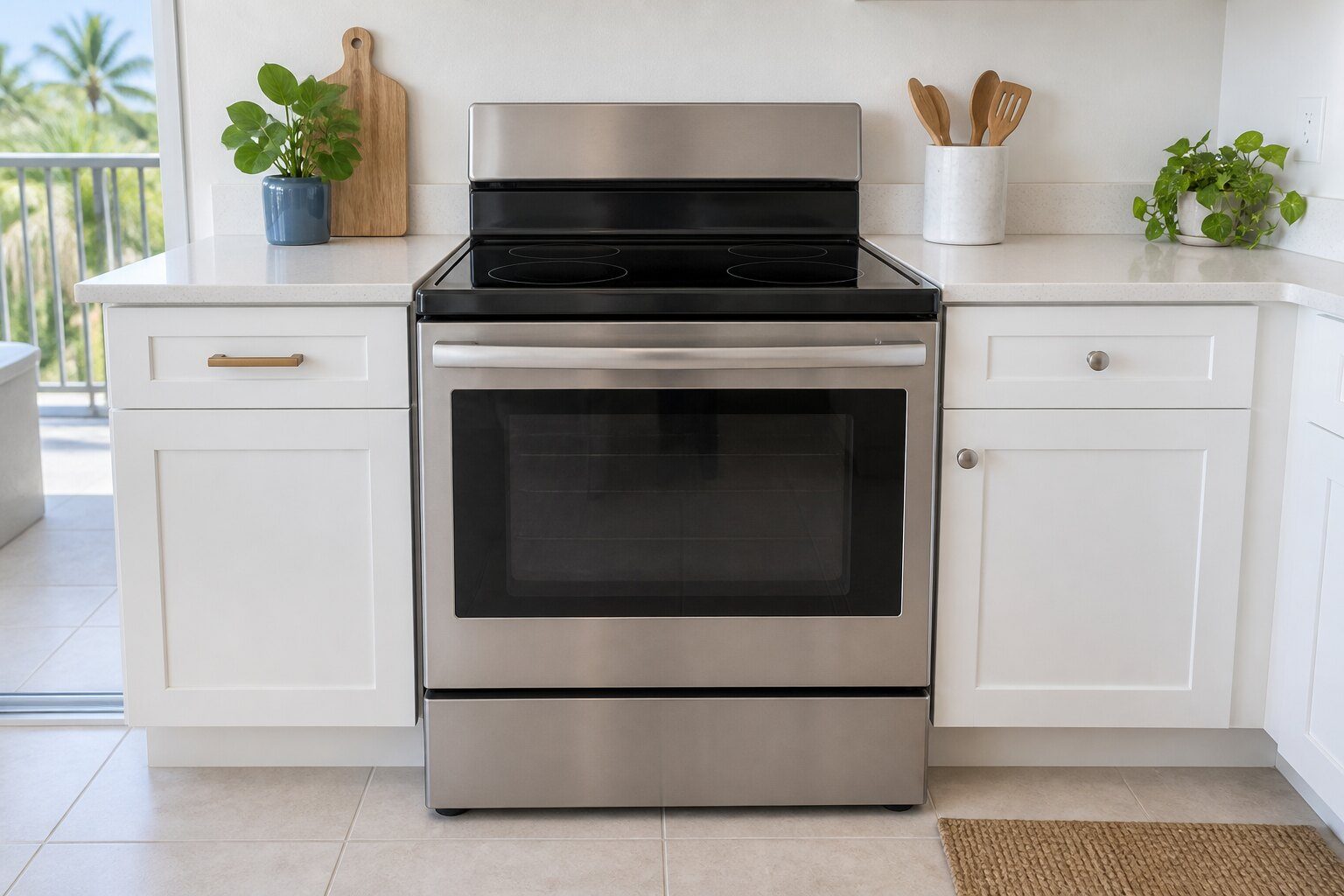
Eighty ranges, and all four fuels: 35 electric, 31 gas, 12 induction and two dual-fuel. That induction figure matters — this is not a make where the technology is absent, and a page or a photograph that pretended otherwise would be wrong about the catalog. The freestanding range is what most Frigidaire kitchens have, which means the appliance can be pulled out, the service access is decent and the parts channel is wide. What we attend divides cleanly: the cooking surface, the oven cavity, and the control that runs both.
- 5 symptoms we are called out to
- From $89 diagnostic, credited to the repair
- 59 cities and neighborhoods covered
- OEM parts available on order
The short version
What this equipment is, for a repair
Configurations
Electric · gas · induction · dual fuel
Access
Planned before the visit, not discovered on arrival
Parts
OEM, available on order
Diagnostic
From $89, credited to the repair
What goes wrong with it
Symptoms we are called out to on Frigidaire ranges
Each one covers the likely causes in the order they are worth checking, and what to do in five minutes before booking anything.
-
It stays cold, or never gets near the temperature you set Oven not heating
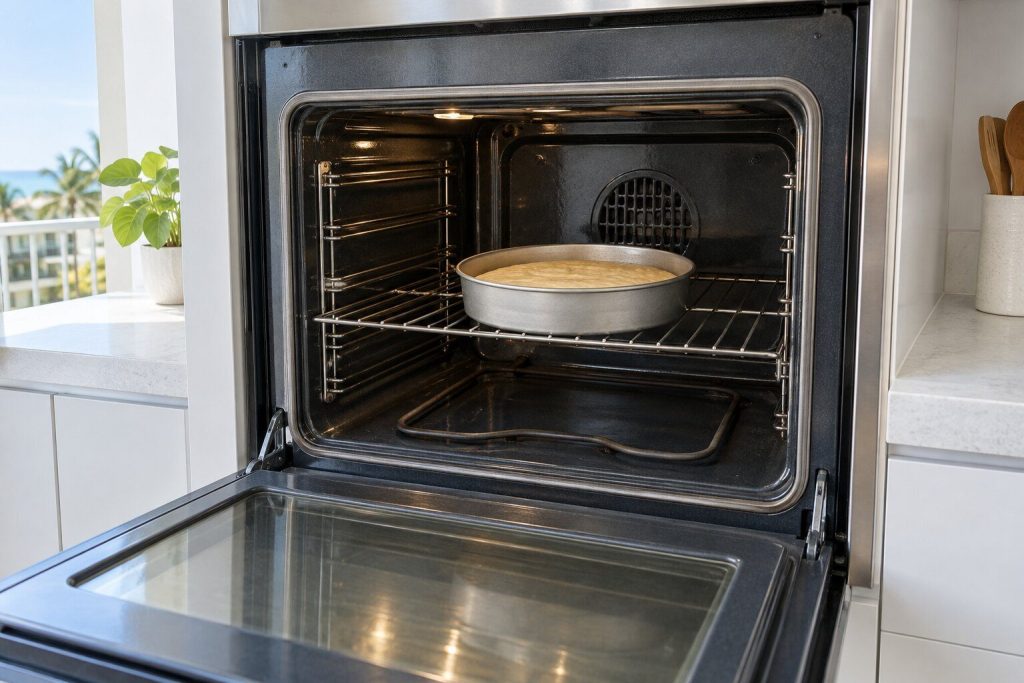
Two complaints wear one title, and separating them saves a visit. An oven that is stone cold is an element, an igniter or a supply problem; an oven that heats but stops well short is almost always the sensor or the calibration. A thermometer on the middle shelf tells us which one you have, and that decides what rides on the van.
- Stone cold and never-hot-enough are different repairs
- On gas, a weak igniter gives slow heat rather than no heat — the classic misdiagnosis
- An oven thermometer is the cheapest diagnostic tool in the kitchen
-
Cakes sink, edges burn, everything takes longer than the recipe Oven temperature is wrong
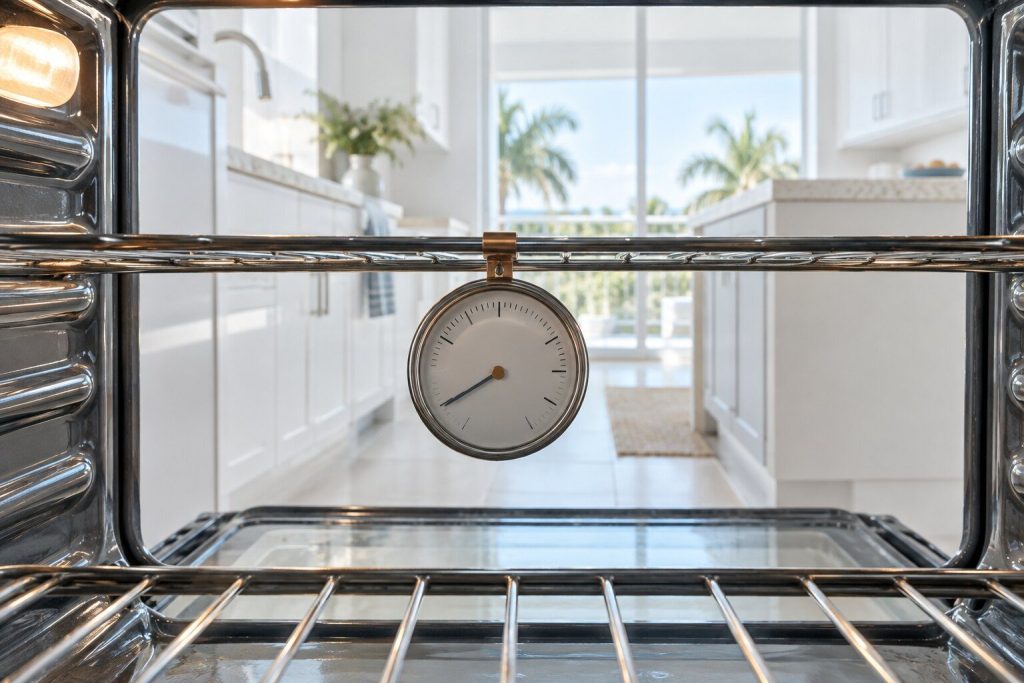
Sometimes a failure, sometimes an oven behaving correctly and a recipe written for a different one. These cavities are allowed to swing either side of the setting as the thermostat cycles, and a new oven often runs truer — and hotter at the edges — than the twenty-year-old machine it replaced. A thermometer and three readings settle which of those you have.
- A cavity swings by design; the question is where the middle of the swing sits
- A drifting sensor is a part; a small consistent error is a calibration offset
- A door that leaks heat produces exactly this with nothing electrical wrong
-
It went into a clean cycle and never let go Oven door locked shut
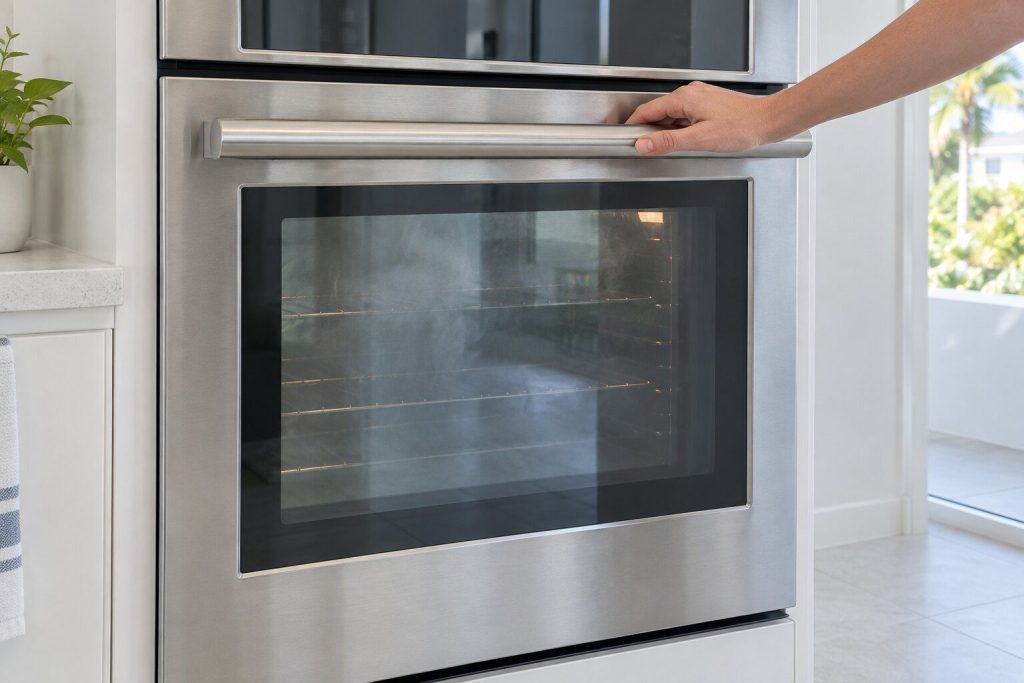
Alarming and usually ordinary. The cavity has to fall below a threshold before the lock will release, so a sensor reading high — which is common after the heat of a self-clean cycle — keeps a perfectly good door shut indefinitely. The one thing not to do is lever it, because the hinges and the lock assembly cost several times what the visit does.
- The lock is waiting for a temperature, and it may be reading the wrong one
- Forcing the door costs hinges and a lock assembly
- Self-clean cycles are hard on these ovens, and we say so
-
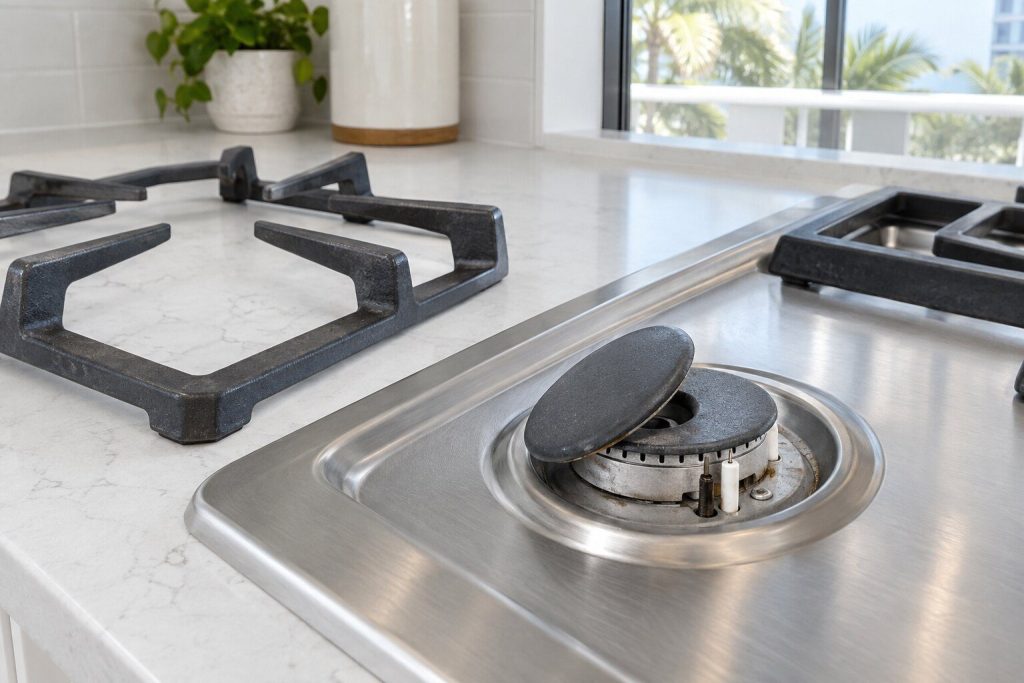
It clicks and clicks, or lights and goes straight out Gas burner will not light
Mostly mechanical and mostly free to correct: a burner cap put back a few millimeters out after cleaning, a blocked port, or an igniter still wet from a boil-over. The pattern tells us which — one burner or all of them, clicking or silent, lighting then dying — and each of those points somewhere different.
- A cap out of position after cleaning is the commonest cause of all
- All burners clicking at once is one stuck switch, not four failures
- Lighting then going out is the flame sensor or the valve, not the igniter
-
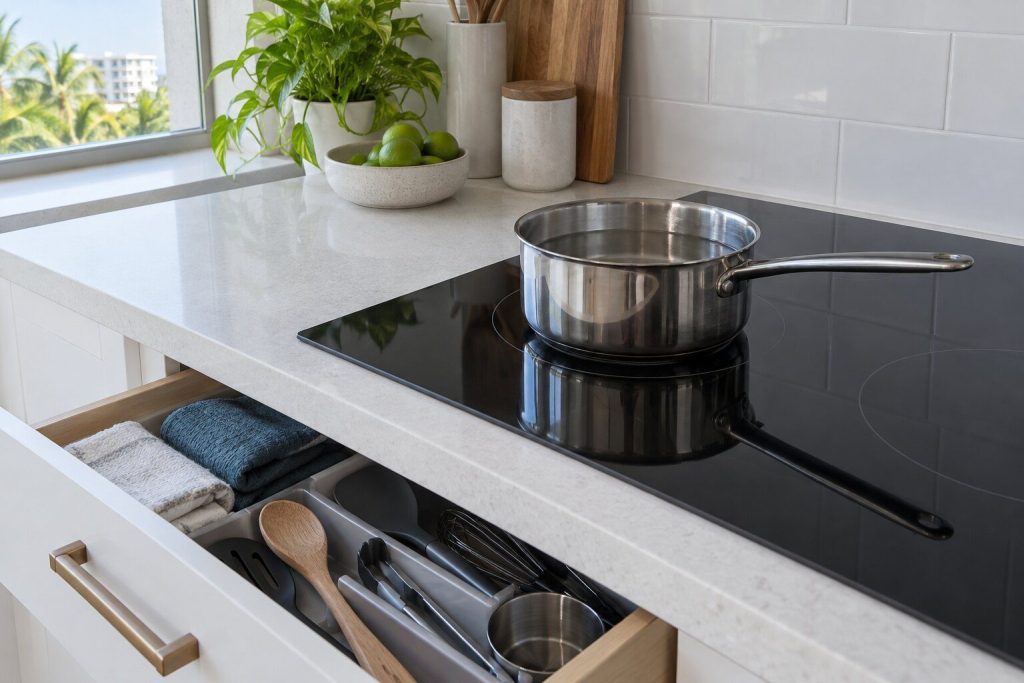
It beeps, or a zone stops working part way through cooking Induction zone turns itself off
Frigidaire sells twelve induction ranges and eight induction cooktops, so this is ordinary work rather than an exotic call — and most of it turns out to be the pan or the cooling rather than the hob. An induction zone stops for three reasons: it cannot see a suitable pan, it is too hot inside, or the power board has genuinely failed.
- Most 'failures' are cookware: the base must be ferrous and cover enough of the zone
- Induction makes its heat in the electronics, so its cooling fan matters
- One zone dead and the whole hob dead are different parts
What we do on it
Repairs we carry out on Frigidaire ranges
Starting figures for this equipment in South Florida. The exact cost is confirmed after an on-site diagnostic — and this is not the whole list of what can go wrong, so call if your problem is not here.
-
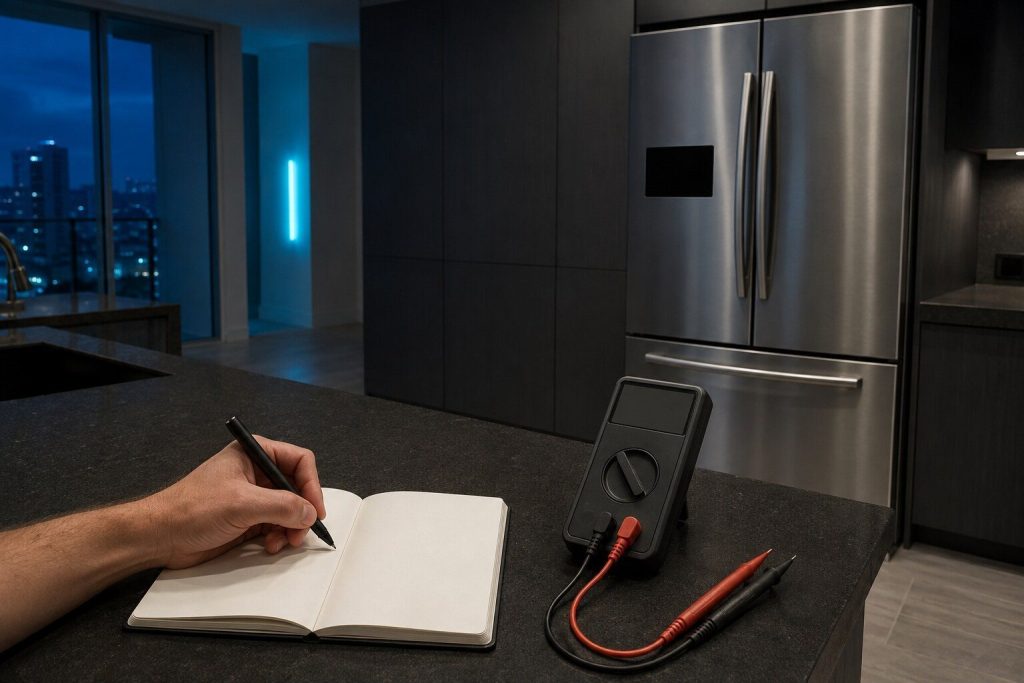
from $89 Diagnostic visit
We find out what is wrong before anybody quotes a part. On this make the first thing established is age, because the badge sells the appliance that came with the apartment and we open machines at every stage of life — a two-year-old range and a fifteen-year-old washer in the same building. The fee comes off the bill when you go ahead with the work, and where the answer is that the repair is not worth doing, you get that answer plainly and it is still the same fee.
- Age and model first: this badge is repaired at every stage of life
- The number before the work, in writing, and it is credited toward the repair
- Where the machine is not worth fixing we say so instead of selling a part
-
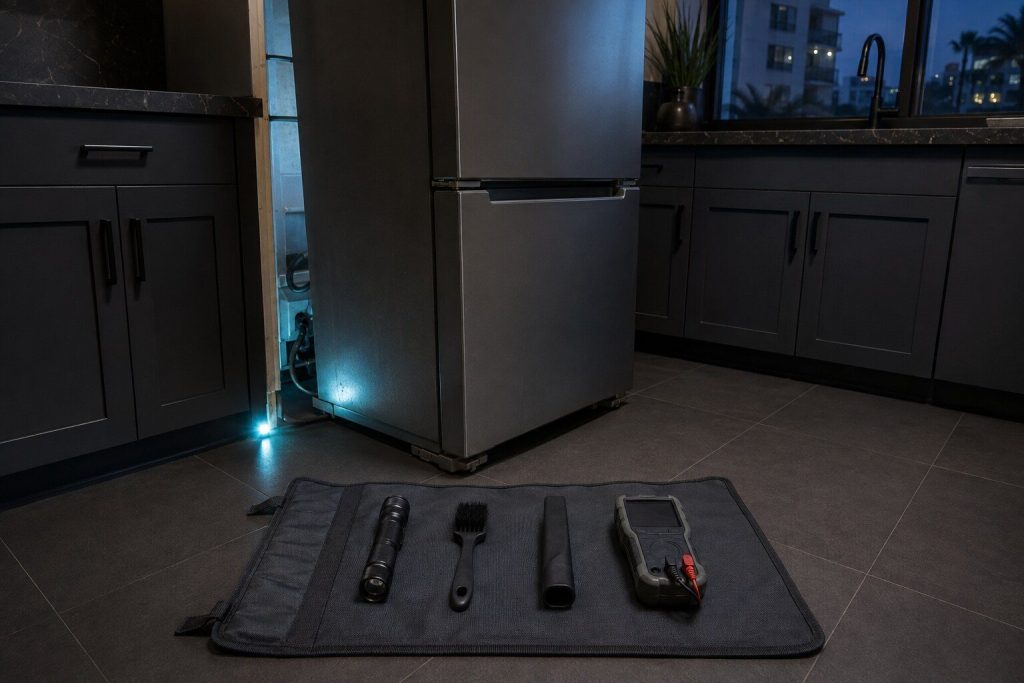
from $119 Appliance maintenance
The work that stops the calls we would otherwise be taking in August: condensers cleared, dryer ducts checked, dishwasher filters and seals looked at, water lines and shut-offs confirmed. In this climate maintenance is not a formality — a condenser that breathes dust in a Miami summer is the single most preventable refrigeration failure, and a dryer duct that nobody has cleaned is the most preventable fire risk in the apartment.
- Condenser, seals, ducts, filters and shut-offs, on the machines that have them
- Written down: what was cleaned, what was measured, what is starting to go
- Booked for several appliances in one visit, which is how it is worth doing
-
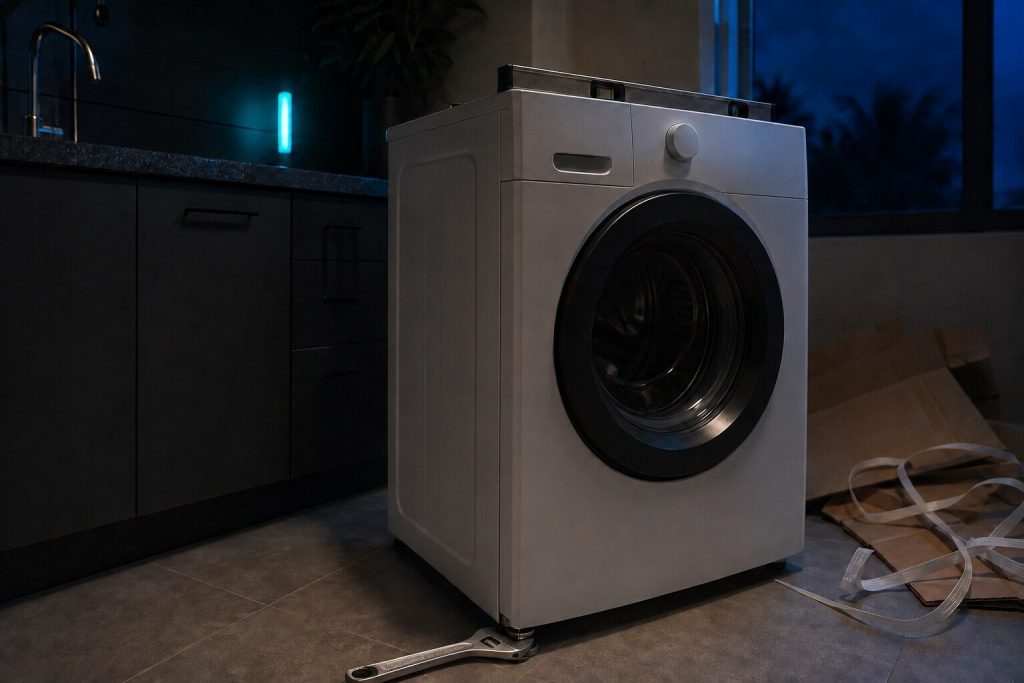
from $139 Appliance installation
Fitting a new machine properly and leaving the old one gone: level, connected, tested and checked for the things that cause a call-out three weeks later. On this badge most of what we install is freestanding or slide-in, which is straightforward — and the two that are not, a wall oven in a column and a beverage cabinet built into a run, are exactly where a bad installation shows up later as a repair.
- Level, connected, tested — and the old machine taken away
- Water, gas and vent connections left right, not just left working
- Built-in cabinets get a clearance check, which is where later problems begin
-
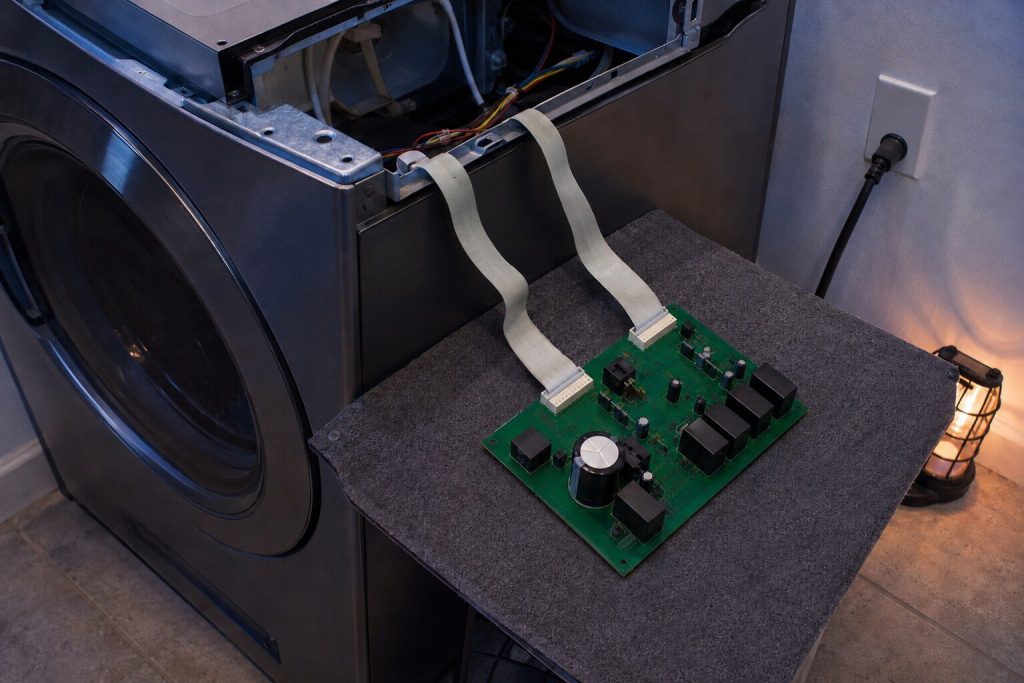
from $245 Control board repair
The board is the part most often blamed and least often to blame. A machine that is dead, resetting, or ignoring half its own panel usually has a supply problem, a failed sensor or a connector that has corroded in this humidity — and all three imitate a failed board convincingly. We measure what reaches the board before quoting one, because on this badge a board is frequently a large share of what the appliance is now worth.
- Measured before it is quoted: supply, sensors and connectors first
- Humidity corrodes connectors here, and that looks exactly like a dead board
- On an older machine the board is compared with the value of the appliance, out loud
-
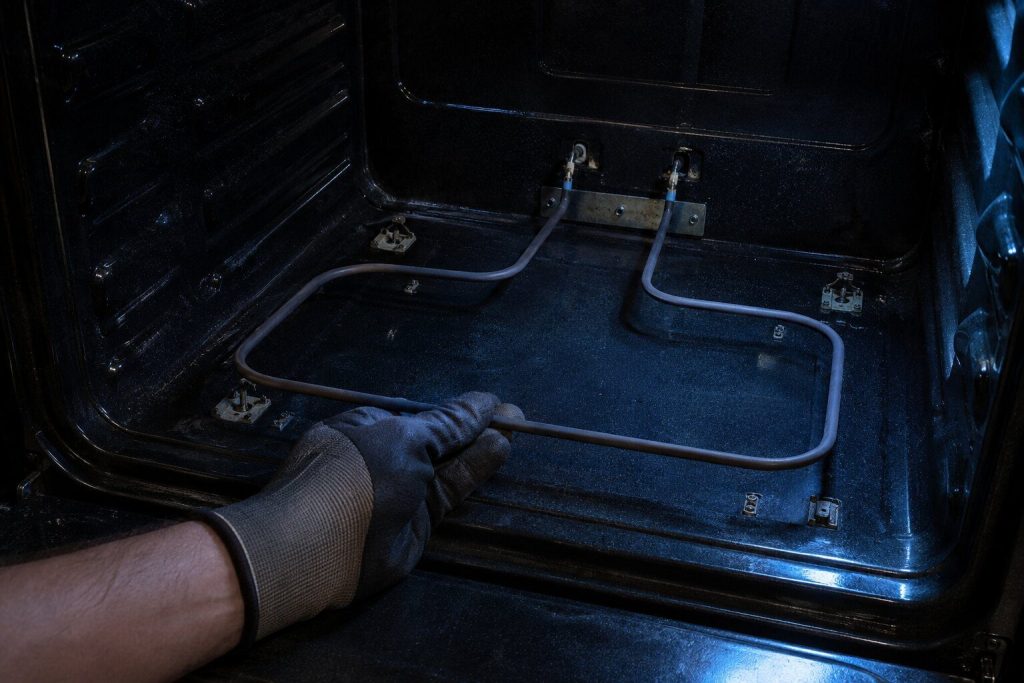
from $149 Oven not heating repair
An oven that stays cold, or one that heats to something well short of what it was set to. On an electric cavity that is the bake or broil element, its relay, or the sensor the control is reading; on gas it is the igniter, which fails by drawing too little current to open the valve properly and produces weak, slow heat rather than none at all. Both are ordinary jobs with parts that are usually on the van.
- Cold and 'not hot enough' are two different diagnoses
- On gas, a weak igniter gives slow heat rather than no heat — the classic misdiagnosis
- The sensor is measured, not guessed at, before a control is quoted
-
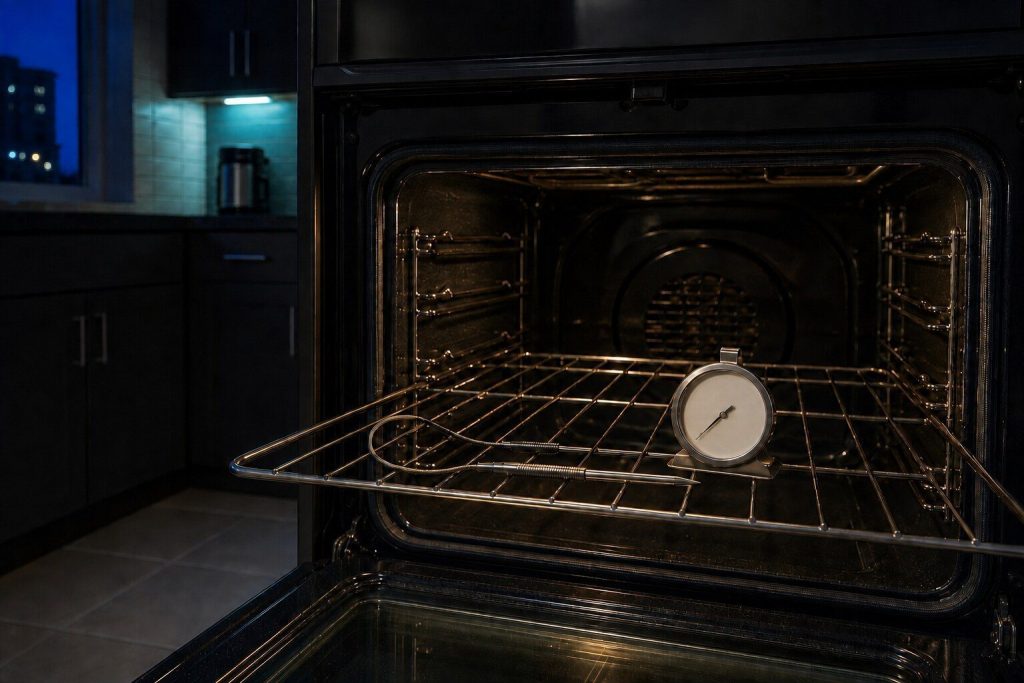
from $115 Oven temperature and calibration service
Baking that has gone wrong without anything obviously failing: cakes that sink, a cavity that runs twenty degrees under, a machine that was fine until it was moved. Most of these are the sensor or the calibration, and both are cheap to establish. It is also the visit where we find out that a new oven is behaving correctly and the recipe was written for an old one.
- Cheap to measure and often not a failure at all
- A sensor reading high is the commonest single cause
- Ovens can be offset in software; not every complaint needs a part
-
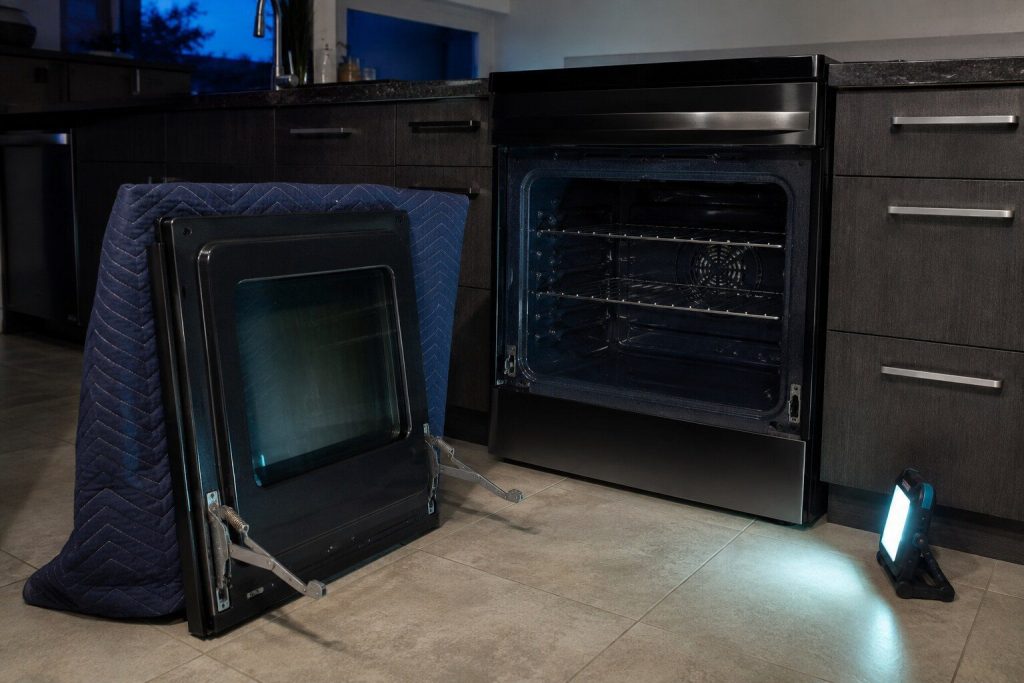
from $165 Oven door and hinge repair
A door that will not close flush, has dropped on one side, or whose glass has gone cloudy from the inside. A leaking door costs heat on every bake and is one of the reasons an oven 'runs cool' with no electrical failure at all. On a wall oven at chest height it is also a weight-handling job rather than a quick fix.
- A leaking door is a common cause of an oven that runs cool
- Hinges are replaced in pairs — one worn side drags the other
- On a wall oven this is a two-person lift, planned in advance
-
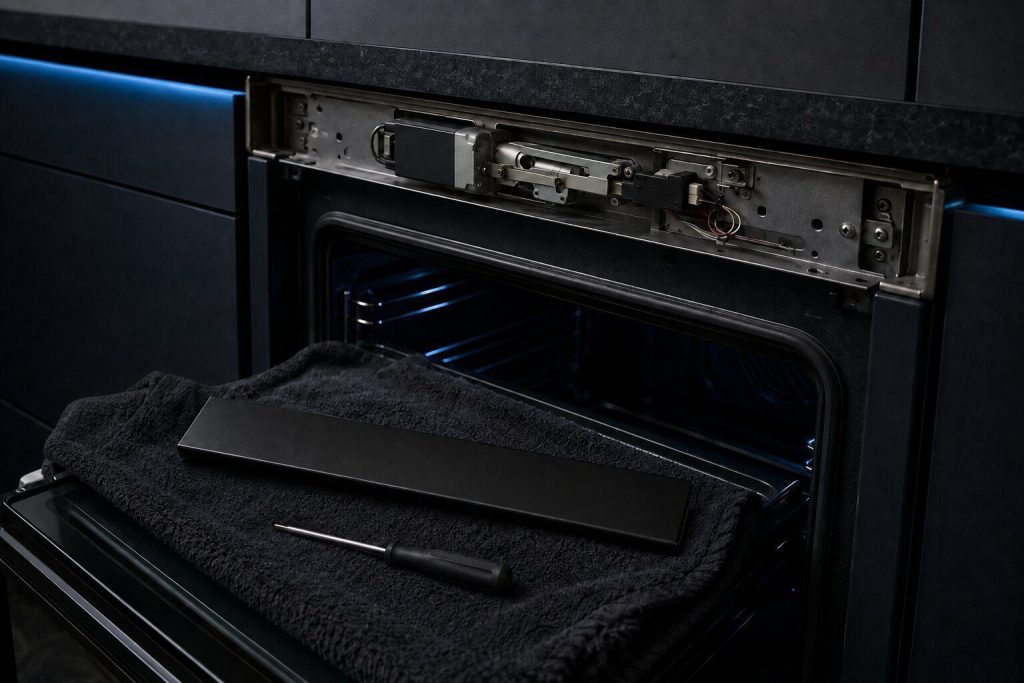
from $149 Self-clean and door lock repair
A door locked shut after a cleaning cycle, or a cycle that will not start because the lock will not engage. It is one of the more alarming things an oven does and one of the more ordinary to repair: the cavity has to fall below a threshold before the lock will release, so a sensor reading high keeps a perfectly good door shut indefinitely.
- A locked door after cleaning is usually a temperature reading, not a seized lock
- Forcing it costs more than the visit: hinges and lock assemblies are dear
- Self-clean is hard on these ovens, and we say so
-
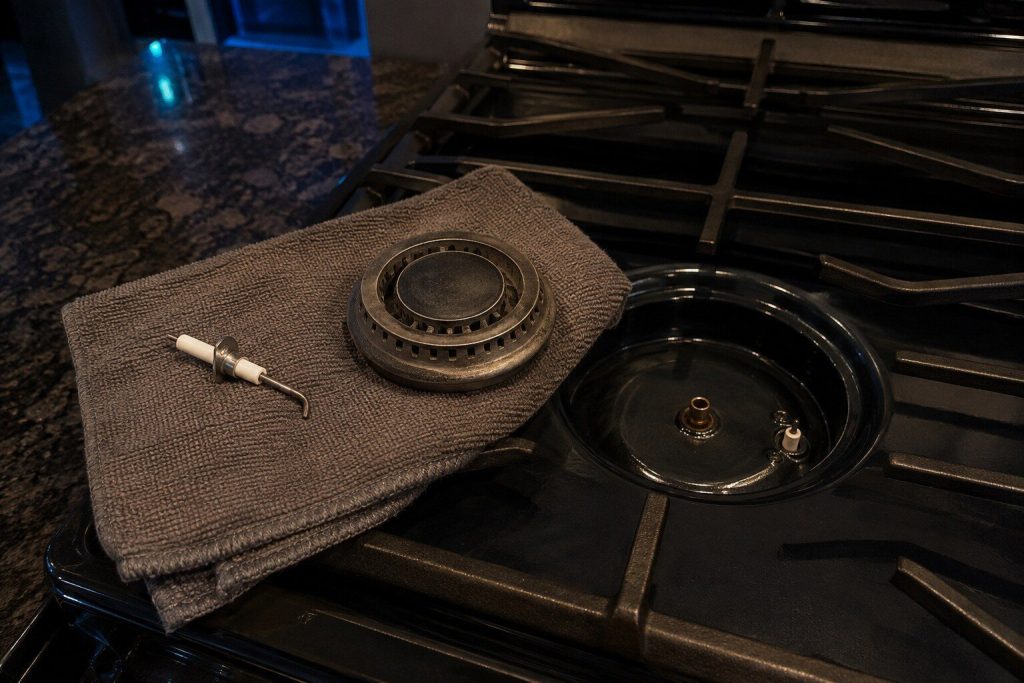
from $155 Gas burner and igniter repair
A burner that clicks and will not light, lights and then goes out, or burns yellow and uneven. On this badge's 31 gas ranges and 12 gas cooktops the causes are mostly mechanical and cheap: a cap seated wrongly after cleaning, a blocked port, a wet igniter. The electrical failures — a failed igniter or a switch stuck closed so every burner clicks — are the rest.
- A cap out of position after cleaning is the commonest cause of all
- All burners clicking at once is a switch or a wet igniter, not four failures
- A yellow flame is attended to promptly, not lived with
-
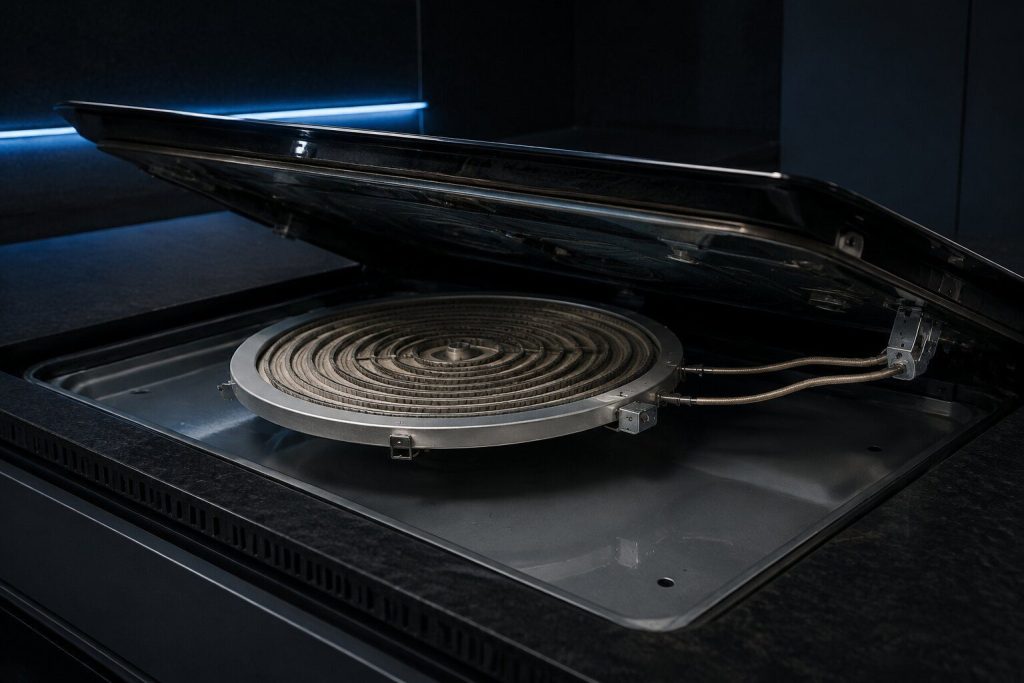
from $165 Electric cooktop element repair
One zone dead, a zone stuck on full, or a radiant element that cycles far too quickly. On these cooktops the switch and the element fail about equally often, and there is a third candidate nobody thinks of: the receptacle a plug-in element sits in, which burns at the contacts and looks like a dead element from above.
- Element, switch or receptacle — the third one is the one that gets missed
- A zone stuck on full is a switch, and it gets attended to quickly
- Radiant elements are tested cold, not by watching them glow
-
from $245 Cooktop glass replacement
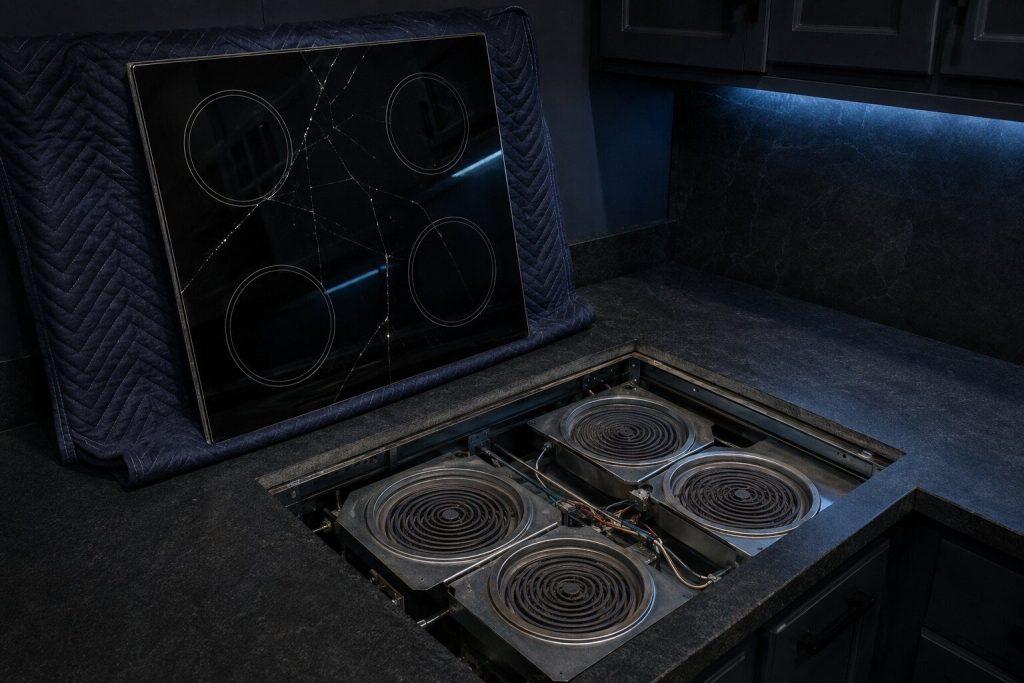
A cracked or shattered ceramic top, usually from a dropped pan. The glass is replaceable and the price is mostly the part — but a crack is not only cosmetic: it lets liquid reach the elements and the switchgear underneath, so the assessment is of the whole appliance rather than the panel. A cracked top over a live element is not something to keep using.
- Replaceable, and the price is mostly the glass
- A crack lets liquid into the elements below — the assessment covers the whole appliance
- Stop using it in the meantime: this one is a safety matter
-
from $185 Induction cooktop and range repair
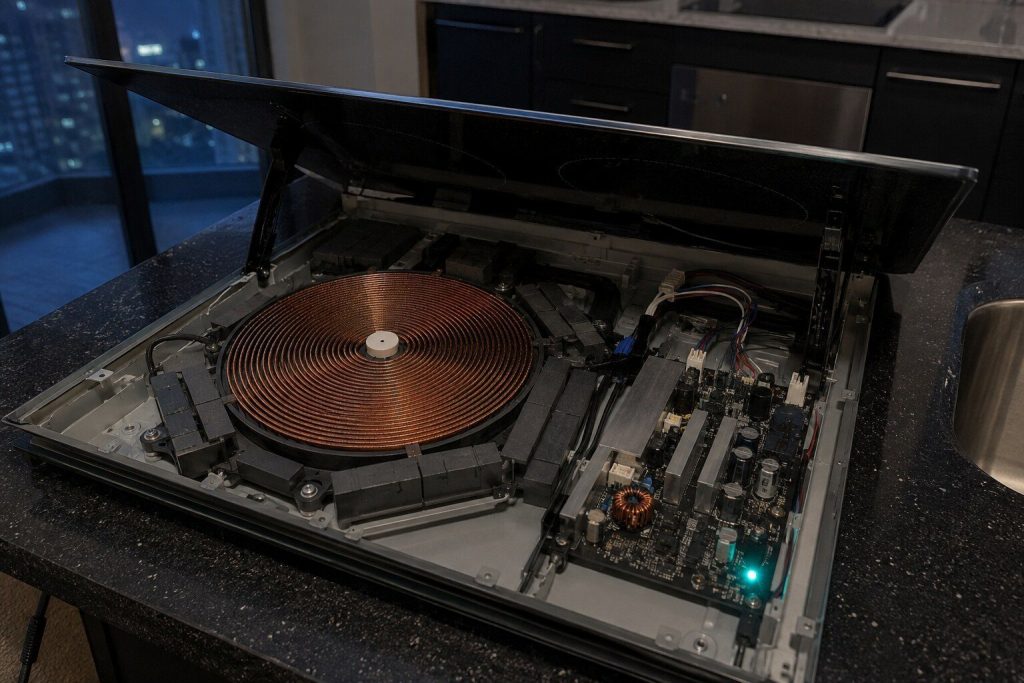
Twelve induction ranges and eight induction cooktops are current products under this badge, so induction here is ordinary work rather than an exotic call. Most of what gets reported as an induction failure turns out to be the cookware or a dirty surface sensor; the real failures are the cooling fan, the power board and the coil, and they behave quite differently from a radiant hob.
- A real part of this catalog: 12 induction ranges and 8 cooktops
- Most 'failures' are the pan or a dirty sensor, and we check those first
- Fan, power board and coil are the genuine failures, and they announce themselves differently
In more detail
About Frigidaire ranges
Four fuels, four different repairs
The word 'range' covers machines with almost nothing in common below the worktop. An electric coil or radiant range fails at elements, switches and receptacles; a gas range at igniters, valves and safety devices; an induction range at coils, fans and the power board that drives them; and a dual-fuel machine is two repairs in one cabinet. The first question we ask is which of those is in your kitchen, because it decides everything after it.
Induction, on a make that actually sells it
Twelve induction ranges and eight induction cooktops are current products under this badge, so induction problems here are ordinary work rather than an exotic call. Most of what gets reported as an induction failure is cookware or a dirty surface sensor; the genuine problems are cooling fans, the power board and the coil itself, and they behave differently from a radiant hob in ways that are worth diagnosing rather than guessing.
This article is based on:
- Official manufacturer documentation
- Internal repair procedures
- Technician repair history
- Company quality standards

Before you book
Questions about Frigidaire ranges
The oven heats, but nothing like the temperature it is set to.
Usually the sensor or the calibration rather than the element, and the two are told apart with a meter in a few minutes. On a gas range it can also be the igniter drawing too little current to open the valve properly — a problem that shows as slow, weak heat rather than as no heat at all, which is why it gets misdiagnosed.
One surface element or burner does not work.
On an electric range: the element, its receptacle or the switch, and the receptacle is the one people forget. On gas: the igniter or a blocked port, and a burner cap seated wrongly after cleaning causes more of these than any failed part. On induction: usually the pan rather than the hob — the wrong base will simply not be seen by the coil.
The whole panel is dead after a power cut.
Check the breaker first, both legs of it on an electric range. Beyond that it is the control board or its supply, and a range that lost power mid-cycle sometimes needs nothing more than a full power-down for a minute to come back. We will tell you to try that before we book a visit rather than after you have paid for one.
Where we do it
Across Miami-Dade, Broward, and Palm Beach
Same terms everywhere we go: an on-site diagnostic first, the price agreed in writing, and the exact figure confirmed once we have seen the unit.
Neighborhoods people ask for by name