FrigidaireRepair Miami

23 conditions · 6 appliances

What the display is telling you, and how little this maker says about it.

Type the characters exactly as they appear. Filter by appliance first — the same letter and number mean different things on a washer and on a range.

  • 23 conditions traced to a source
  • 9 the maker answers with a power cycle and nothing more
  • 5 appliances it documents no code for
  • 0 invented to fill a gap

All of them

The full index

Filter by appliance before you type. The same letter and number are not the same condition on a washer and on a range, and choosing the machine first turns a list of near-misses into one page.

Everything here was read from this maker's own owner support library, and every entry links back to the article it came from. What is the maker's is quoted as the maker's and marked: the code itself, which appliance shows it, and the sentence published about it. What is ours is the reading around that sentence, the order of the checks and the judgment about what it usually turns out to be in a South Florida building. Where the maker names a condition and publishes no mechanism behind it — which is most of the range's F-codes — the page prints its instruction and says so, rather than offering a plausible guess. Nothing here is invented, and nothing is borrowed from a sister make.

The shape of this archive

Short, single codes on four kinds of machine

The top-load washer, the dishwasher, the electric range and cooktop, and the refrigerator. That is where this maker publishes conditions, and the codes themselves are short and single — F30, i20, E4, with a few two-letter words like Hd and SB among them. Nothing alternates and nothing arrives in halves.

Not all of them are failures. Four of the entries here are the machine reporting a mode rather than a problem: a control lock, a delay start counting down, a heater warming water, a cabinet in Sabbath mode. They are kept in the archive as themselves rather than dressed up as failures.
A dishwasher counting down
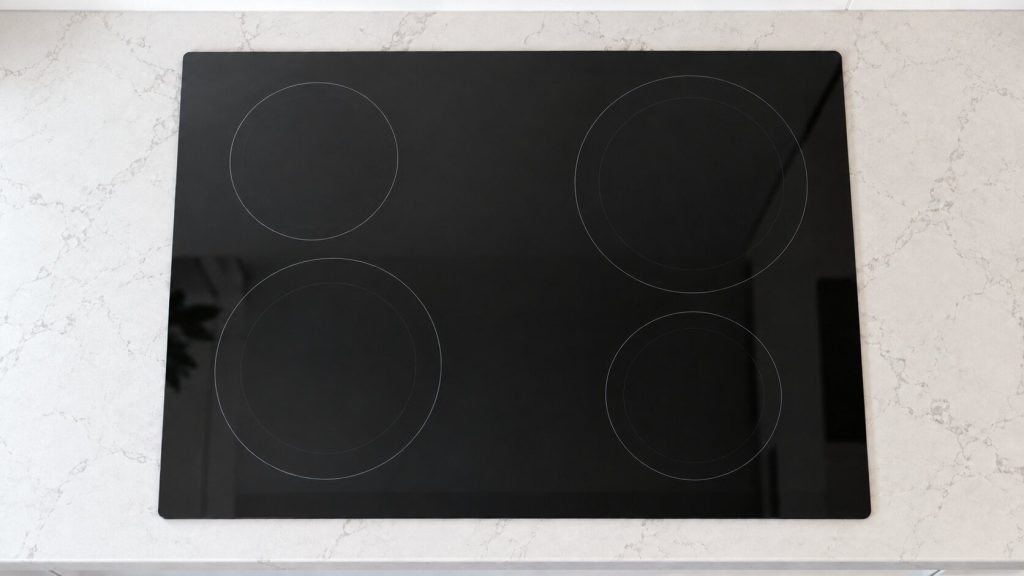
A black ceramic cooktop set in pale quartz photographed straight down, clean and cold, no pans, bright even daylight.

And the silence

Nothing at all for a dryer, a freezer, a wine cabinet or an ice machine

We looked, and the count is zero. This maker’s support library carries no code table for any of them — not a short one, not an old one, none.

So there are no pages here for those appliances. Borrowing a refrigerator’s condition and printing it under a freezer would make this archive look complete and send somebody down the wrong path in their own kitchen. The symptom pages carry those machines instead, written around what can be measured.

Symptoms instead
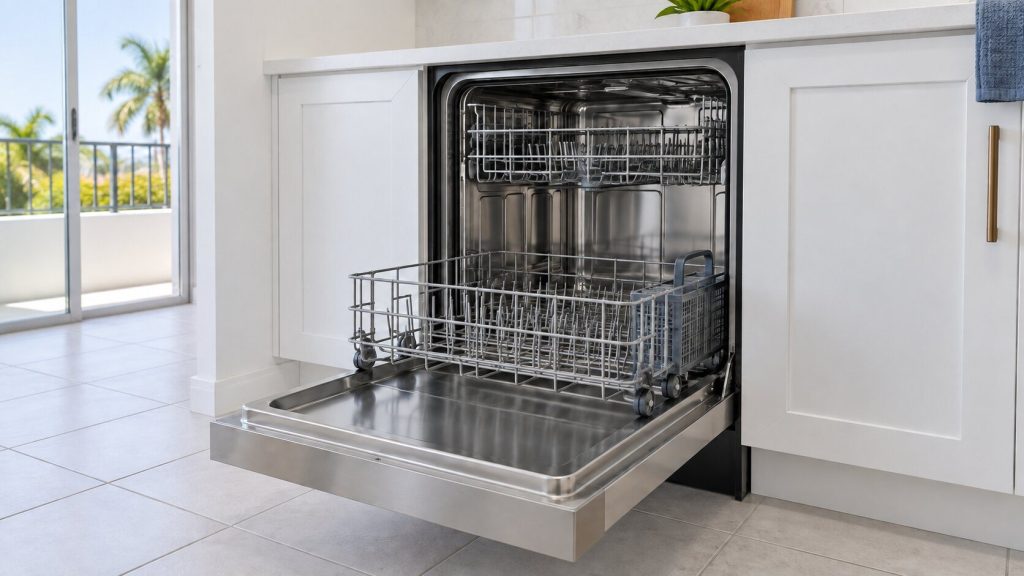
A stainless dishwasher door dropped open in a bright white kitchen with the lower rack half out and empty, pale tile floor.

Before you search

How to read a display accurately

Getting the characters right

  • Photograph the panel. It is the only copy — this maker has no service display to ask for the code again once it is cleared.
  • Letters are part of the code and their case is not decoration: Hd, HO, SB and i20 are written the way the maker writes them.
  • Numbers between 1 and 24 on a dishwasher are hours of delay, not a code.
  • Note the appliance. Half of this archive is filed by machine for that reason.

Before you reset it

  • The maker's own answer to most of these is thirty seconds at the breaker, and it is worth doing once.
  • Do it after you have photographed the display, not before.
  • A code that clears and stays clear was a condition rather than a failure.
  • A code that returns has a part behind it, and repeated resets only postpone the same visit.

Or start from what it is doing

By symptom instead

Most people read the display but search for the behavior.

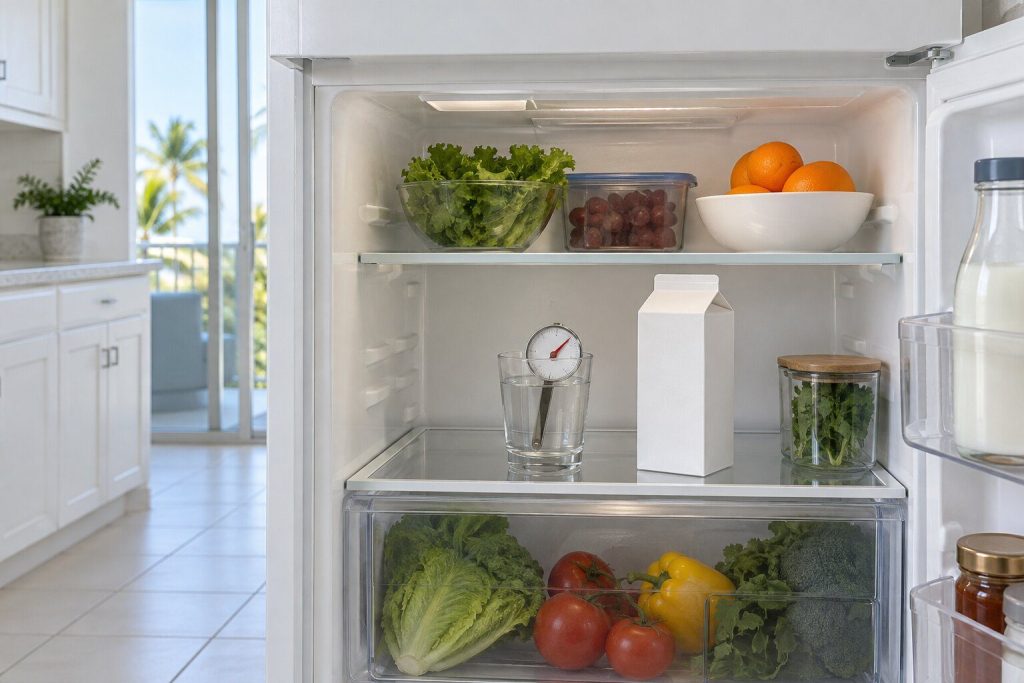
  • The open fresh-food compartment of a white top-freezer refrigerator with an ordinary dial thermometer standing in a glass of water on the middle shelf reading well above forty, a carton of milk beside it.
    It runs, the light comes on, and the food is warm

    Refrigerator not cooling

    The cabinet is doing something — you can hear it — and it is still not cold. On most of the machines this badge sells there is nothing on the front to read, so the first useful thing you can do is not a repair at all: put a thermometer in each compartment and note the two numbers an hour apart. That pair tells us more than any description of the noise, and it is the difference between an hour of guessing and a visit that arrives with the right parts.

    • A cold freezer with a warm fridge is an air problem, not a refrigerant one
    • Both halves drifting together is the dearer diagnosis, and worth knowing before we arrive
    • Three free things — a blocked vent, a stuffed condenser, a door held ajar — end a real share of these
    What it usually means
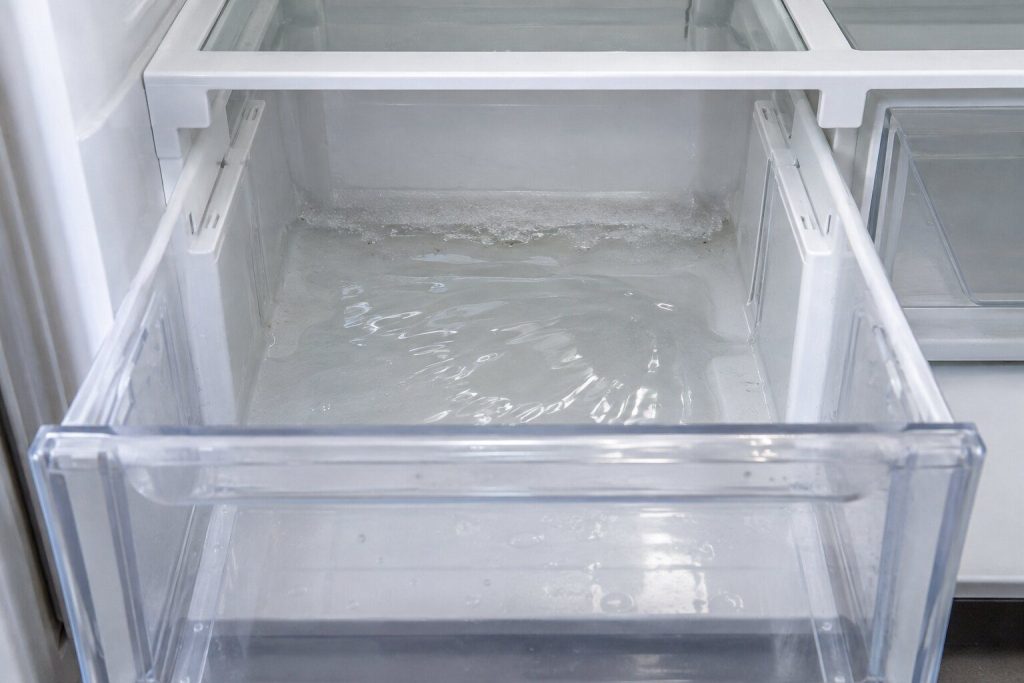
  • A clear crisper drawer pulled forward in a bright refrigerator interior with a shallow pool of water standing in the well underneath it and a thin sheet of ice at the back edge.
    A puddle on the floor, or water under the crisper drawers

    Water under the refrigerator

    The commonest refrigerator call we take in South Florida, and usually the cheapest to put right. Where the water shows up is the whole diagnosis: under the drawers points at the defrost drain, on the floor at the front points at the drain pan or the door, and water at the back points at the supply line. Before you mop it, look and remember which of those three it was.

    • Under the crisper is the defrost drain, and that is the usual answer here
    • At the back is a water supply problem, which is the one that damages floors
    • A cabinet that has been leaking for weeks is a cabinet-and-floor question too
    What it usually means
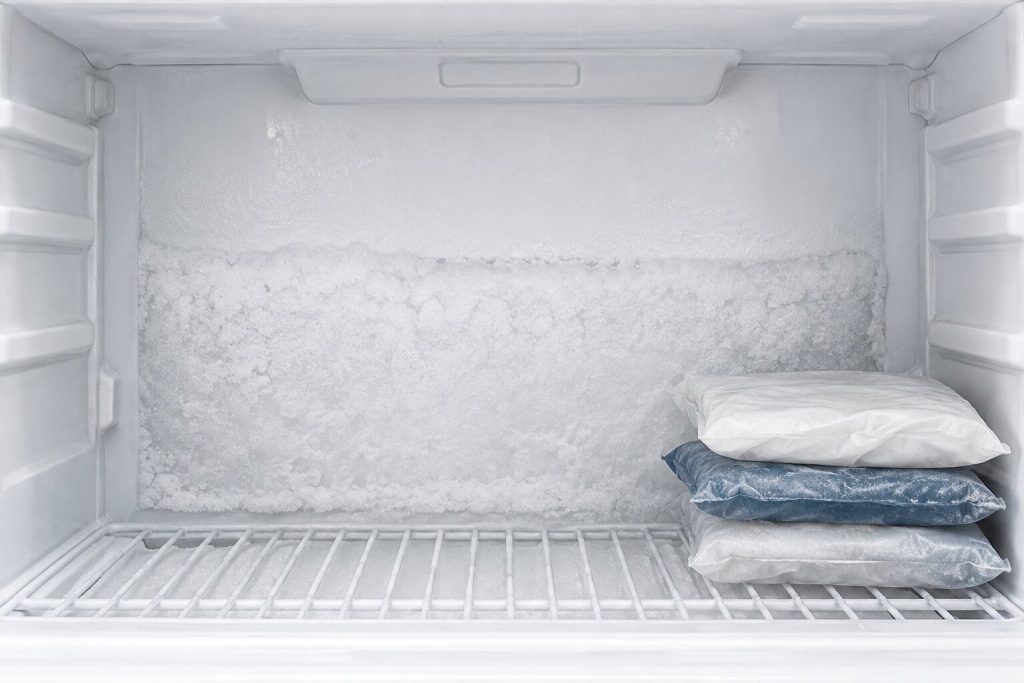
  • The inside of a freezer compartment with the food removed, the white rear panel carrying a thick even crust of frost that has climbed from the bottom to halfway up, and frozen packets stacked to one side.
    Ice on the back wall, or a freezer that keeps growing a crust

    Frost building up inside

    A frost-free cabinet is not supposed to accumulate anything, so frost is always a message. Where it is tells us which message: a sheet on the freezer back wall is the defrost circuit, frost around the door is a seal, and a fine crust over everything after a hot week is usually the humidity that came in through a door that was left ajar.

    • A sheet of ice on the back wall is the defrost circuit, and it will not clear itself
    • Frost at the door edge is a seal or an alignment question
    • Chipping it out buys a week; the reason it formed decides whether it comes back
    What it usually means
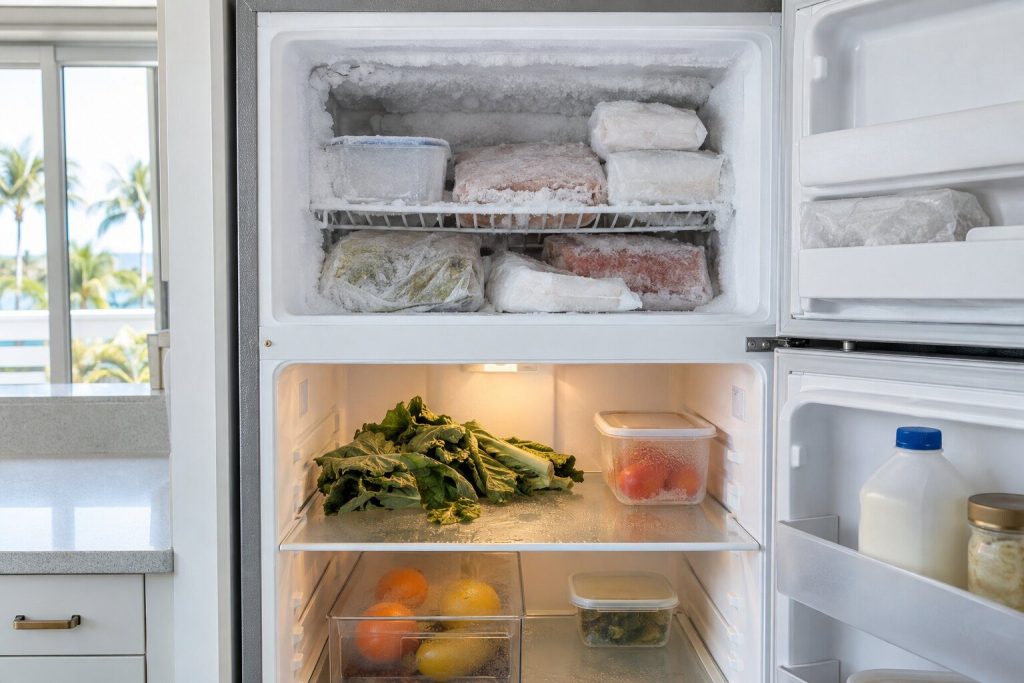
  • A split view of an open top-freezer refrigerator: the upper freezer basket packed with properly frozen food and heavy frost, and the fresh-food shelf below holding wilted greens and condensation on the shelf glass.
    One half of the cabinet is fine and the other is not

    Fridge warm, freezer cold

    This is the single most useful thing an owner can tell us about a refrigerator, because it rules out most of the expensive answers immediately. Almost every cabinet this badge sells makes its cold in one place and moves air to the other, so a cold freezer proves the sealed system is working and points the whole diagnosis at air: a fan, a damper, a duct or a coil under ice.

    • A cold freezer proves the compressor and the refrigerant are doing their job
    • The problem is air: fan, damper, duct or a coil under frost
    • This is usually the cheaper half of the refrigeration repair list
    What it usually means
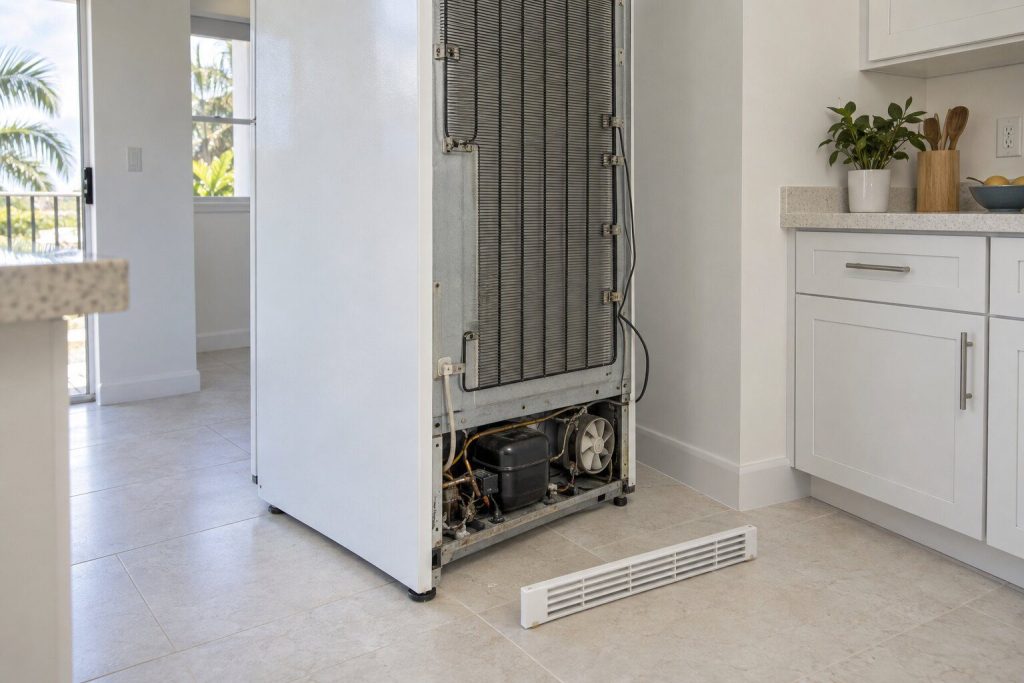
  • A white refrigerator pulled a foot out from a light kitchen wall at night-free daylight, the base grille off and the compressor and fan visible low at the back, a pale tile floor.
    Chirping, rattling, buzzing or a bang from the back

    Refrigerator making a noise

    Refrigerators are among the few appliances that give warning before they fail, and the noise is usually it. What matters is which noise: a chirp or squeal that comes and goes with the door is the evaporator fan, a rattle from the floor at the back is the condenser fan or the drain pan, and a click every few minutes with no cooling is the compressor relay. None of them are ignorable, and one of them is cheap this week and dear next month.

    • A chirp that changes with the door is the freezer fan — cheap now, warm food later
    • A rattle at floor level is usually the condenser fan or a loose drain pan
    • Clicking with no cooling is the compressor relay and is worth attending to quickly
    What it usually means
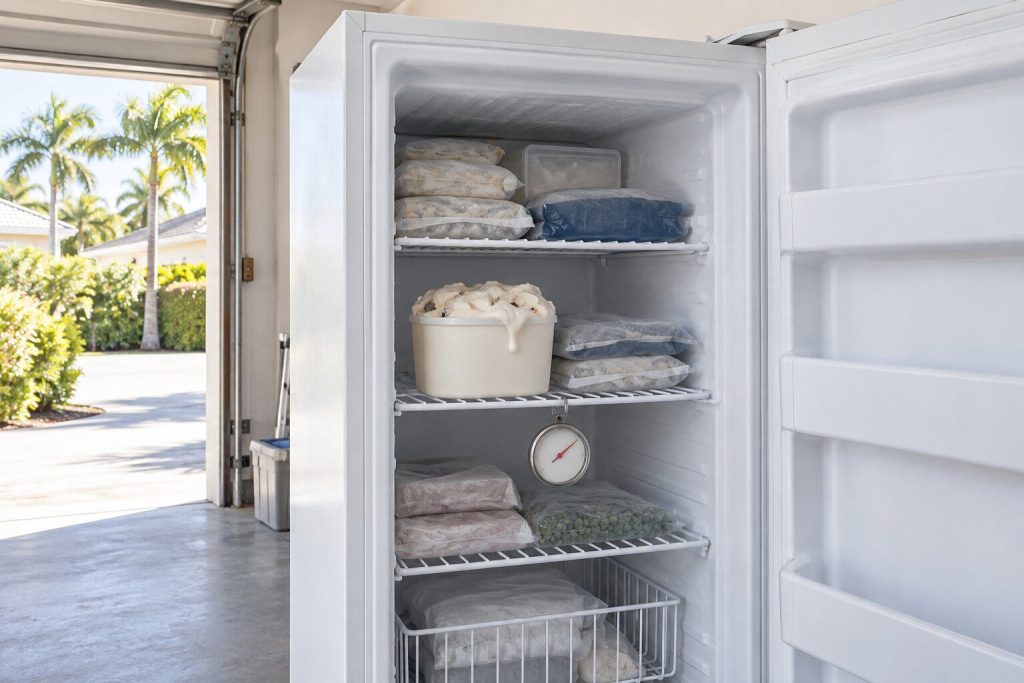
  • An open upright freezer in a bright garage with a tub of ice cream on the middle shelf visibly soft at the edges, a dial thermometer hanging from the wire shelf reading above zero, and packets of food beyond.
    The cabinet is running and the food has gone soft

    Freezer not freezing

    The expensive failure, because nothing announces it. A freezer that has drifted from 0°F to 20°F looks and sounds exactly like one that is working, and the first sign is usually the food. In South Florida there is an extra suspect that is not the machine's doing at all: a cabinet in a garage is being asked to work at an ambient it was never rated for.

    • Nothing tells you until the food does — a thermometer is the whole early warning system
    • A garage in August is not the room the cabinet was designed for
    • Upright and chest freezers fail in different places, so say which you have
    What it usually means
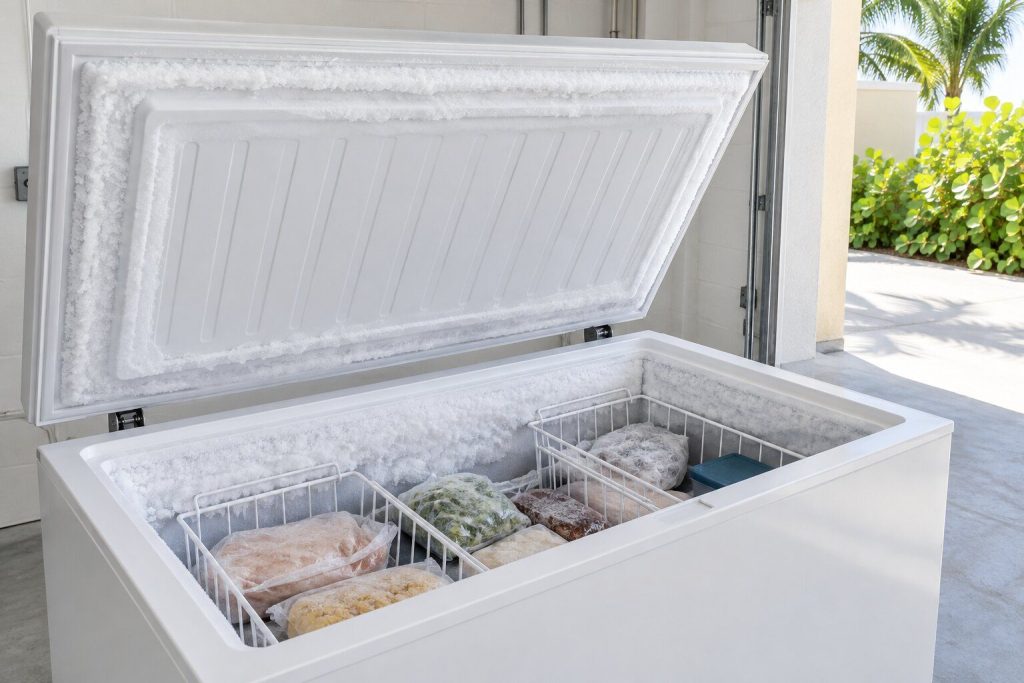
  • A white chest freezer with its lid up in a bright garage, thick frost built up along the lid seal and down the inside of the near wall, baskets of frozen food below.
    A crust on everything, or ice growing on the walls

    Frost building in the freezer

    On a frost-free upright this is a message and on a manual-defrost chest freezer it is housekeeping — so the first question is which cabinet you have. An upright that grows frost has a defrost circuit that has stopped; a chest freezer that grows frost has been opened, or has a lid that is not sealing, and is doing what it was designed to do.

    • Frost-free upright: frost is a failure. Chest freezer: frost is maintenance
    • Ice at the lid line points at the seal or the hinge
    • Chipping it out is safe with plastic, never with metal
    What it usually means
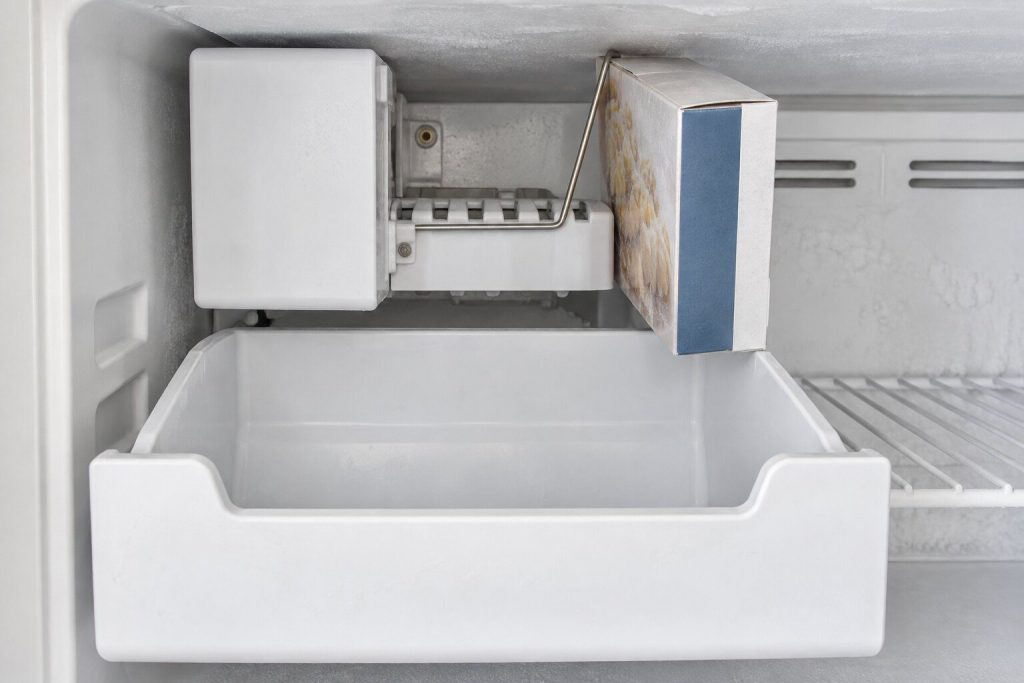
  • The inside of a freezer compartment with the ice bin pulled out and completely empty, the white ice maker module above it with its wire shut-off arm raised in the up position and a box of frozen food pressed against it.
    The bin is empty and nothing is arriving

    Ice maker not making ice

    One question sorts most of these before anybody is booked: does the water dispenser still work? Water at the dispenser but no ice separates the ice half of the circuit from the supply in a sentence, and neither water nor ice sends the whole diagnosis back to the filter and the shut-off. Half of these calls end on the water side rather than at the ice maker itself.

    • Water at the dispenser but no ice narrows this to the ice half of the circuit
    • No water either sends us to the filter, the line and the shut-off
    • The fill tube freezing closed is commoner than the module failing
    What it usually means

Worth saying

Half of these come with a name and nothing behind it

Every F-code on the electric range is published by this maker as a title and a power cycle: F30 is “Open Probe”, and the whole of the documented solution is thirty seconds at the breaker. Those pages say exactly that. What they do not do is invent a checklist behind the name — where our own reading of the subsystem is worth having we write it and mark it as ours, and where the maker is silent we say so.

Before you book

The questions this page is asked

My code is not in here.

Then this maker does not document it publicly, which is not the same as the code being invalid. Some are shown only on a service display and some belong to one model year. Tell us the model and what the panel shows.

Can I just keep resetting it?

Once, yes — that is the maker's own instruction and it clears conditions that were events rather than failures. After that you are only spending the evidence.

Does the same code mean the same thing on two appliances?

No, and that is why this archive is organized by appliance. The same characters on a washer and on a range are two different repairs.

In more detail

What this archive is, and what it is not

Quoted where it is quoted

The code, the appliance it belongs to and the maker’s own sentence about it are the maker’s, and marked as such. The reading around them is ours: what the condition tends to mean in practice, which free checks come before which parts, and what it usually turns out to be in a building on this coast. Keeping those two apart is the whole discipline of a page like this.

Nothing invented, including the silence

Where this maker names a condition and publishes nothing behind the name — which is most of the range’s F-codes — the page prints the maker’s own instruction and says plainly that there is no published mechanism. Where it documents no codes at all, there are no pages. A sibling site once published about thirty-eight codes that were symptoms somebody made up, and that is the mistake this archive is built to make impossible.

Where these came from

Every entry is traced to one article of this maker’s own owner support library, and the page links it. A code that cannot be traced there is not published here, however widely it circulates elsewhere.

Send us the photograph of the display.

With the model number, that is usually enough for us to name the likely part before anybody sets off — including when the answer is that it is a setting.

This article is based on:

  • Official manufacturer documentation
  • Internal repair procedures
  • Technician repair history
  • Company quality standards
Call (305) 615-5496