Error code
Washer error code E5
Frigidaire washer error code E5: A separate code from the out-of-balance one, and the difference matters: E4 is about the load, E5 is about the machine. Which machines can raise it, what the maker publishes about it, and what to do next.
- From $89 diagnostic, credited to the repair
- 59 cities and neighborhoods covered
- OEM parts available on order
- In writing the price, before anything is opened
What we can confirm
Code E5, from the manufacturer's own documentation
A code is only meaningful together with the machine showing it — the same digits mean different things on different equipment.
The code
E5
A separate code from the out-of-balance one, and the difference matters: E4 is about the load, E5 is about the machine. A washer leaning back — which is how they end up when pushed into a closet against a baseboard — puts its drum off the axis its suspension was designed around, and every spin after that is harder on the bearing than it needs to be. This is the cheapest code on the list to answer, and ignoring it is what turns into the bearing job we sometimes advise against.
or call (305) 615-5496
What it narrows down to
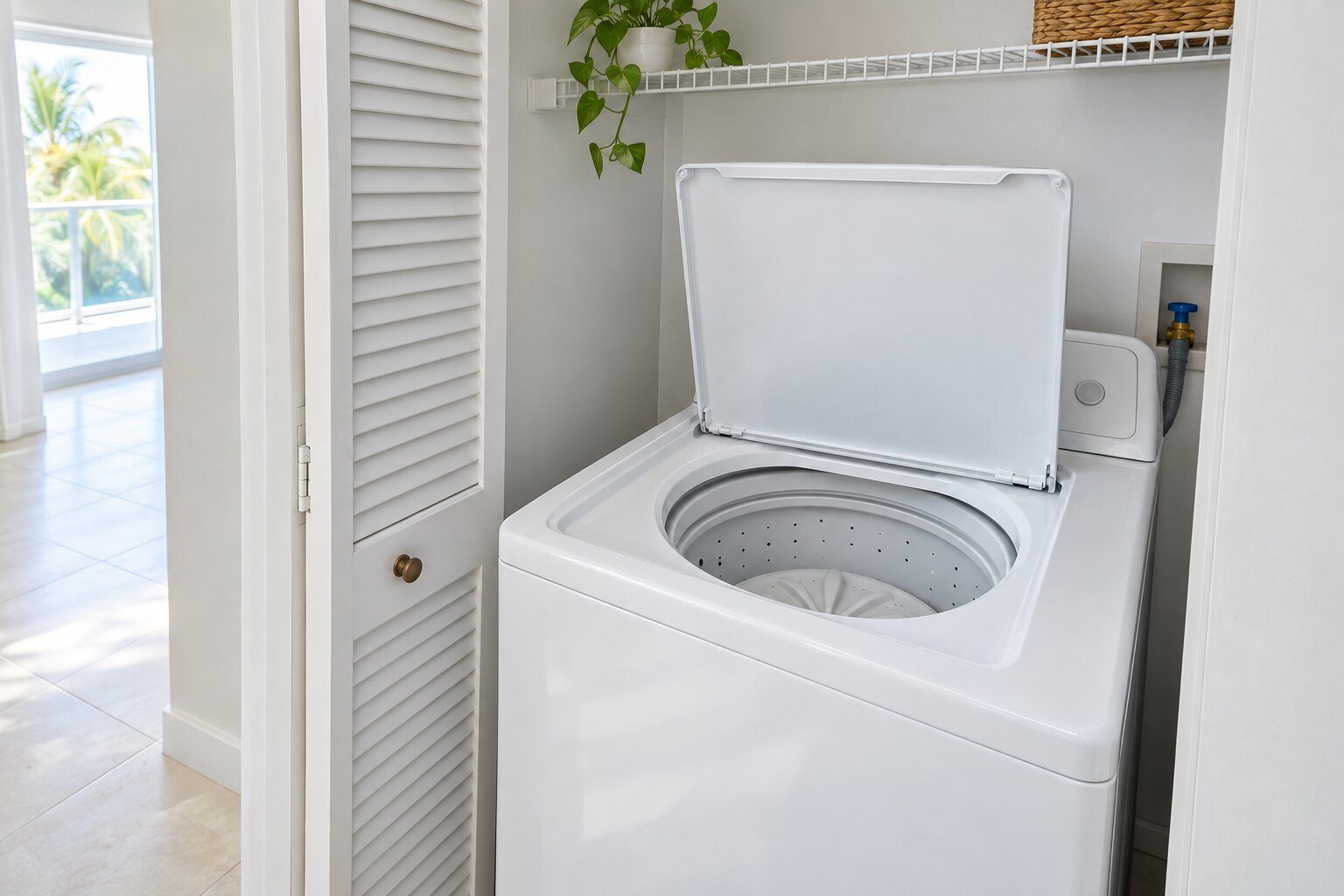
Error Code E5 means the unit is not level.
Diagnostic
From $89, credited to the repair
On the same appliance
What else belongs to the washers
On this make a code belongs to the appliance rather than to a product line. These are the other conditions this machine can display, and the models that can show this one — a display often has more than one thing to say, and the model number decides what any of it costs to put right.
Other codes this appliance can display
Error Code F2 indicates there is too much soap or wrong type of soap. Often, suds leak out or overflow.
Error Code E1 means water is not entering washer or slow water fill time.
Error Code E2 means water takes too long to drain or is not draining properly.
Error Code E3 means wash lid is either open or the lid lock failed.
Error Code E4 means the unit is out of balance during spin operation.
Error Code CL means the unit lid is open for more than 20 seconds with control lock activated.
The same digits mean different things on different equipment. Search the full code list
In more detail
About Washer error code E5
What E5 means on this make
A separate code from the out-of-balance one, and the difference matters: E4 is about the load, E5 is about the machine. A washer leaning back — which is how they end up when pushed into a closet against a baseboard — puts its drum off the axis its suspension was designed around, and every spin after that is harder on the bearing than it needs to be. This is the cheapest code on the list to answer, and ignoring it is what turns into the bearing job we sometimes advise against.
Where this appears, and why not to clear it
On the appliance's own display, as a short single code — a letter and a number, or two letters. Nothing alternates and nothing arrives in halves on this make, so what the panel shows is the whole of it. Photograph it before you cut the power. This maker's own answer to most of these is thirty seconds at the breaker, and that is worth following once — but a display that has been cleared has taken the evidence with it, and there is no way to ask the machine for it again.
Which machines this one applies to
Top-load washers. The same number on a different appliance of this make is a different page and often a different repair, which is why this archive is organized by appliance rather than by number. This maker documents codes on four kinds of machine — the top-load washer, the dishwasher, the electric range and cooktop, and the refrigerator — and publishes none at all for its dryers, its freezers, its wine cabinets or its ice machines. Those appliances have symptom pages here and no code pages, which is the honest answer rather than borrowing a table from the machine next door.
What to do about it
- Put a level on the top of the machine, front to back and side to side.
- Adjust the leveling legs until the cabinet does not rock at any corner, then check it again with the drum loaded.
- Make sure the machine is not leaning back against a wall or a baseboard — that is the usual cause in a laundry closet.
- Run a spin with a normal load and watch it. A machine that stays put is done; one that still moves has a suspension problem behind the level.
Where this goes next
The job this usually becomes is diagnostic visit, and that page carries a starting figure and the reasons that move it. If it turns out to be nothing — and on this make a real share of these are modes, reminders and settings rather than problems — the visit ends there and you pay the diagnostic and nothing else, or call (305) 615-5496 and describe what the panel is doing before booking anything.
This article is based on:
- Official manufacturer documentation
- Internal repair procedures
- Technician repair history
- Company quality standards