Appliance
Frigidaire ice makers
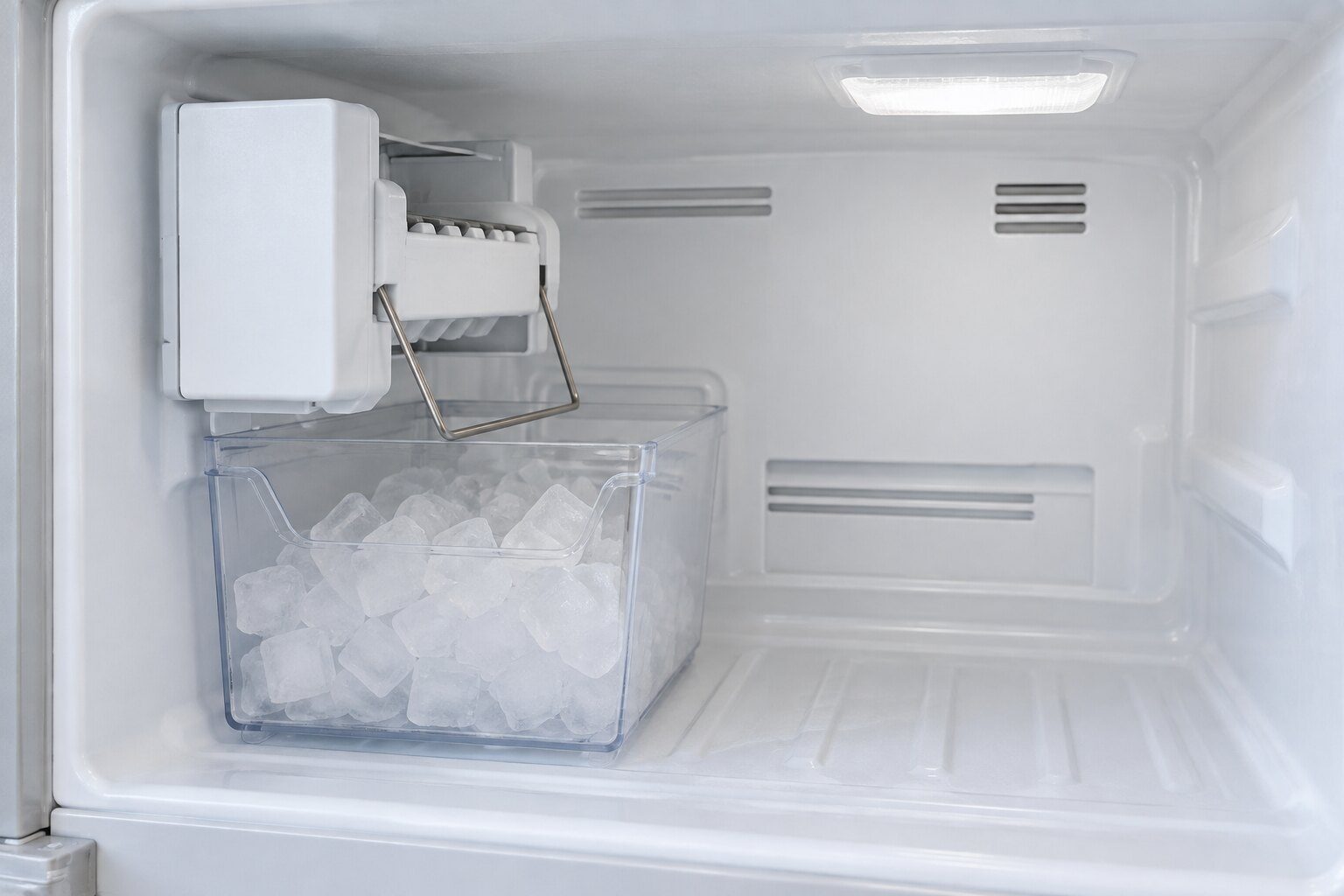
This page is about the ice maker inside the refrigerator, because that is where Frigidaire puts them. The catalog has no undercounter ice cabinet at all — the standalone machines are three countertop appliances, and they have their own page. What we are called out for here is the module in a French door or side-by-side cabinet: no ice, hollow or half-formed cubes, a bin that has frozen into one block, or a dispenser that grinds and delivers nothing. The water side of that circuit — filter, valve, line — causes more of it than the module itself.
- 2 symptoms we are called out to
- From $89 diagnostic, credited to the repair
- 59 cities and neighborhoods covered
- OEM parts available on order
The short version
What this equipment is, for a repair
Configurations
In the refrigerator · in the freezer door
Access
Planned before the visit, not discovered on arrival
Parts
OEM, available on order
Diagnostic
From $89, credited to the repair
What goes wrong with it
Symptoms we are called out to on Frigidaire ice makers
Each one covers the likely causes in the order they are worth checking, and what to do in five minutes before booking anything.
-
The bin is empty and nothing is arriving Ice maker not making ice
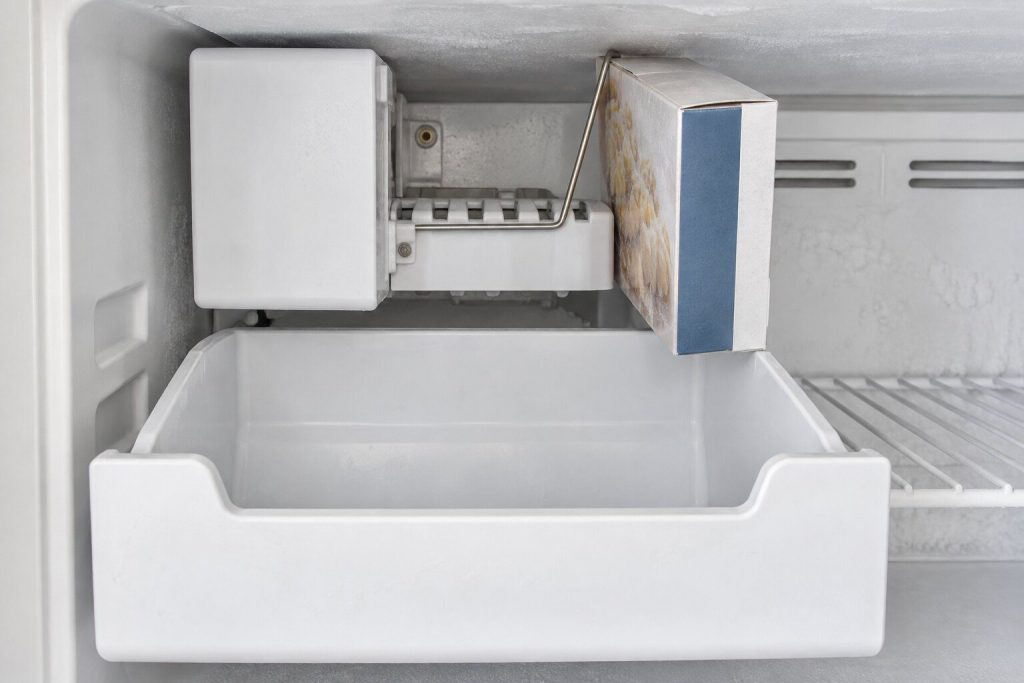
One question sorts most of these before anybody is booked: does the water dispenser still work? Water at the dispenser but no ice separates the ice half of the circuit from the supply in a sentence, and neither water nor ice sends the whole diagnosis back to the filter and the shut-off. Half of these calls end on the water side rather than at the ice maker itself.
- Water at the dispenser but no ice narrows this to the ice half of the circuit
- No water either sends us to the filter, the line and the shut-off
- The fill tube freezing closed is commoner than the module failing
-
The cubes are arriving but they are not right Small, hollow or cloudy ice
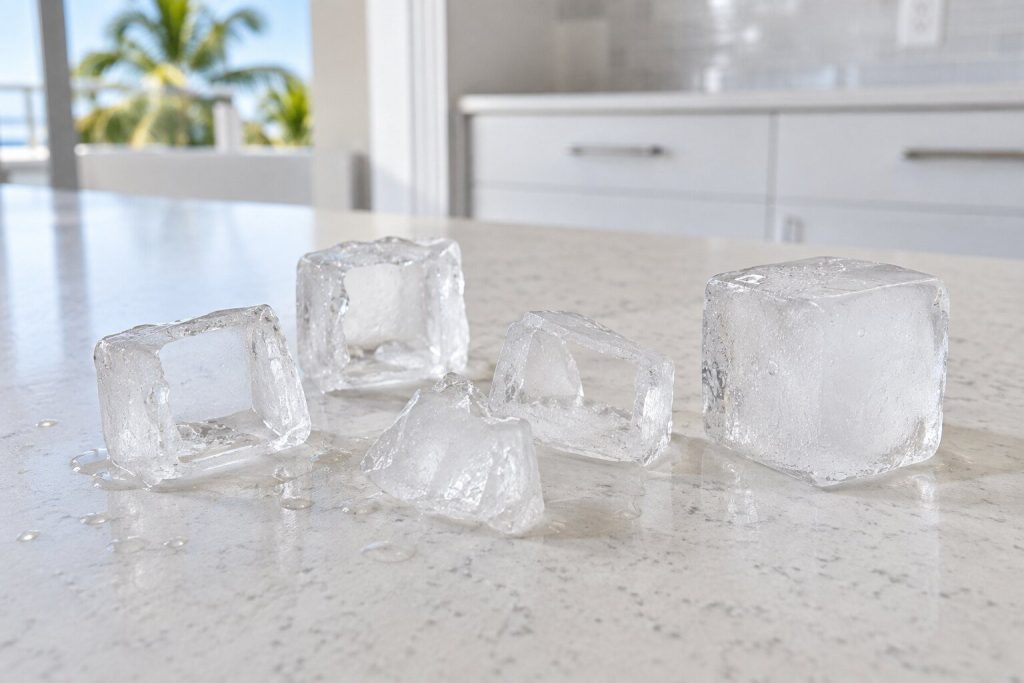
This is a flow complaint rather than a freezing one, and it is almost always upstream of the ice maker. The mold fills for a fixed time, so if less water arrives in that time you get a smaller cube, a hollow one, or a shell that collapses in the glass. The filter is the first suspect, the supply is the second, and the third is a freezer that is not quite cold enough.
- The mold fills for a fixed time — less water in means a smaller cube out
- A filter past its date changes cube size before it changes anything else
- Cloudy ice is usually air and minerals in the water, not a failure at all
What we do on it
Repairs we carry out on Frigidaire ice makers
Starting figures for this equipment in South Florida. The exact cost is confirmed after an on-site diagnostic — and this is not the whole list of what can go wrong, so call if your problem is not here.
-
from $89 Diagnostic visit
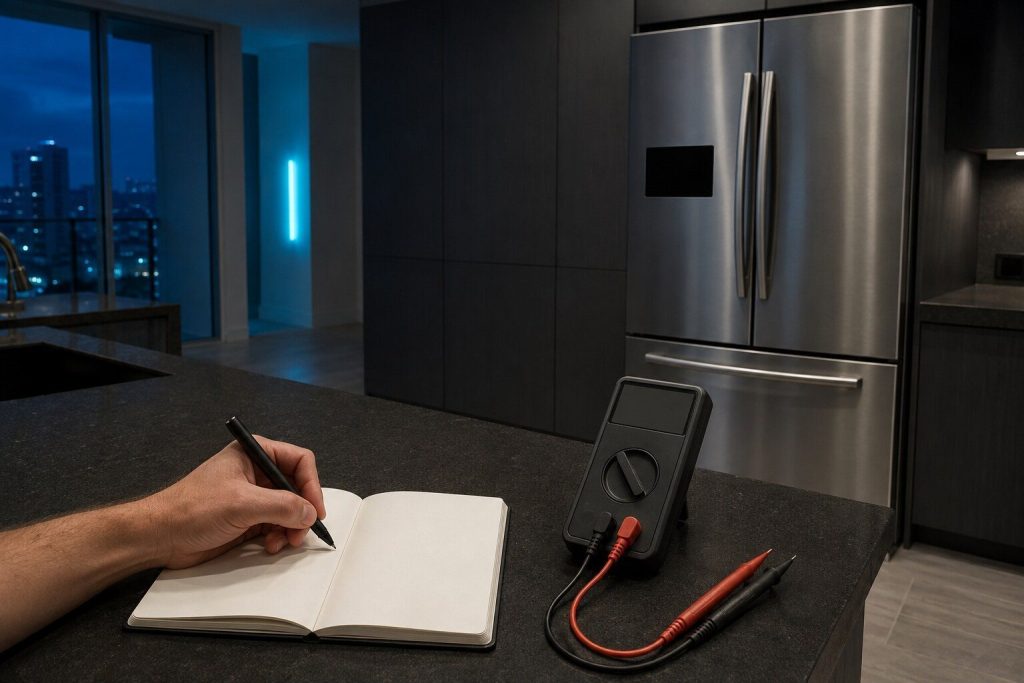
We find out what is wrong before anybody quotes a part. On this make the first thing established is age, because the badge sells the appliance that came with the apartment and we open machines at every stage of life — a two-year-old range and a fifteen-year-old washer in the same building. The fee comes off the bill when you go ahead with the work, and where the answer is that the repair is not worth doing, you get that answer plainly and it is still the same fee.
- Age and model first: this badge is repaired at every stage of life
- The number before the work, in writing, and it is credited toward the repair
- Where the machine is not worth fixing we say so instead of selling a part
-
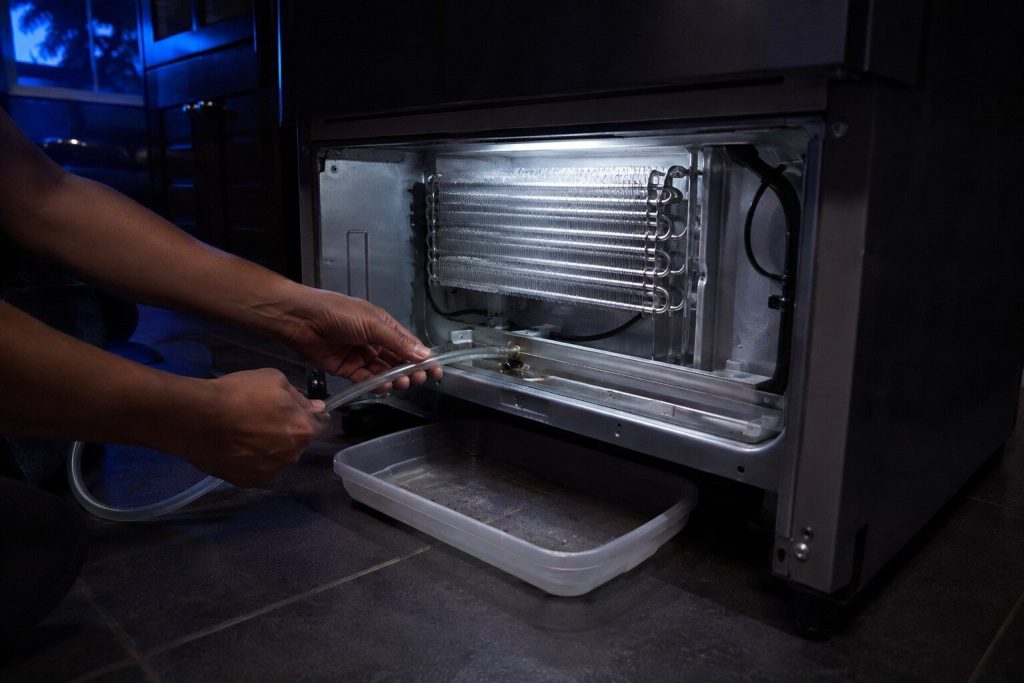
from $129 Refrigerator leak repair
Water under the crisper, water on the floor, or ice building in the bottom of the freezer. This is the most common refrigerator call we take in South Florida, and it has three usual causes that are told apart by where the water is: a blocked defrost drain, a water supply connection, or a door that is not sealing and letting the room condense inside the cabinet.
- Where the water is decides which of three causes it is
- A blocked defrost drain is the commonest by a distance in this climate
- Water at the back of the cabinet is a supply problem, not a defrost one
-
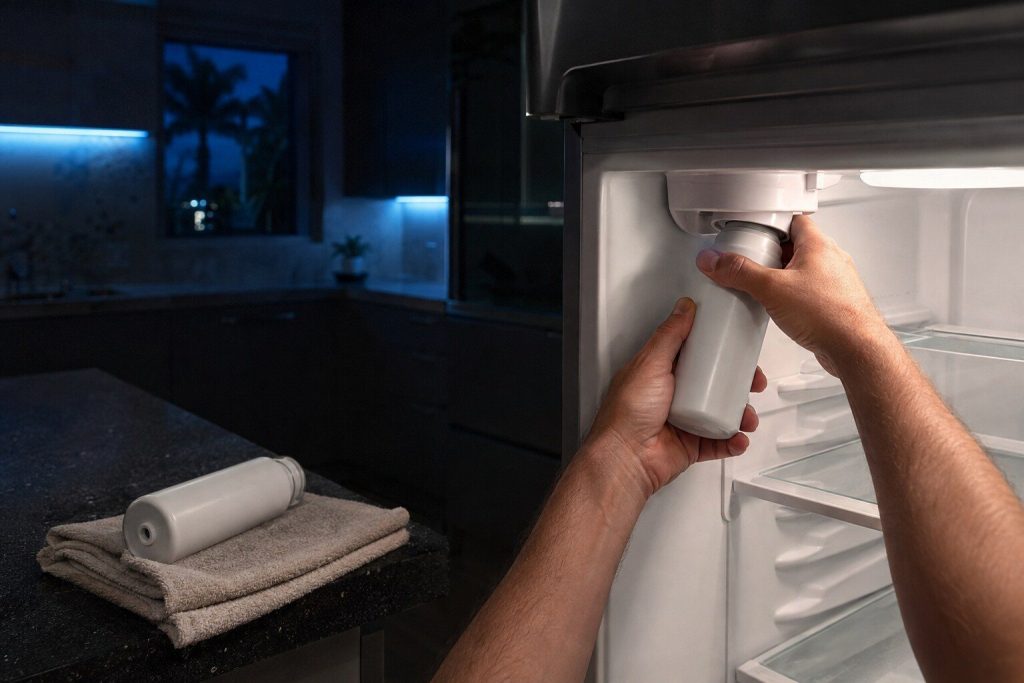
from $105 Water dispenser and filter service
Slow water, no water, a filter that will not seat or a dispenser that has started to taste of something. The circuit is short — supply, shut-off, filter, valve, tank, line, dispenser — and the answer is usually in the first half of it. On a French door or side-by-side cabinet this is also the circuit behind most 'no ice' calls, so the two get looked at together.
- One short circuit behind both the water and most of the ice complaints
- A filter past its date changes flow, taste and cube size at once
- A frozen tank in the fresh-food compartment is a temperature problem, not a plumbing one
-
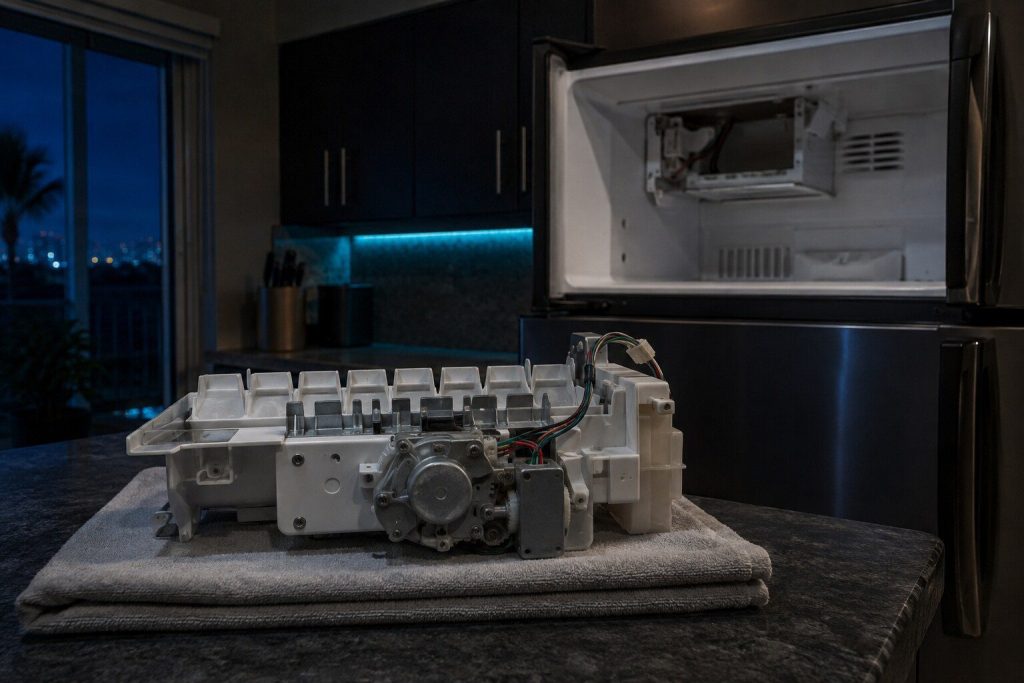
from $139 Ice maker repair
The module inside the refrigerator: no ice, hollow cubes, a bin frozen into one block, or a dispenser that grinds and delivers nothing. Half of these calls end on the water side rather than in the ice maker itself, which is why the first questions are about the filter and the dispenser rather than about the module.
- Half of these end at the filter, the valve or the fill tube
- Hollow or small cubes are a flow story, not a freezing one
- A bin frozen solid points at compartment temperature or a door seal
-
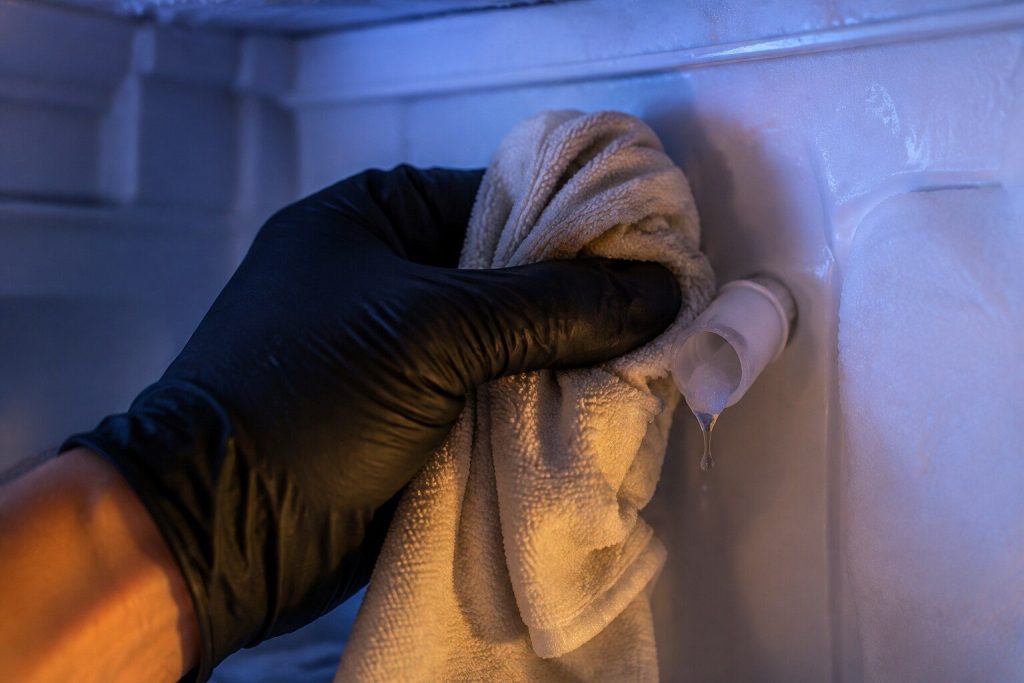
from $119 Ice maker water line and fill valve service
The supply half of the ice circuit, and the half that fails most: the shut-off at the wall, the line behind the cabinet, the filter and the inlet valve with its two solenoids. It is also the half that causes water damage, so a line that is old, kinked or made of the wrong material gets said out loud whether or not it is today's problem.
- The shut-off, the line, the filter and the valve — in that order
- A weeping valve behind a cabinet is a slow leak nobody sees for months
- Old plastic supply lines get flagged whether or not they are today's problem
-
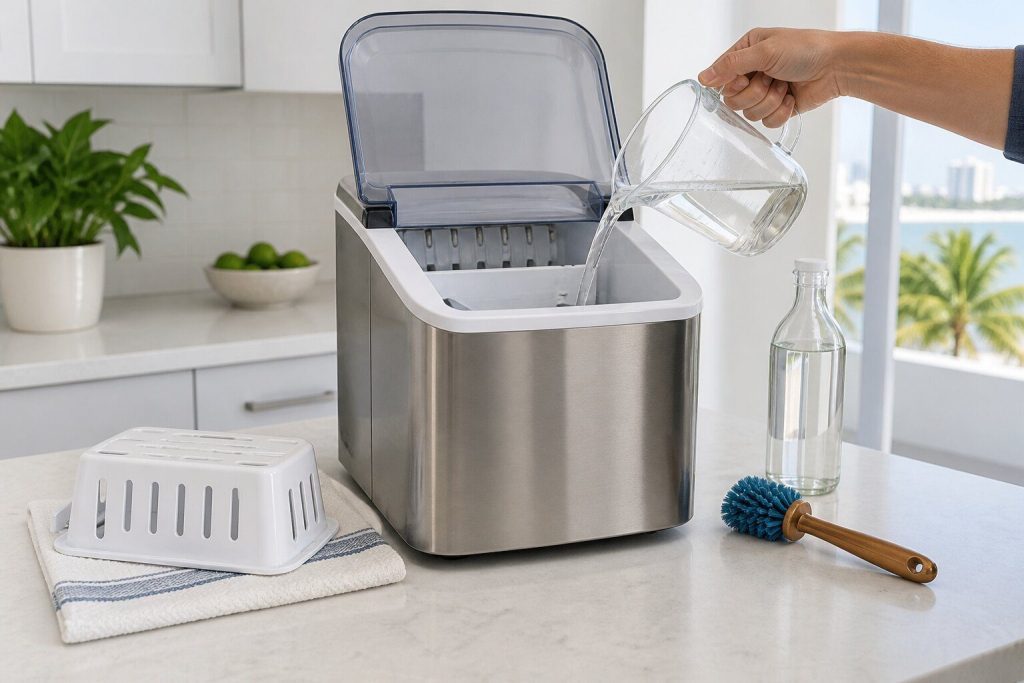
from $89 Ice machine descaling
Soft, cloudy or slow ice on a countertop machine, or a cycle that has become long and noisy. Scale is the ordinary enemy of these appliances here, and the routine is the maker's own: a descaling solution through the water path, a rinse cycle, and the reservoir and pump cleaned by hand. It is maintenance rather than repair, and doing it twice a year is the difference between a machine that lasts and one that does not.
- The commonest cause of slow, soft or cloudy ice on a countertop machine
- The maker's own routine, not a household improvisation
- Twice a year in this water is the honest interval
In more detail
About Frigidaire ice makers
Why this page is not about a machine
Some makes in this fleet sell an ice machine as an appliance in its own right — an undercounter cabinet with its own condenser and drain. Frigidaire does not. Its ice comes from a module inside a refrigerator, and its standalone products are three countertop makers that sit on a worktop and are filled by hand. Writing this page as though there were a built-in cabinet under this badge would be describing somebody else's product, so it describes what is actually in your kitchen.
The circuit, end to end
Ice is a chain: supply line, shut-off, filter, inlet valve, fill tube, mold, heater, ejector, bin, and on a dispensing door a flap and an auger as well. A problem anywhere in it presents as 'no ice', which is why the first questions are about water at the dispenser, the age of the filter and whether anything changed in the house plumbing. Half of these calls end at the filter or the valve.
This article is based on:
- Official manufacturer documentation
- Internal repair procedures
- Technician repair history
- Company quality standards
Before you book
Questions about Frigidaire ice makers
No ice at all, and the water dispenser still works.
That pair is useful. Water reaching the dispenser but not the module points at the fill valve's ice side, the fill tube — which freezes closed more often than people expect — or the module itself rather than the supply. If neither water nor ice arrives, we start at the filter and the line instead, and that is a different set of parts on the van.
The cubes are small, hollow or cloudy.
Usually flow rather than freezing. A restricted filter, a partly closed supply valve or a kinked line lets the mold fill only part way, and the cube that comes out is the shape of the water it got. It is worth changing the filter before booking; if that fixes it, you have saved a visit, and if it does not, you have ruled out the cheapest cause.
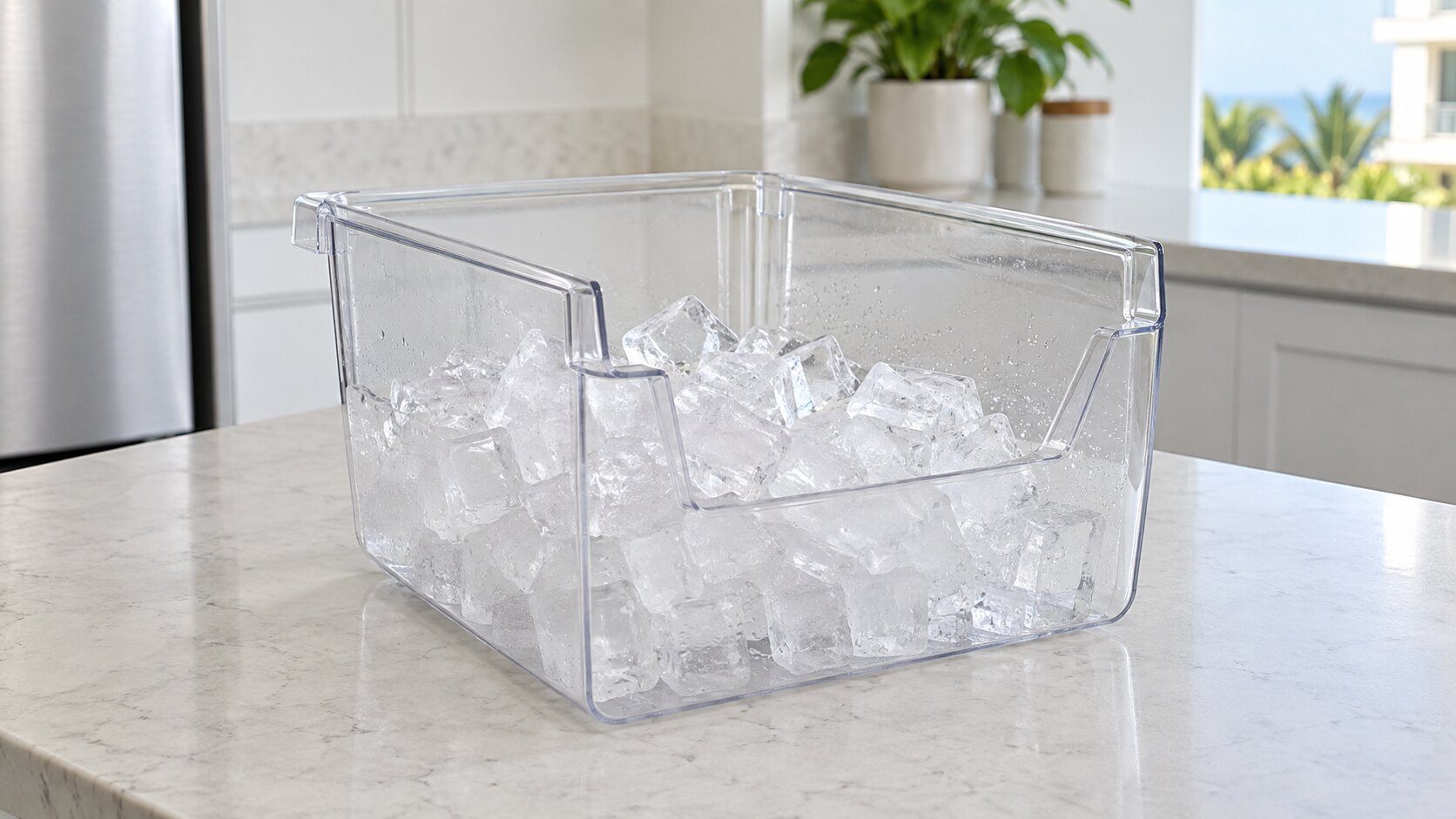
The whole bin has frozen into one lump.
That is a sign the ice is melting slightly and refreezing, which points at the compartment temperature, the door seal or a dispenser flap that is not closing. Clearing the lump gets you ice tomorrow; finding out why it happened is what stops it coming back, and it is usually one of those three.
Where we do it
Across Miami-Dade, Broward, and Palm Beach
Same terms everywhere we go: an on-site diagnostic first, the price agreed in writing, and the exact figure confirmed once we have seen the unit.
Neighborhoods people ask for by name