Appliance
Frigidaire wine and beverage coolers
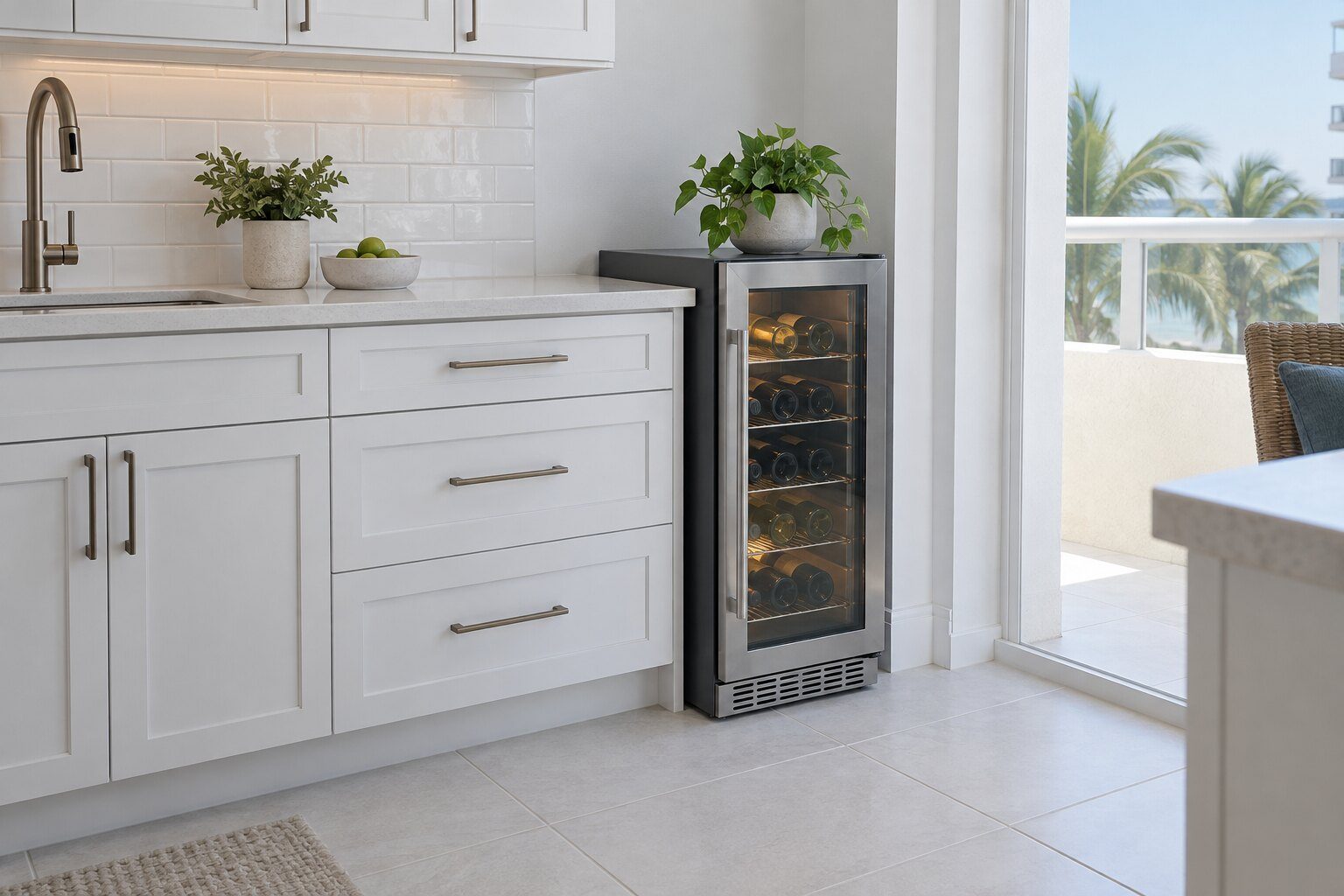
Seven cabinets, and they are beverage centers and wine storage rather than the multi-zone cellars the luxury makes in this fleet sell. They go under a counter or into a bar run, they are usually glass-doored, and in South Florida they spend the year fighting the room: warm ambient, a glass door that gains heat, and a compressor sized for a small cabinet. The complaints follow from that — not holding temperature in the afternoon, condensation on the inside of the glass, a fan that has become loud.
- 1 symptoms we are called out to
- From $89 diagnostic, credited to the repair
- 59 cities and neighborhoods covered
- OEM parts available on order
The short version
What this equipment is, for a repair
Configurations
Beverage centers · wine storage
Access
Planned before the visit, not discovered on arrival
Parts
OEM, available on order
Diagnostic
From $89, credited to the repair
What goes wrong with it
Symptoms we are called out to on Frigidaire wine and beverage coolers
Each one covers the likely causes in the order they are worth checking, and what to do in five minutes before booking anything.
-
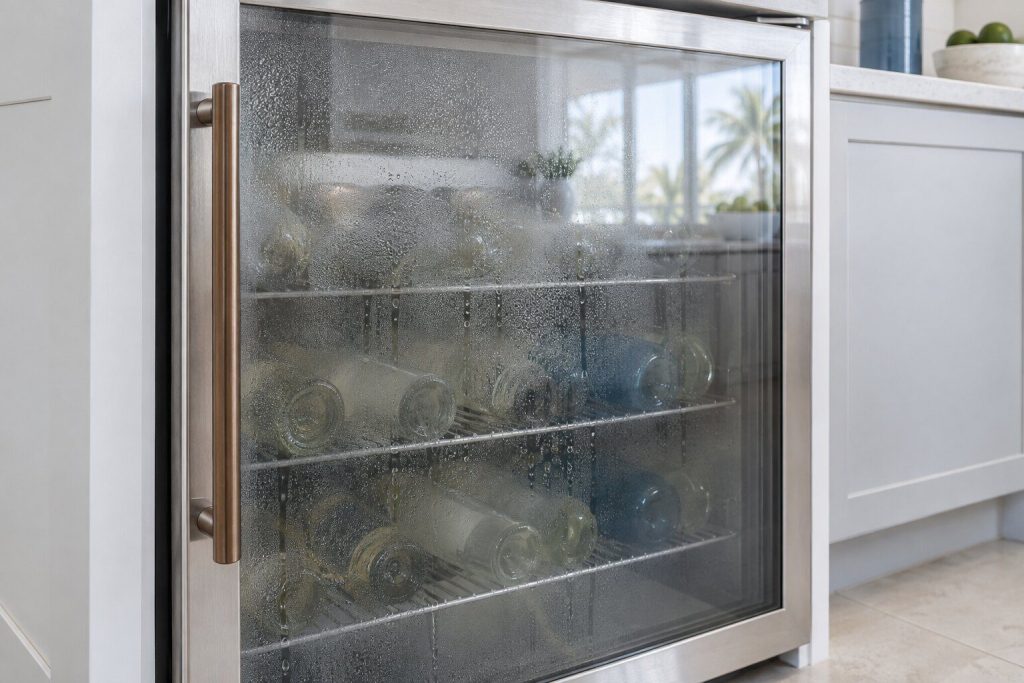
It is a few degrees warm, usually in the afternoon Wine cooler not holding temperature
Almost every one of these calls is thermal rather than mechanical. These are single-zone cabinets with a glass door and a small compressor, and in a South Florida kitchen at 80°F they are fighting the room all day. Before a part is quoted we want to know two things: what it holds overnight, and whether the cabinet has anywhere to send its heat.
- Holding overnight but drifting in the afternoon is the room, not the machine
- A cabinet built flush into a run with no grille is recirculating its own heat
- Glass doors gain heat, and a full rack can hold one open by a fraction
What we do on it
Repairs we carry out on Frigidaire wine and beverage coolers
Starting figures for this equipment in South Florida. The exact cost is confirmed after an on-site diagnostic — and this is not the whole list of what can go wrong, so call if your problem is not here.
-
from $89 Diagnostic visit
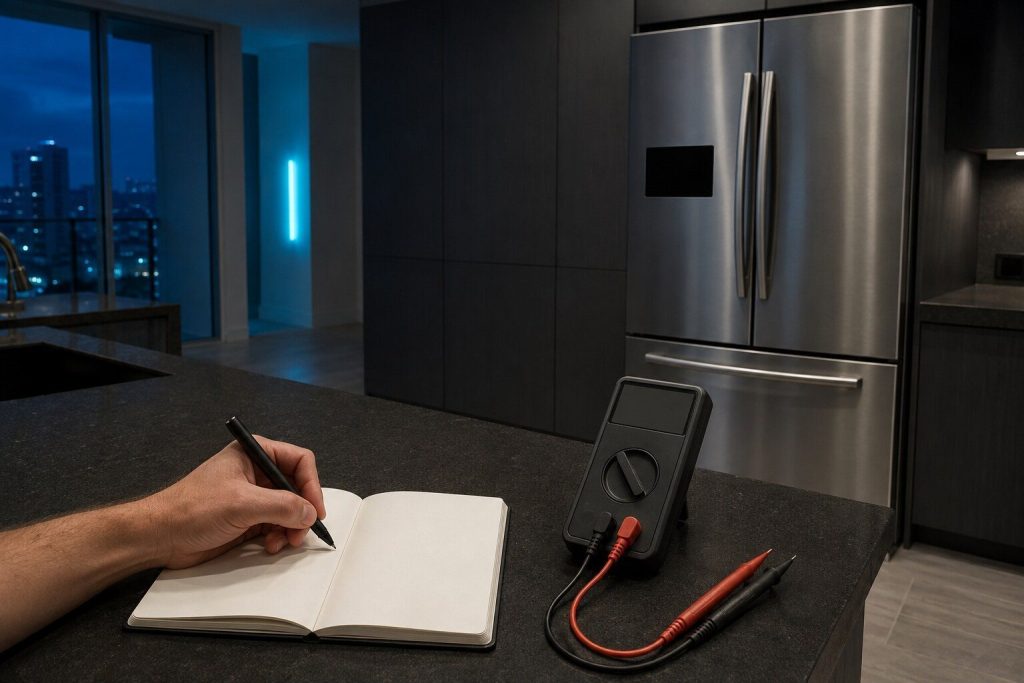
We find out what is wrong before anybody quotes a part. On this make the first thing established is age, because the badge sells the appliance that came with the apartment and we open machines at every stage of life — a two-year-old range and a fifteen-year-old washer in the same building. The fee comes off the bill when you go ahead with the work, and where the answer is that the repair is not worth doing, you get that answer plainly and it is still the same fee.
- Age and model first: this badge is repaired at every stage of life
- The number before the work, in writing, and it is credited toward the repair
- Where the machine is not worth fixing we say so instead of selling a part
-
from $139 Appliance installation
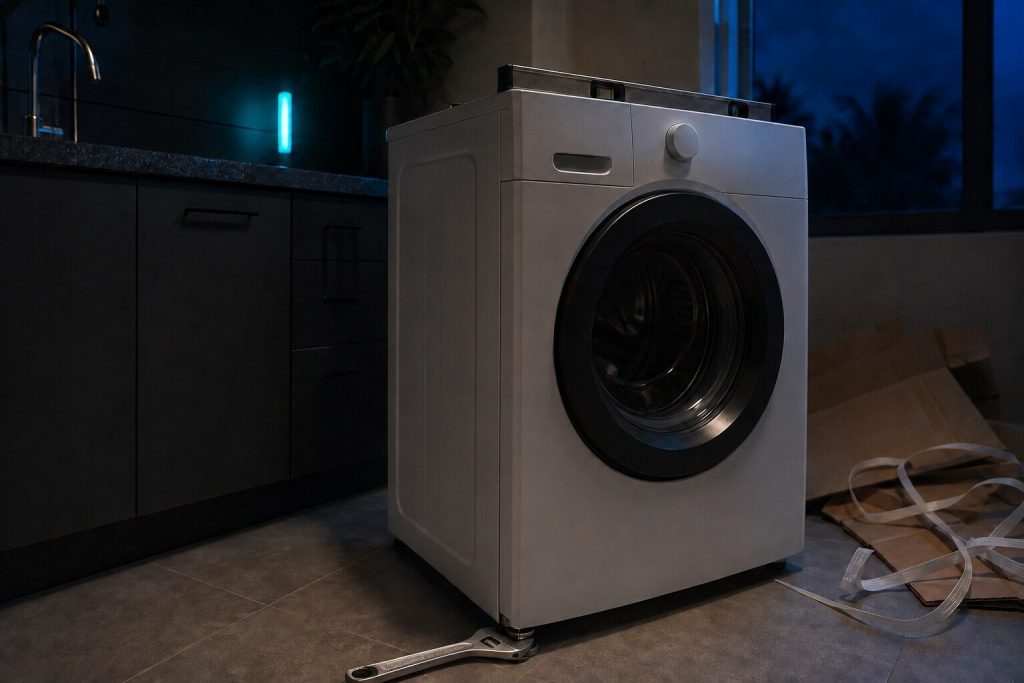
Fitting a new machine properly and leaving the old one gone: level, connected, tested and checked for the things that cause a call-out three weeks later. On this badge most of what we install is freestanding or slide-in, which is straightforward — and the two that are not, a wall oven in a column and a beverage cabinet built into a run, are exactly where a bad installation shows up later as a repair.
- Level, connected, tested — and the old machine taken away
- Water, gas and vent connections left right, not just left working
- Built-in cabinets get a clearance check, which is where later problems begin
-
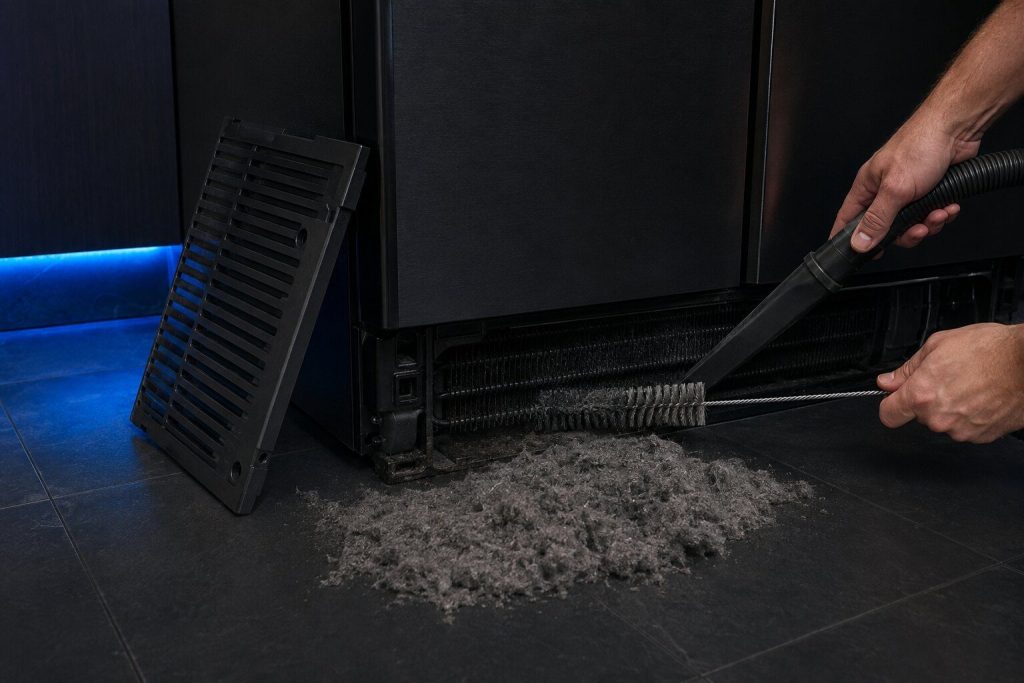
from $109 Condenser cleaning
The cheapest thing that can be done to a refrigerator in South Florida, and the one most often skipped. A condenser matted with dust and pet hair cannot reject heat, so the compressor runs longer, the cabinet drifts in the afternoon and the machine ages years in a summer. On a garage freezer or a beverage cabinet built into a cabinet run it matters more still, because the air around them is warmer to begin with.
- The most preventable refrigeration failure there is in this climate
- Long run times and afternoon drift are the symptoms it fixes
- Worth booking with other work rather than alone
-
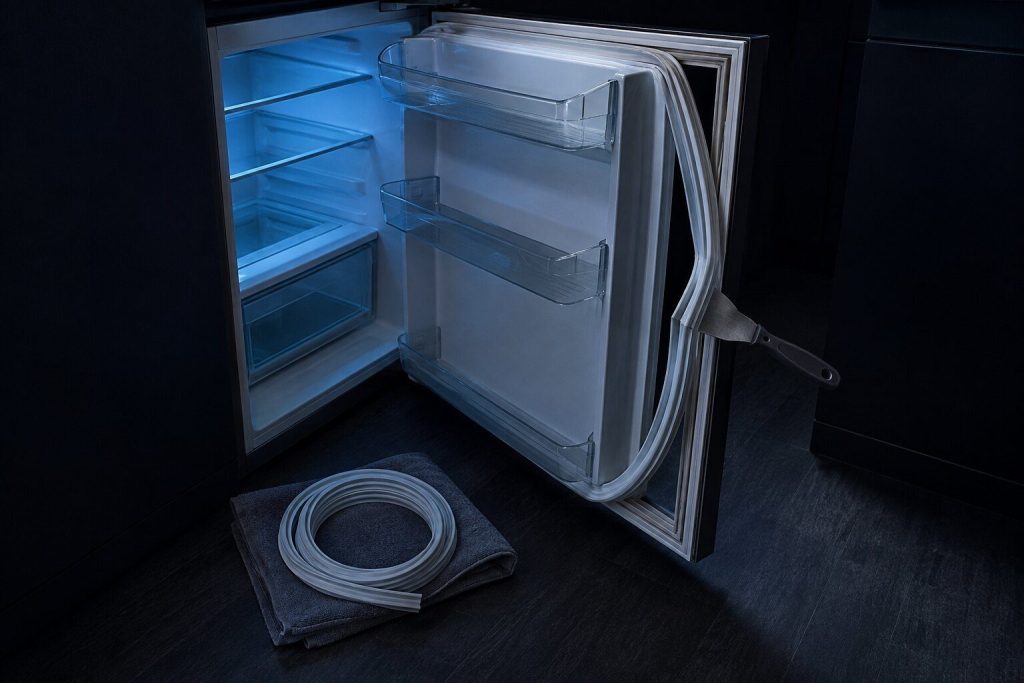
from $129 Door seal replacement
A gasket that has hardened, torn or stopped pulling the door shut lets warm wet air into the cabinet all day. In Miami that shows up as sweating along the door frame, ice building at one corner of the freezer, and a compressor that never rests — and the seal is one of the few parts on a refrigerator where age alone is a good enough reason to replace it.
- Sweating on the frame and ice in one corner are the usual signs
- Seals die faster here: they never fully dry between openings
- Cheap next to what a leaking door does to run time and food
-
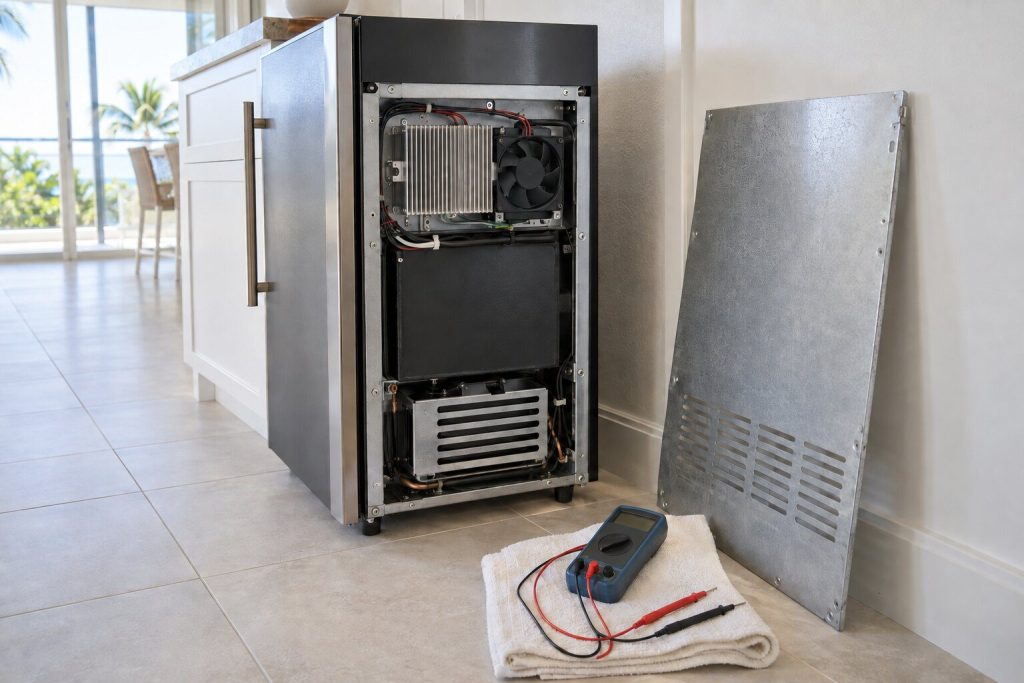
from $135 Wine and beverage cooler repair
Seven cabinets in this catalog, and they are single-zone beverage centers and wine storage rather than the dual-zone cellars the luxury makes sell. Most of what we attend on them is thermal rather than mechanical: a glass door in a warm kitchen, a cabinet built into a run with nowhere for its heat to go, a seal that has hardened. We check the installation before we quote a part, because on this appliance it is the answer often enough to matter.
- Single-zone beverage and wine cabinets, not multi-zone cellars
- Installation and clearance explain more of these calls than parts do
- Afternoon drift with a fine night-time temperature is a room story
-
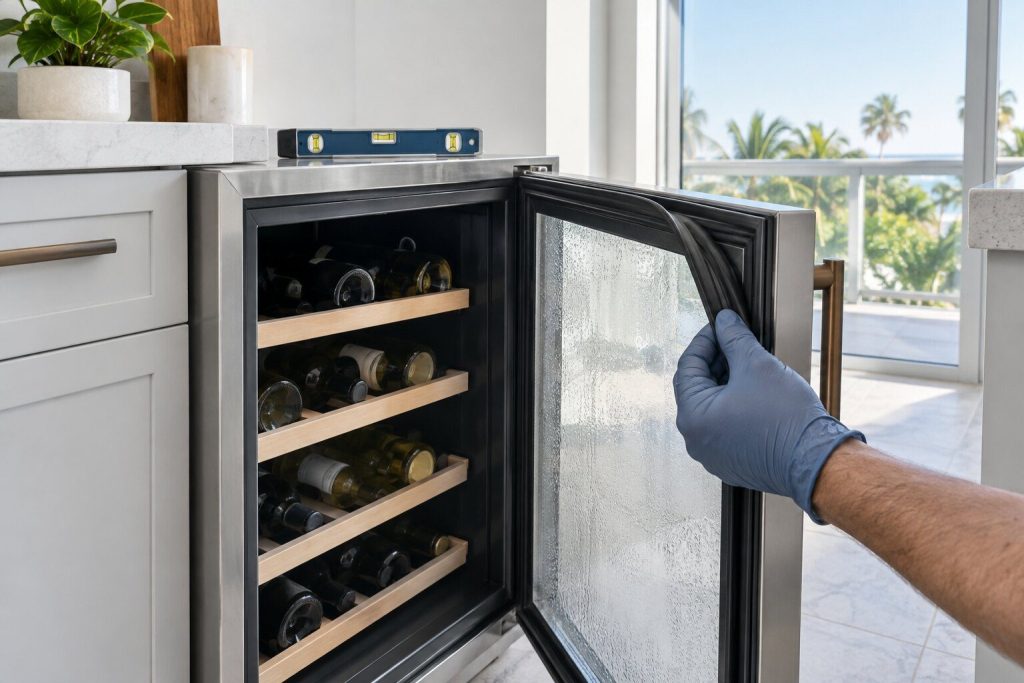
from $115 Wine cooler door and seal service
Condensation on the inside of the glass, a door that no longer pulls itself shut, or a cabinet that has started to run continuously since somebody loaded it fully. Glass doors, small hinges and a warm humid room are a combination that puts most of the wear on the door rather than on the machine behind it.
- Condensation, a sagging door and a seal that has hardened
- A full rack changes the geometry of a small door more than people expect
- Cheap to correct and expensive to ignore: the compressor pays for a leaking door
In more detail
About Frigidaire wine and beverage coolers
What kind of cabinet this actually is
It is worth being precise, because the words are used loosely in this trade. Frigidaire's seven cabinets are beverage centers and single-zone wine storage: one compartment, one temperature, a glass door and a small compressor. They are not the dual-zone cellars with vibration-damped shelving that the luxury makes on this fleet sell, and a repair written for one of those would be the wrong advice here.
Why installation matters more than on any other appliance in the kitchen
These cabinets are usually built in, and most of the temperature complaints we attend on them are about air. A unit fitted flush into a cabinet run with no clearance at the back and no grille at the front is recirculating its own heat, and no part replaced inside it will change that. We check the installation first because it is the answer often enough to be worth the two minutes.
This article is based on:
- Official manufacturer documentation
- Internal repair procedures
- Technician repair history
- Company quality standards
Before you book
Questions about Frigidaire wine and beverage coolers
It holds temperature at night and drifts during the day.
That is the room, not usually the cabinet. These are small compressors behind a glass door, and in an afternoon kitchen at 80°F the machine can be running continuously and still losing. Before replacing anything we check the seal, the ventilation around the cabinet and the condenser, because a unit built into a run with no air path will do exactly this while being mechanically fine.
There is condensation on the inside of the glass.
Humidity meeting cold glass, and in this climate a small amount of it is normal. Persistent condensation points at the door seal, a door left ajar by a full rack, or a cabinet set colder than it needs to be. It is worth checking those three before booking, and we will tell you which one it was if we come out.
Can these be repaired, or are they throwaway?
Repairable, and more often worth it than people assume. Fans, thermostats, control boards, door seals and hinges are all serviceable parts with a wide channel behind this badge. A sealed-system problem on a cabinet of this class is the one where we will usually advise against the repair, and we say so before the work rather than after.
Where we do it
Across Miami-Dade, Broward, and Palm Beach
Same terms everywhere we go: an on-site diagnostic first, the price agreed in writing, and the exact figure confirmed once we have seen the unit.
Neighborhoods people ask for by name