Cost Expectations
What a Broken Glass Cooktop Costs to Replace, and When It Is Not Worth It
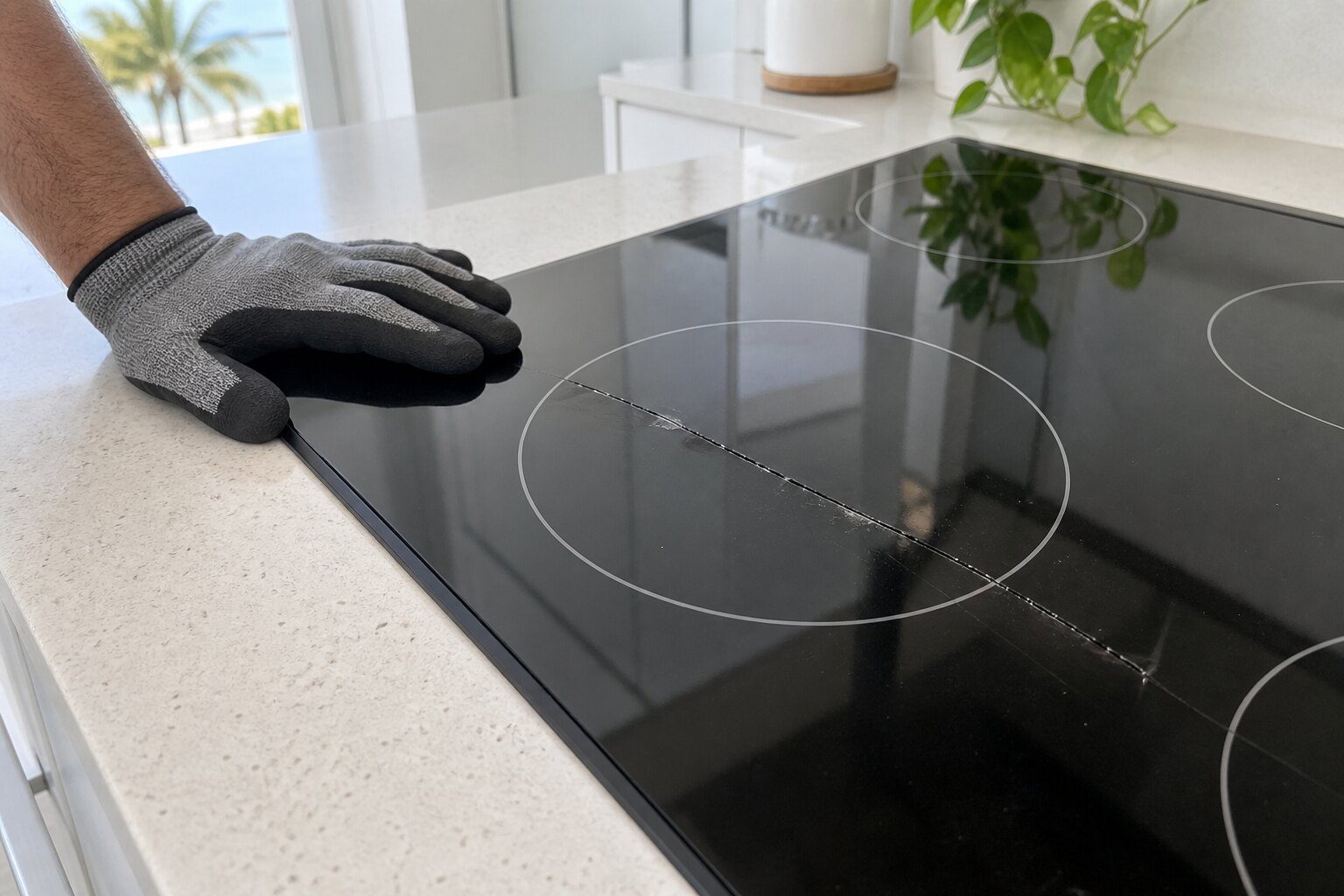
On this badge the job starts at $245 and the number that actually matters is which part the maker sells. On some models the ceramic panel is a separate part and the repair is glass plus labor. On others the glass arrives bonded to the frame with the elements and the wiring already attached, and the part alone can approach what a replacement cooktop costs — at which point we say so rather than quoting it. Before any of that, where the crack runs decides whether the appliance is out of service at all: a chip at the edge or a surface scratch is cosmetic, while a crack that crosses a heating zone or reaches the control area lets spills through onto live parts underneath and takes the top out of use. We establish which part your model takes at the diagnostic, and you get the arithmetic before anything is ordered.
The full guide
How much does it cost to replace a broken glass stove top is a question where the honest answer starts with a different one: *is it actually broken, or does it just look it?*
How much does it cost to replace a broken glass stove top? First, whether the top is out of service at all
Ceramic cooktops crack in ways that look identical from across the kitchen and mean completely different things.
Cosmetic. A chip at the edge, a shallow surface scratch, or a mark left by a pan dragged across it. Ugly, permanent, and no reason to stop using the appliance.
Out of service. A crack that crosses a heating zone, or that runs into the control area, or that reaches an edge. Those are not aesthetic. Underneath the glass are the heating elements and their wiring, and a crack is a path for a boil-over to reach them. Heat also opens a crack a little further on every cycle, so this is not a stable situation.
If yours is the second kind, switch the appliance off at the breaker rather than agreeing to be careful with it.
Then, which part your model actually takes
This is where the money is, and it varies by model rather than by badge.
Glass as a separate part. The ceramic panel is sold on its own. The repair is the panel plus the labor to lift the old one, transfer or refit the elements, and reseal. This is the version where a repair is clearly worth doing.
Glass bonded to the frame. On a good number of models the maker does not sell the panel by itself. What arrives is the glass already bonded into its frame with the heating elements and the wiring attached — effectively most of the cooktop. The part alone can approach what a whole replacement appliance costs.
We establish which of those your model number takes before quoting anything, because the difference between them is the difference between a sensible repair and a conversation about a new appliance.
The number
On this site the job starts from $245, and the diagnostic is from $89 and comes off the repair when you go ahead.
That starting figure covers the labor and the straightforward case. What moves it is the part, and the part is decided by the model rather than by anything we control.
Two other things move it. Whether the cooktop is a drop-in unit or the glass top of a freestanding range, because the access is different. And whether the crack has already let liquid through — in which case the elements and their terminals underneath need checking before a new top goes on, and occasionally one of them needs replacing too.
The arithmetic on a volume badge
This is where being honest costs us work, and it is still the right answer.
This is not a five-figure built-in with matched cabinetry around it. It is a volume-brand appliance that was inexpensive when it was new, and in a great many of the kitchens we work in nobody chose it.
So when the part comes bonded to the frame and the figure lands within a couple of hundred dollars of a new appliance, the repair usually does not make sense — and we would rather show you both numbers at the diagnostic than order a part and hand you an invoice you would not have agreed to.
Where it does make sense, and it often does: a separate glass panel on an otherwise sound appliance, or any cooktop that is built into a countertop where replacing the unit means dealing with the cutout as well.
What breaks these, since it is nearly always avoidable
Almost every cracked top we see came from one of three things.
A dropped pan, usually a cast-iron one, usually onto a cold top. A pot boiled dry and then moved onto a cold wet surface, which is thermal shock rather than impact. And a heavy item stored in a cupboard above, which fell.
Ceramic handles heat superbly and impact poorly, and the two failure modes look the same afterward.
And the one that is not a crack
Worth ruling out before any of the above: a cooktop that has stopped responding entirely, with no visible damage, is usually locked rather than broken. The control lock is a feature, it is engaged by holding a pad, and a sleeve wiping the surface is how it usually gets switched on.
That costs nothing to check and it is not a repair at all.
If it turns out to be a repair
What this leads to, and what it costs
Every job on this site is priced the same way: an on-site diagnostic first, the figure agreed in writing before anybody starts.
-
from $245 Cooktop glass replacement
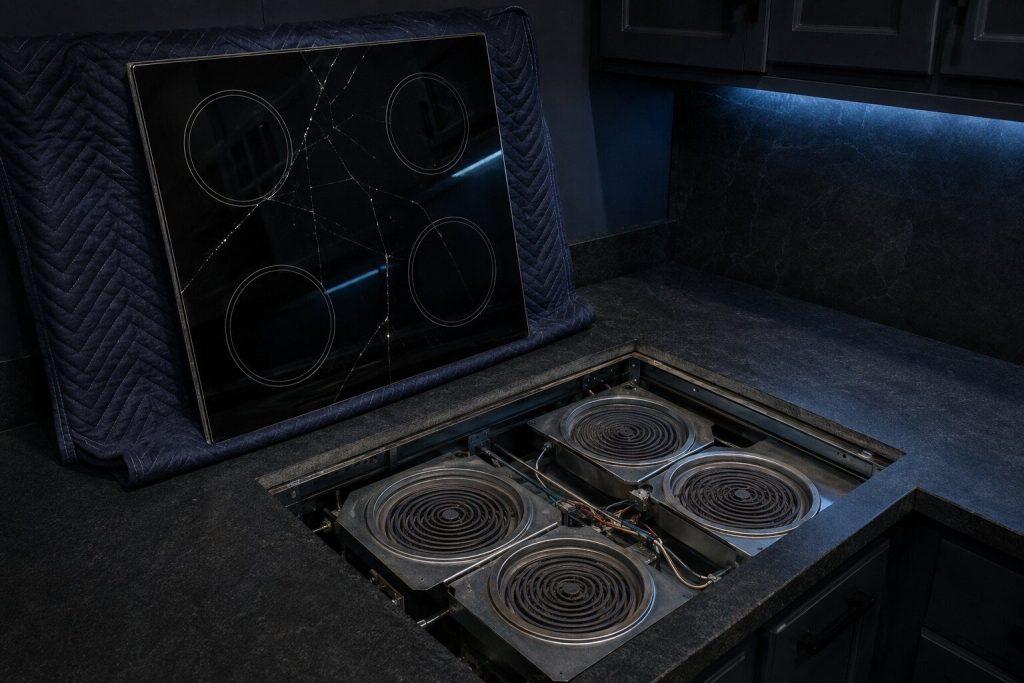
A cracked or shattered ceramic top, usually from a dropped pan. The glass is replaceable and the price is mostly the part — but a crack is not only cosmetic: it lets liquid reach the elements and the switchgear underneath, so the assessment is of the whole appliance rather than the panel. A cracked top over a live element is not something to keep using.
- Replaceable, and the price is mostly the glass
- A crack lets liquid into the elements below — the assessment covers the whole appliance
- Stop using it in the meantime: this one is a safety matter
-
from $165 Electric cooktop element repair
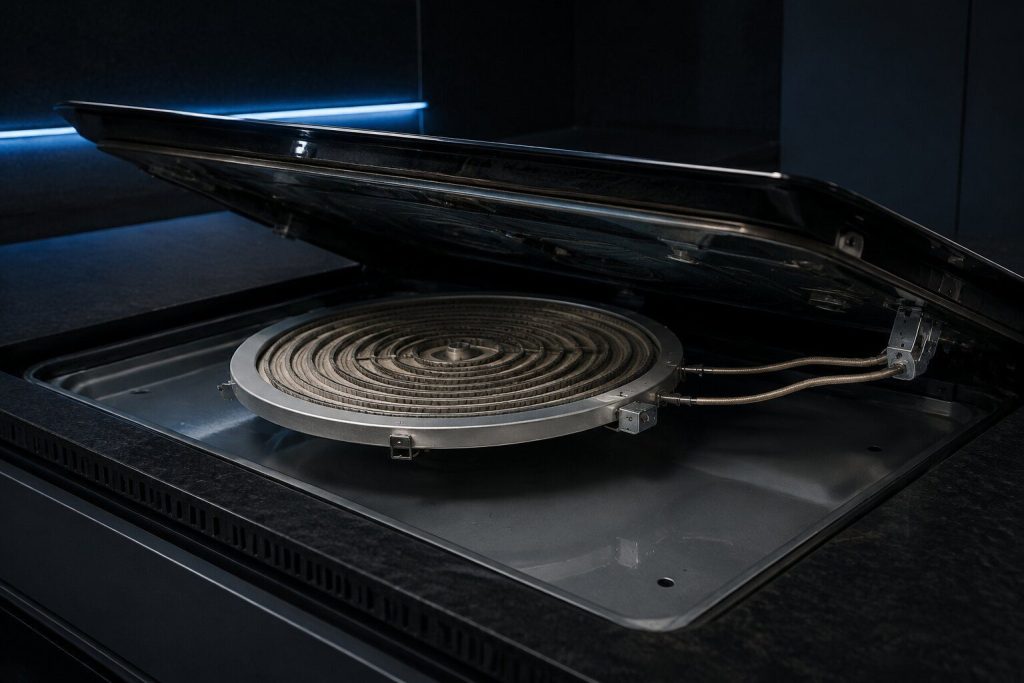
One zone dead, a zone stuck on full, or a radiant element that cycles far too quickly. On these cooktops the switch and the element fail about equally often, and there is a third candidate nobody thinks of: the receptacle a plug-in element sits in, which burns at the contacts and looks like a dead element from above.
- Element, switch or receptacle — the third one is the one that gets missed
- A zone stuck on full is a switch, and it gets attended to quickly
- Radiant elements are tested cold, not by watching them glow
Questions people ask about this
How much does it cost to replace a broken glass stove top compared with a new cooktop?
On models where the glass is a separate part, the repair is comfortably cheaper than replacing the appliance. Where it comes bonded to the frame with the elements attached, the two figures get close enough that we would rather show you both than take the work.
Can I keep cooking on it until the part arrives?
Not on a crack that crosses a zone or reaches an edge. Liquid getting through onto live parts is the risk, and heat opens the crack a little further every time that zone is used. A crack away from the zones on a top that is otherwise sound is a different judgment.
Cost Expectations
More guides like this one
-
What an Appliance Repair Service Call Costs in South Florida, and What It Buys
The fee, what is inside it, whether it is credited, and the three arrangements people confuse with each other before they agree to any of them.
Read more -
What Repairing a Frigidaire Ice Maker Costs, and the Cheaper Thing to Check First
Two different appliances share this question — the module inside a refrigerator and the countertop machine — and they cost different amounts to put right.
Read more -
What Replacing a Refrigerator Door Seal Costs, and When It Pays for Itself
From $129 on this badge — and one of the few repairs in this climate that earns its money back, because a leaking seal is what starts a frost problem.
Read more
Tell us the model number and what it is doing.
This article is based on:
- Official manufacturer documentation
- Internal repair procedures
- Technician repair history
- Company quality standards