Cost Expectations
What Replacing a Refrigerator Door Seal Costs, and When It Pays for Itself
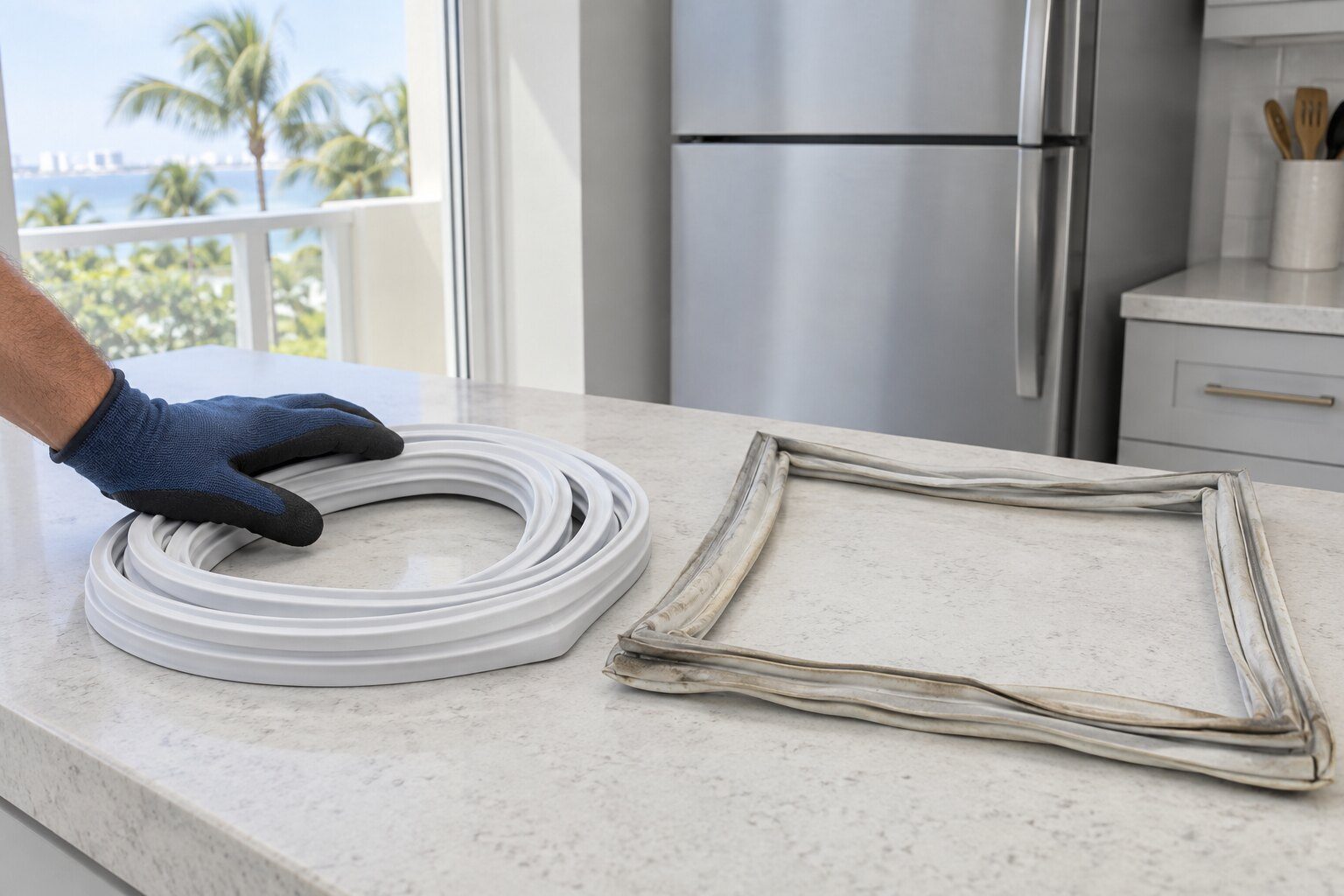
On this badge the job starts at $129, and the diagnostic is from $89 and comes off it when the work goes ahead. What moves the figure is the cabinet: a single gasket on a top-freezer door is quick, while a French-door cabinet has three or four separate seals and a side-by-side has two long ones, and a gasket that has to be ordered for an older model costs more than one held in stock. Before spending anything, it is worth knowing that a good share of doors that will not seal do not need a gasket at all — a cabinet that is out of level, or a door that has dropped on its hinge, produces exactly the same symptom and is a much cheaper fix. Where the rubber genuinely has hardened, this is one of very few repairs in this climate that pays for itself, because the frost problem a leaking seal causes is a considerably more expensive visit than the seal.
The full guide
How much does it cost to replace a refrigerator door seal has a straightforward answer, and a more interesting one about whether you need to.
How much does it cost to replace a refrigerator door seal? The figure
From $129 on this badge for the job, with the from $89 diagnostic credited toward it when the work goes ahead.
Three things move it.
How many seals the cabinet has. A top-freezer has two, one per door, and each is a single loop. A side-by-side has two long ones. A French-door cabinet has three or four, and the alignment between the two upper doors matters as much as the rubber does.
Whether the part is stocked. On this make the common gaskets usually are, which is why this repair is generally one visit. On an older model in an unusual color it may be an order.
Whether the door needs anything else. A gasket fitted to a door that has dropped on its hinge seals no better than the old one, so occasionally the hinge is part of the job.
First, whether you need one at all
A good share of the doors we are called to do not need a gasket. They need the two things that produce an identical symptom.
Level. These cabinets are designed to sit very slightly tipped back, and that tilt is what makes a door fall shut on its own. A floor sloping toward the room — common where tile has been laid over tile — cancels it, and the household ends up with a door that stays wherever it was left. Winding the front feet down a turn is free.
A dropped hinge. Stand square in front and look at the gap along the handle side. Even top to bottom means the door hangs correctly and the seal is the issue. Widening toward the bottom means the door has dropped, usually from weight on it while open.
Both cost far less than a gasket, and both are worth ruling out before anybody orders a part.
The test that decides it
The dollar-bill test takes a minute and it is the only honest way to judge a gasket, because a hardened seal looks perfect.
Close a bill in the door with half of it inside and pull it out. There should be noticeable drag. Repeat at ten points all the way round — including both hinge-side corners, which are the ones people skip and which fail first.
Anywhere the bill slides out freely, warm wet air is getting in at that point.
What fails is rarely a hole. It is a hardening: rubber ten years old has lost the grip in its magnet strip and the memory in the material, so it lies against the frame looking exactly right and seals against nothing at the corners.
Why it pays for itself here specifically
In a dry climate a leaking door seal is an efficiency problem. The cabinet runs longer, the bill goes up, and nothing else follows.
In South Florida the air coming in is warm and wet, and that changes the consequence entirely. Every hour of it deposits moisture on the coldest surface in the machine — the evaporator coil behind the rear wall of the freezer. Enough of that and the coil is buried in ice, the airflow stops, and what the household notices is a fresh-food section gone warm over a freezer that still looks fine.
That is a defrost repair, and it is a considerably more expensive visit than a strip of rubber. It also comes with a spoiled fridge full of food.
So on this coast a gasket is not a comfort repair. It is the cheap end of a chain, and dealing with it early is one of very few appliance repairs where the arithmetic is genuinely in the owner's favor.
The code that goes with it
If the cabinet has been showing H or HI — high temperature — a failing seal is one of the three causes this maker names for it, alongside a door left open and a setting somebody changed.
One thing worth doing before clearing that alert: the highest temperature the cabinet reached is displayed when the alarm is first acknowledged. Write it down. Clearing the alarm throws it away, and it is the single most useful number you can hand a technician.
Doing it yourself
On many models the gasket is a push-fit into a channel around the door, and it is genuinely within reach of a careful owner.
Two things catch people out. A new gasket arrives folded and has kinks set into it — an hour in a warm room, or a soak in warm water, relaxes it, and fitting it cold leaves gaps at the folds. And the gasket must be seated all the way into the channel at the corners, which is where the pressure is highest and where a partly-seated one shows up a week later.
If the door also needs aligning, do that first. A perfect gasket on a crooked door is a wasted part.
If it turns out to be a repair
What this leads to, and what it costs
Every job on this site is priced the same way: an on-site diagnostic first, the figure agreed in writing before anybody starts.
-
Door seal replacement
A gasket that has hardened, torn or stopped pulling the door shut lets warm wet air into the cabinet all day. In Miami that shows up as sweating along the door frame, ice building at one corner of the freezer, and a compressor that never rests — and the seal is one of the few parts on a refrigerator where age alone is a good enough reason to replace it.
- Sweating on the frame and ice in one corner are the usual signs
- Seals die faster here: they never fully dry between openings
- Cheap next to what a leaking door does to run time and food
-
Refrigerator error code H
Frigidaire refrigerator error code H: The cabinet has been warmer than it should be for long enough to say so out loud, and the maker's own list of causes is the honest one: a door left open, a setting somebody changed, a seal that no longer closes. Which machines can raise it, what the maker publishes about it, and what to do next.
What this one means
Questions people ask about this
How much does it cost to replace a refrigerator door seal on a French-door cabinet?
More than on a top-freezer, because there are three or four separate gaskets rather than one and the alignment between the two upper doors matters. We quote it after seeing which of them are actually leaking — it is often one, not all.
Can I fit a gasket myself?
On many models it is a push-fit into a channel and it is genuinely doable. What catches people is that a new gasket arrives folded and needs to be relaxed — warm water or a warm room for an hour — and that a gasket fitted with the door out of alignment seals no better than the old one did.
Cost Expectations
More guides like this one
-
What an Appliance Repair Service Call Costs in South Florida, and What It Buys
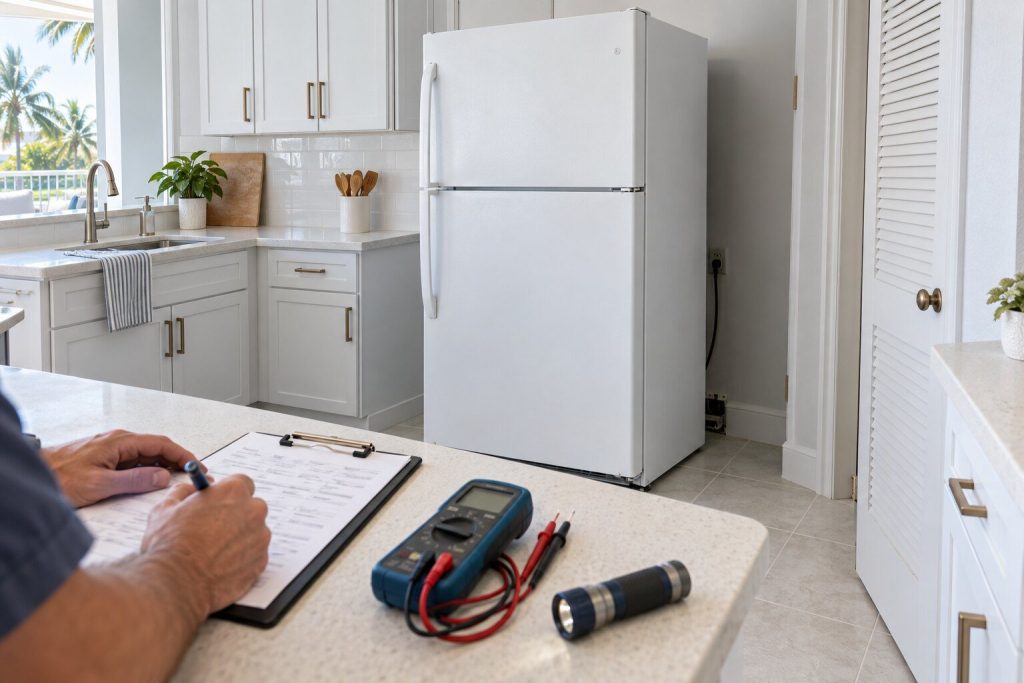
The fee, what is inside it, whether it is credited, and the three arrangements people confuse with each other before they agree to any of them.
Read more -
What Repairing a Frigidaire Ice Maker Costs, and the Cheaper Thing to Check First
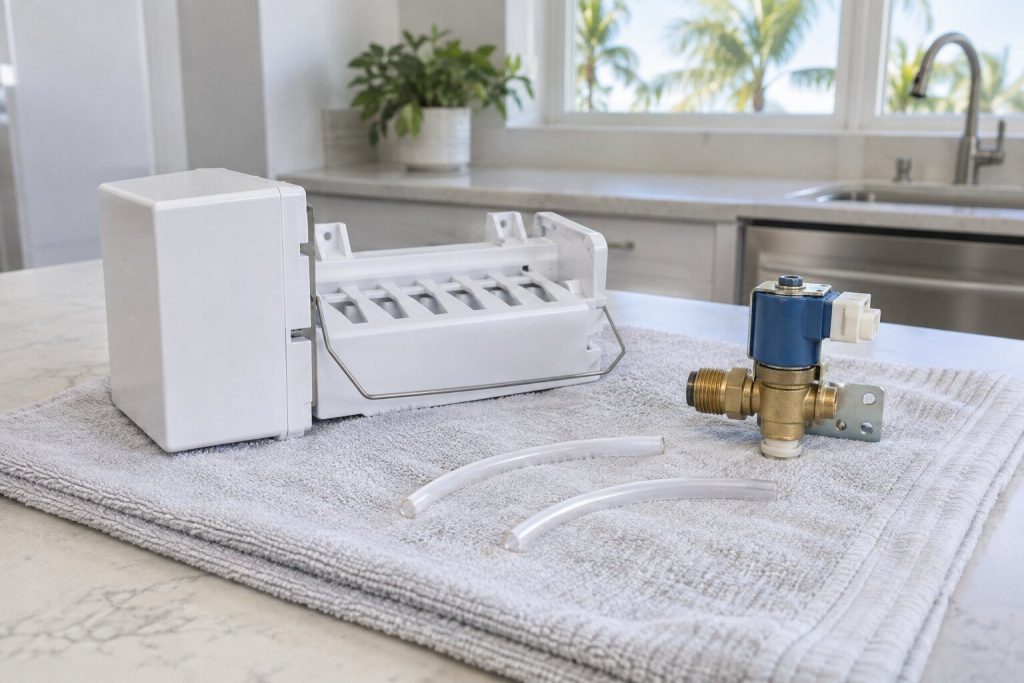
Two different appliances share this question — the module inside a refrigerator and the countertop machine — and they cost different amounts to put right.
Read more -
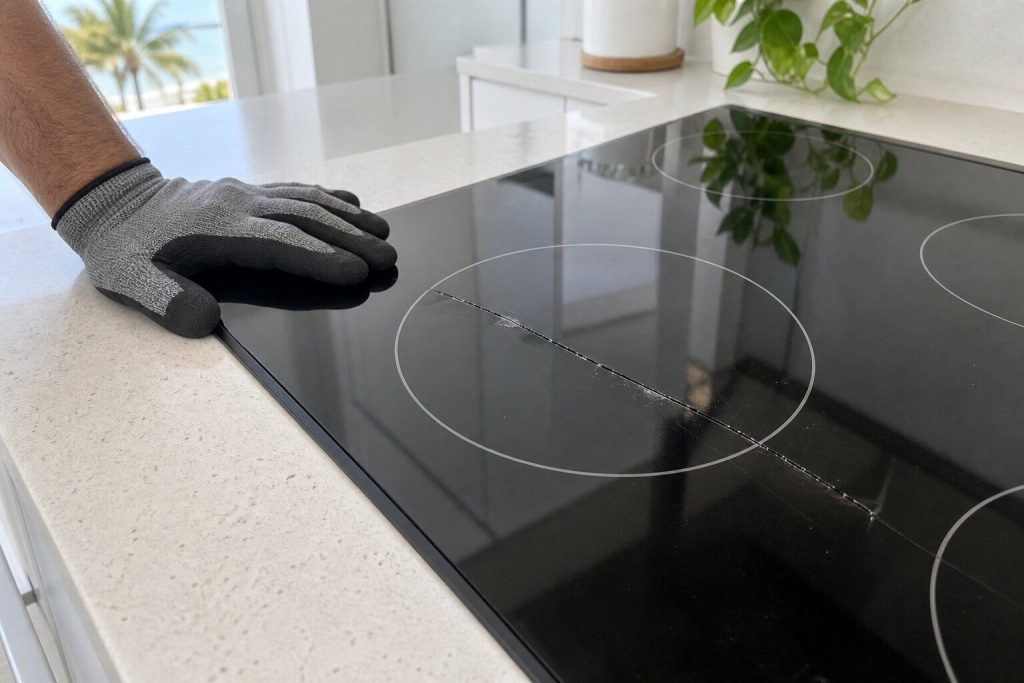
What a Broken Glass Cooktop Costs to Replace, and When It Is Not Worth It
Where the crack runs decides whether it is cosmetic or out of service. On a volume badge the honest arithmetic sometimes says the glass costs more than the machine.
Read more
Tell us the model number and what it is doing.
This article is based on:
- Official manufacturer documentation
- Internal repair procedures
- Technician repair history
- Company quality standards