Maintenance & Prevention
Cleaning a Ceramic Cooktop Without Scratching It
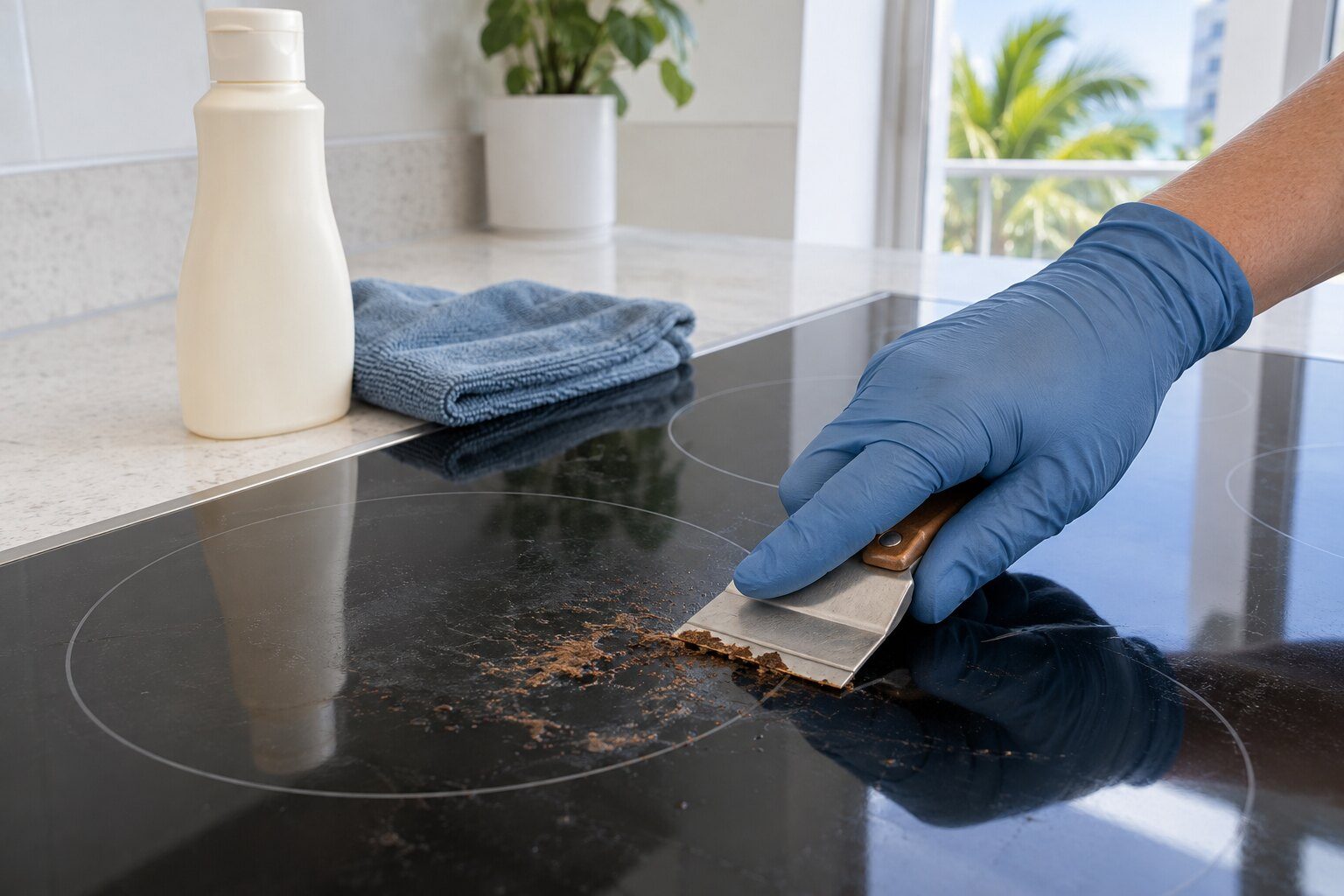
Use a purpose-made ceramic cream cleaner, a soft cloth or a non-scratch pad, and a single-edge razor scraper held almost flat to the surface for anything baked on. That scraper is the tool most people are afraid of and it is the correct one — the glass is far harder than the blade, and a shallow angle lifts residue that scrubbing would only grind into the surface. What actually marks these tops is three things: dry abrasives, including bicarbonate and scouring powders used on a dry surface; steel wool and green scouring pads; and dragging pans, particularly cast iron with a rough base. Sugar is the other real risk, and it is a different one — spilled sugar or anything containing it must be scraped off while the zone is still hot, because sugar bonds to the ceramic as it cools and takes a piece of the surface with it when it comes away.
The full guide
How to clean a ceramic stove top without scratching is the one maintenance job on this site where the damage is done by the cleaning, and where a mistake is permanent.
How to clean ceramic stove top without scratching: why permanent matters here
A scratched ceramic top cannot be polished out, filled or refinished. The only repair is replacement of the glass, and on this badge that starts at a figure high enough that the arithmetic sometimes says the whole cooktop is not worth it.
So the method is worth getting right the first time on an appliance that will otherwise last for years.
The three things that mark these
Dry abrasives. Scouring powders, and bicarbonate used dry. This one surprises people because bicarbonate has a reputation as a gentle cleaner — as a wet paste it usually is, but dry powder rubbed across glass is exactly what fine scratching looks like under a light.
Steel wool and green scouring pads. No qualification. They are harder than the surface finish and they will haze it.
Dragged pans. The commonest of the three and the least noticed, because it happens during cooking rather than cleaning. Cast iron with a rough base is the worst offender, and sliding it a few inches leaves marks that no cleaner removes. Lift, never slide is the whole rule.
The tool everybody is afraid of
A single-edge razor scraper, and it is the correct answer for anything baked on.
The instinct is that a blade must be worse for glass than a pad. It is the other way round. Ceramic cooktop glass is considerably harder than a steel blade, so the blade cannot cut it — while a pad works by abrasion, which is precisely the thing that marks the surface.
Two conditions. Hold it almost flat, ten or fifteen degrees off the surface rather than upright. And use short strokes in one direction rather than sawing. Held flat, it lifts residue off; held steep, the corner of the blade can chip a chipped edge further.
Sugar is a separate rule
This is the one that costs people a cooktop.
Anything sugary — jam, syrup, a boil-over of anything sweet, or plastic, which behaves the same way — must be scraped off while the zone is still hot. Carefully, with the scraper and an oven glove, but immediately.
Sugar bonds to hot ceramic as it cools. Left to set, it does not come off cleanly: it takes a small piece of the surface with it, and that pit is permanent. Every other spill can wait for the top to cool. This one cannot.
The routine that keeps one looking new
Wipe the loose debris off with a damp cloth first, before any cleaner. Grit left on the surface is what gets dragged around by everything that follows.
Soften anything baked on with a hot damp cloth laid over it for ten minutes. Patience does the work that pressure would otherwise do badly.
Then cream cleaner, a soft cloth or a non-scratch pad, small circles, no weight behind it.
Then buff it dry. Cream cleaner left to dry on the glass leaves a chalky haze, which then gets scrubbed at with more force than the original spill deserved — and that is how a well-intentioned cleaning routine slowly hazes a top.
Induction is the same glass and a different heat
This maker builds twelve induction ranges and eight induction cooktops, which is unusual on this fleet — several makes we work on build none at all.
The surface is the same ceramic and the cleaning is identical. What differs is that induction heats the pan rather than the glass, so spills are far less likely to bake on in the first place, and the top is cool enough to wipe much sooner after cooking.
The one thing induction adds is pan bases. Because the pan sits directly on the glass with a magnetic field pulling it, a rough or burred base does more damage than it would on a radiant top. Check the bottom of a cast-iron pan with a fingertip before it goes on a new cooktop.
If it is already marked
Be straightforward with yourself about which kind of mark it is.
Metal transfer — a gray smear from an aluminum pan base — is not a scratch and does come off, with cream cleaner and patience.
Haze from fine scratching is permanent. Cleaners that claim to remove it are filling it temporarily.
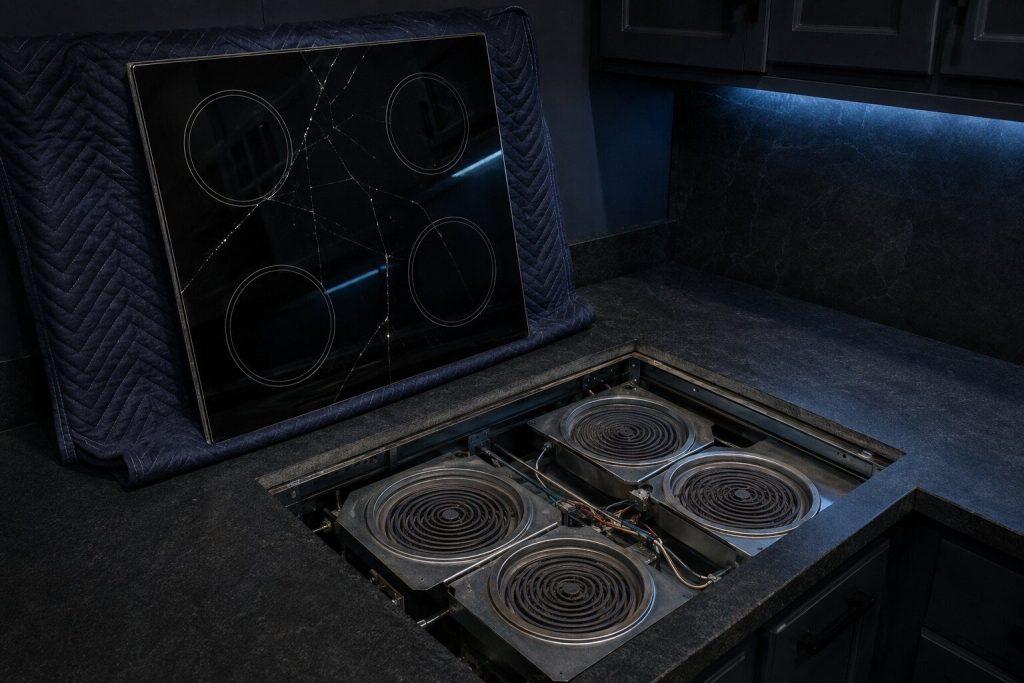
A crack is a different conversation entirely. A crack that crosses a heating zone or reaches an edge takes the cooktop out of service, because liquid can reach the elements underneath, and heat opens the crack a little further every time that zone is used.
If it turns out to be a repair
What this leads to, and what it costs
Every job on this site is priced the same way: an on-site diagnostic first, the figure agreed in writing before anybody starts.
-
from $245 Cooktop glass replacement
A cracked or shattered ceramic top, usually from a dropped pan. The glass is replaceable and the price is mostly the part — but a crack is not only cosmetic: it lets liquid reach the elements and the switchgear underneath, so the assessment is of the whole appliance rather than the panel. A cracked top over a live element is not something to keep using.
- Replaceable, and the price is mostly the glass
- A crack lets liquid into the elements below — the assessment covers the whole appliance
- Stop using it in the meantime: this one is a safety matter
-
from $165 Electric cooktop element repair
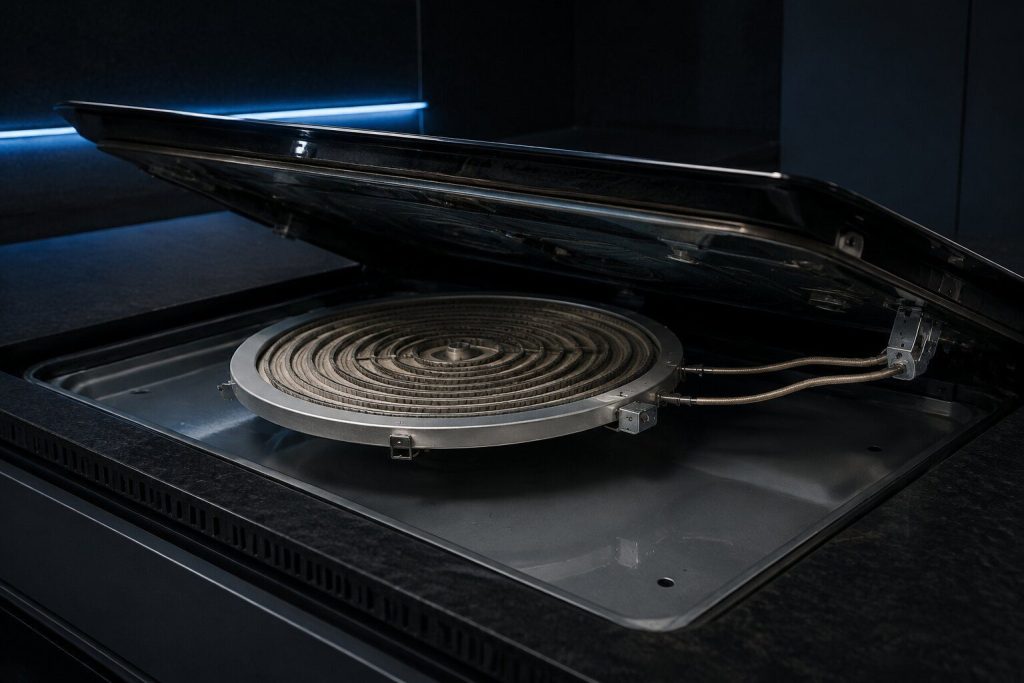
One zone dead, a zone stuck on full, or a radiant element that cycles far too quickly. On these cooktops the switch and the element fail about equally often, and there is a third candidate nobody thinks of: the receptacle a plug-in element sits in, which burns at the contacts and looks like a dead element from above.
- Element, switch or receptacle — the third one is the one that gets missed
- A zone stuck on full is a switch, and it gets attended to quickly
- Radiant elements are tested cold, not by watching them glow
-
from $185 Induction cooktop and range repair
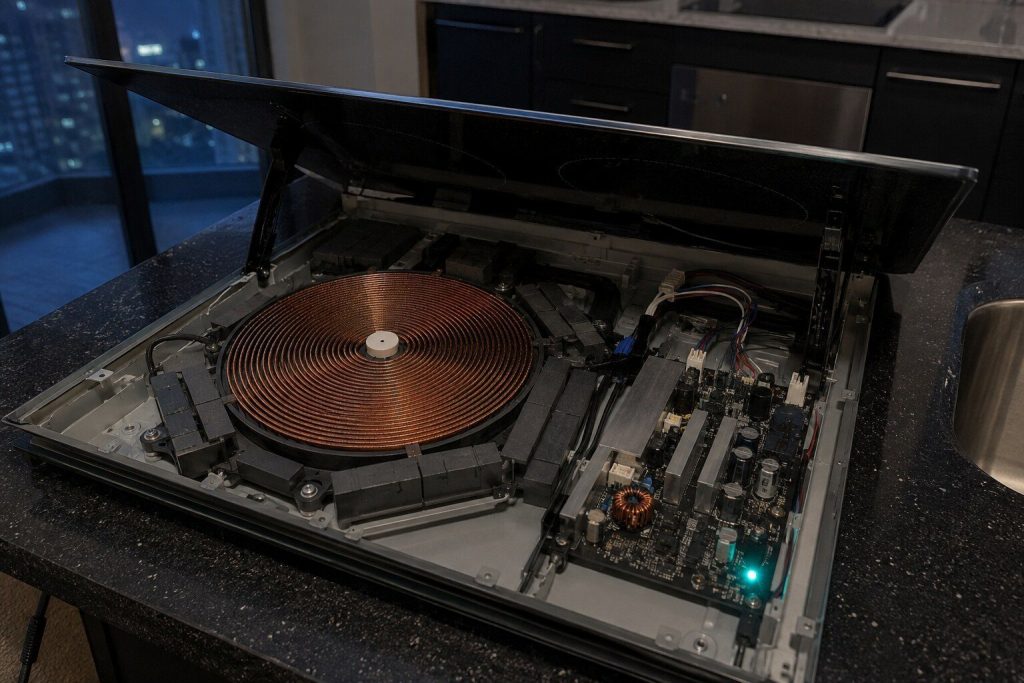
Twelve induction ranges and eight induction cooktops are current products under this badge, so induction here is ordinary work rather than an exotic call. Most of what gets reported as an induction failure turns out to be the cookware or a dirty surface sensor; the real failures are the cooling fan, the power board and the coil, and they behave quite differently from a radiant hob.
- A real part of this catalog: 12 induction ranges and 8 cooktops
- Most 'failures' are the pan or a dirty sensor, and we check those first
- Fan, power board and coil are the genuine failures, and they announce themselves differently

Questions people ask about this
How to clean a ceramic stove top without scratching if food is baked hard onto it?
Soften it first — a hot damp cloth laid over the spot for ten minutes does most of the work — then take it off with the razor scraper held almost flat. What marks tops is scrubbing at hardened food with an abrasive rather than lifting it.
Is baking soda safe on a glass cooktop?
As a paste with water, used gently, it is generally fine. Dry, it is an abrasive powder being rubbed across glass, and that is exactly how fine scratching happens. If you use it, keep it wet and do not press.
Maintenance & Prevention
More guides like this one
-
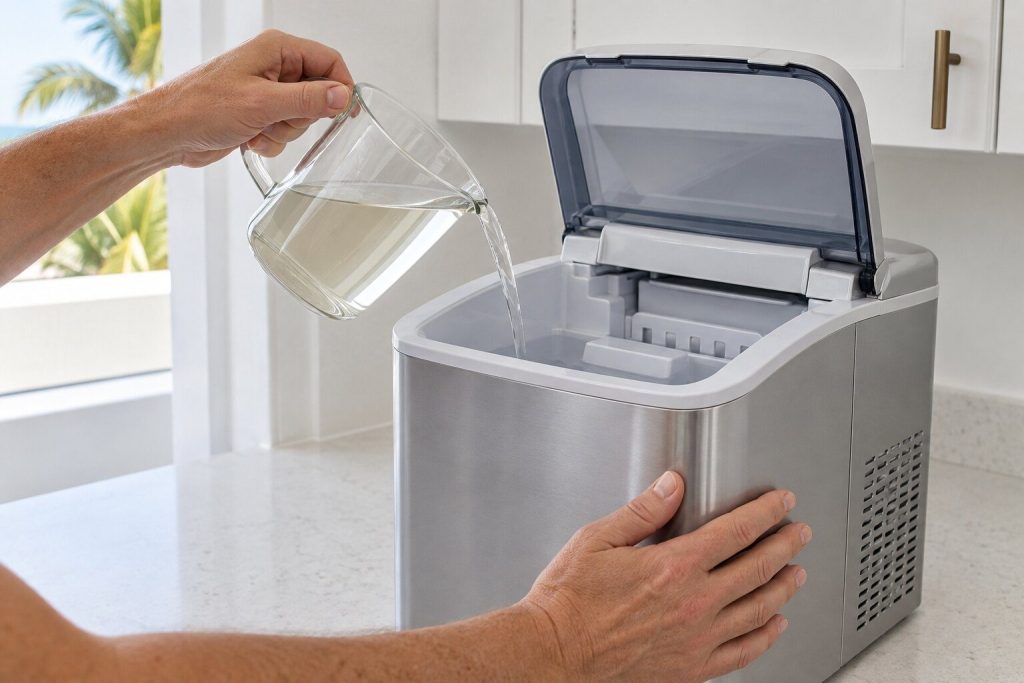
Descaling a Frigidaire Countertop Ice Maker With Vinegar
South Florida water scales the evaporator fingers, and scale is an insulator. A machine gone slow and cloudy usually needs descaling, not repair.
Read more -
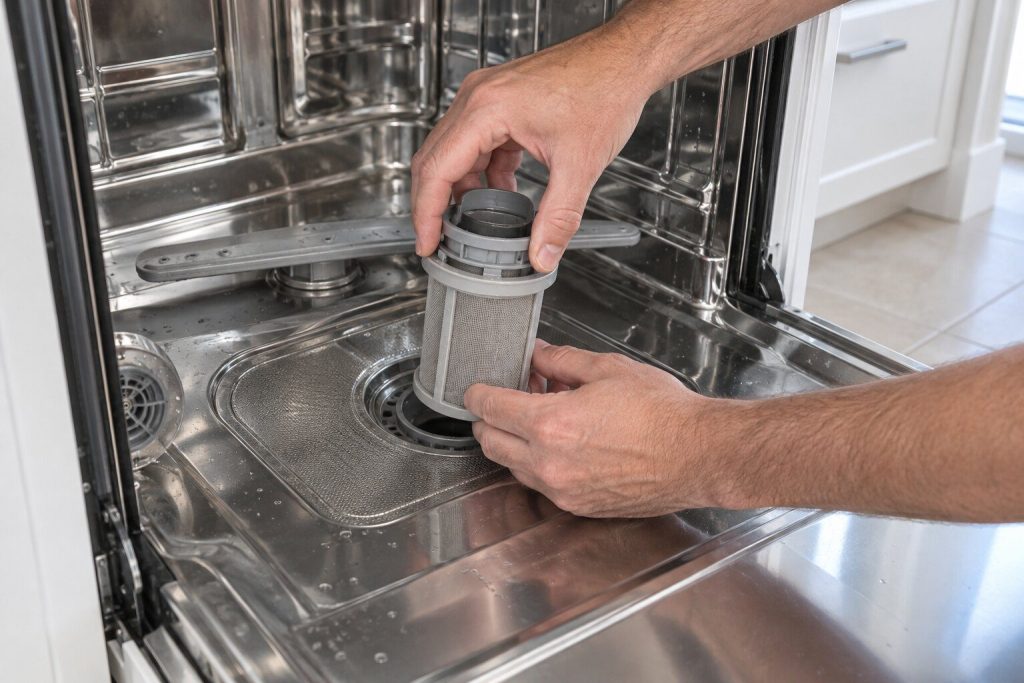
The Frigidaire Dishwasher Filter, and the Five Minutes That Prevent a Drain Call
It twists out by hand, it is an owner item like a lint screen, and the maker's own answer to the i40 code is to clean it.
Read more -
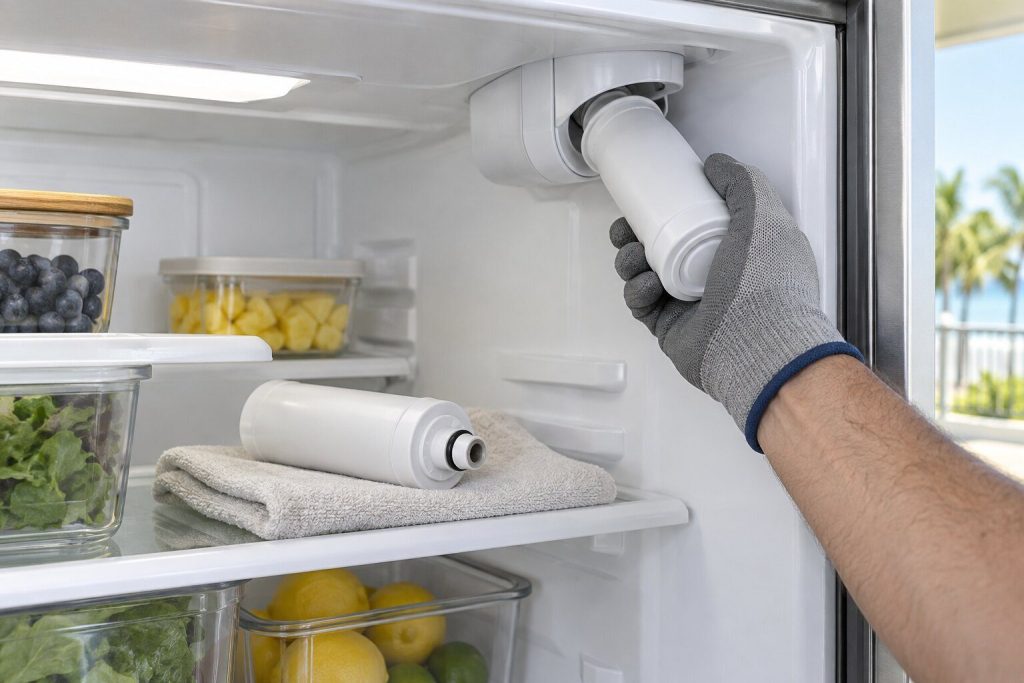
How Often a Frigidaire Refrigerator Water Filter Actually Needs Changing
Six months is the label. The honest answer is the water and the household — and the part nobody mentions is what happens in the first ten minutes afterwards.
Read more
Tell us the model number and what it is doing.
This article is based on:
- Official manufacturer documentation
- Internal repair procedures
- Technician repair history
- Company quality standards