Appliance
Frigidaire washers
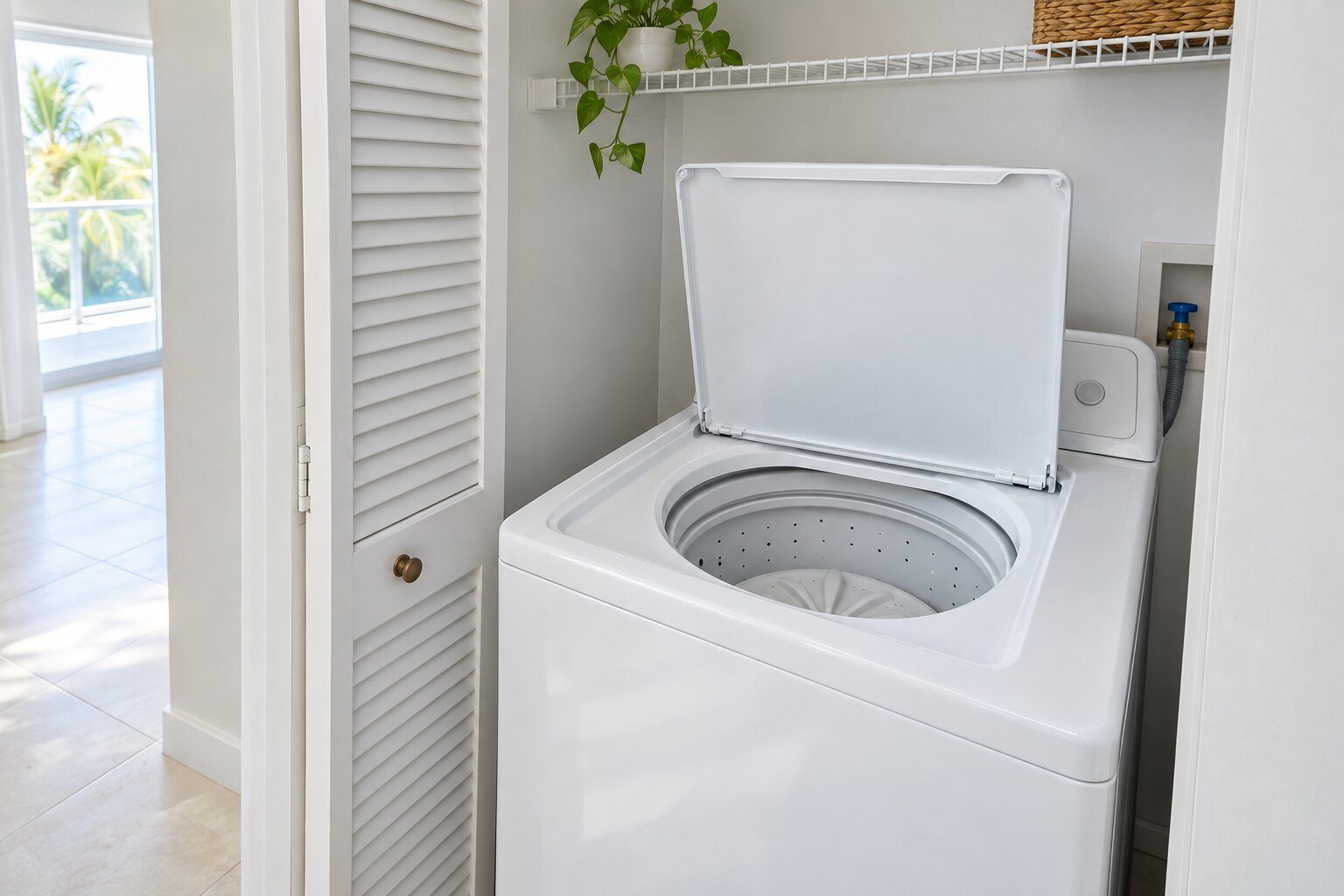
The current catalog carries two top-load washers and three laundry centers, and that thinness is worth saying out loud: Frigidaire's laundry line today is a fraction of its kitchen line. What we open in South Florida is mostly older — front-loaders from the years the badge sold them in volume, top-loaders in condominium closets, and stacked laundry centers in apartments where nothing else fits. The failures are the ones that come with age and with this climate: bearings, seals that never dry, pumps that meet a lint load nobody clears, and drains that back up in a shared stack.
- 3 symptoms we are called out to
- From $89 diagnostic, credited to the repair
- 59 cities and neighborhoods covered
- OEM parts available on order
The short version
What this equipment is, for a repair
Configurations
Top load · front load · laundry centers
Access
Planned before the visit, not discovered on arrival
Parts
OEM, available on order
Diagnostic
From $89, credited to the repair
What goes wrong with it
Symptoms we are called out to on Frigidaire washers
Each one covers the likely causes in the order they are worth checking, and what to do in five minutes before booking anything.
-
The cycle ended and the drum is still full Washer will not drain
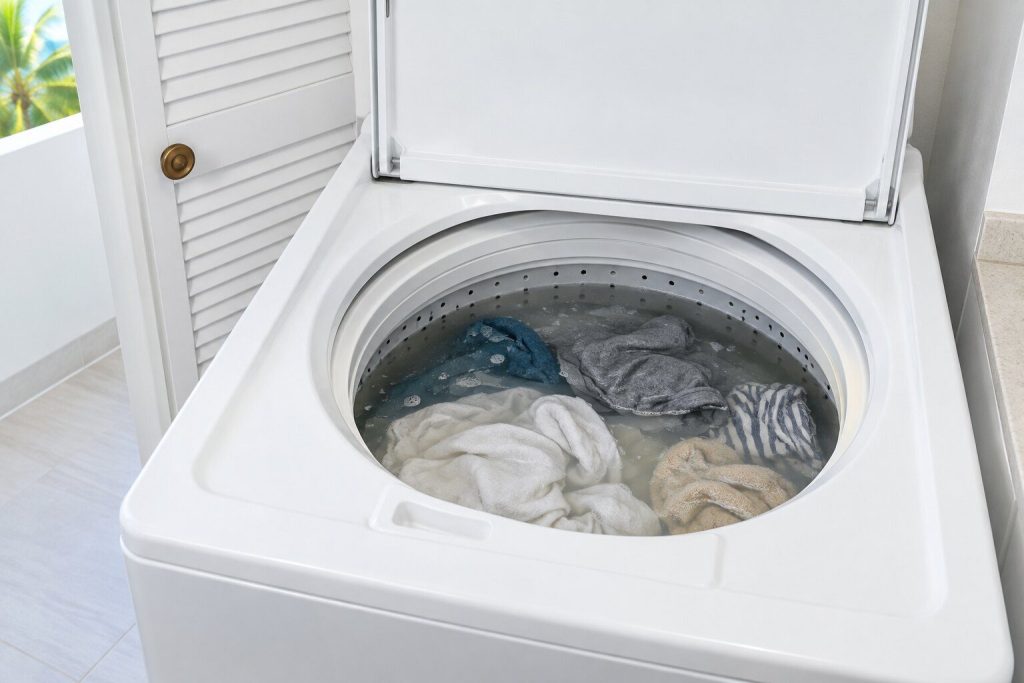
On the older machines that fill South Florida closets this is usually an obstruction rather than a failure, and on a front-loader there is a filter trap behind the lower panel that almost nobody has ever opened. Coins, hairpins, a child's sock: they clear the drum and stop at the pump. The other half of the answer is not in the machine at all — the hose, the standpipe, and in an apartment the stack it shares with the flat above.
- The filter trap on a front-loader is the first place to look and most owners have never opened it
- A pump that hums and moves nothing is blocked rather than dead
- In a condominium a surcharging stack puts the water back and the machine is innocent
-
The load comes out soaked, or the spin never starts Washer will not spin
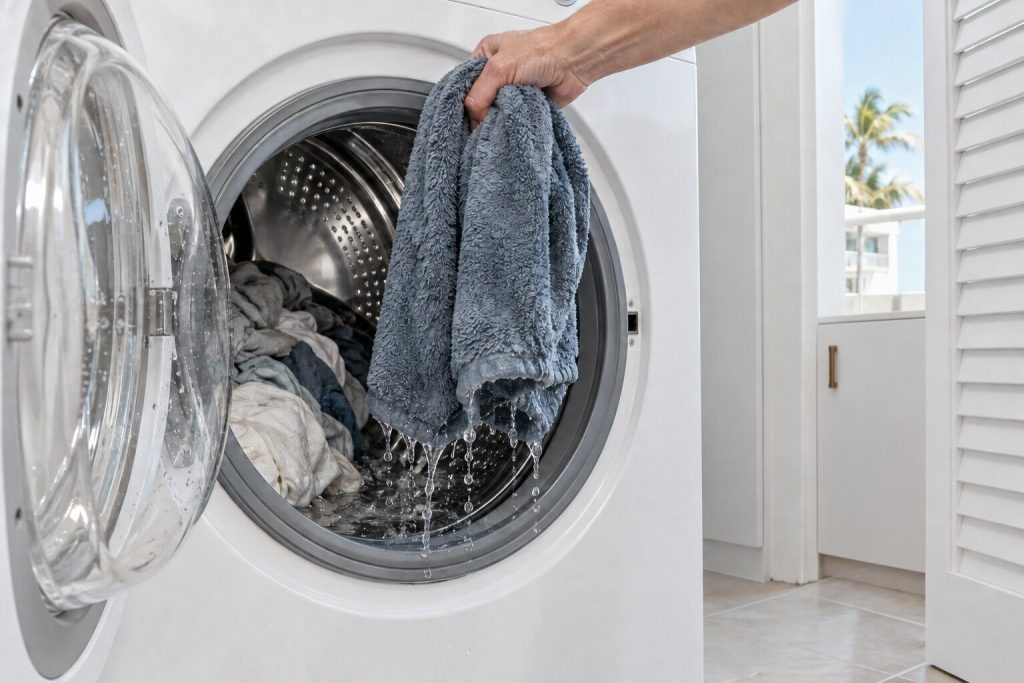
Two quite different machines wear this complaint. On a top-loader it is usually the lid switch or the drive; on a front-loader it is the door lock, the belt or a load the machine has decided it cannot balance. The useful thing you can tell us is whether the drum turns freely by hand and whether the machine tried and gave up or never tried at all.
- Top-loaders: the lid switch is one of the most common failures on an older machine
- Front-loaders: the door lock has to report closed before anything spins
- A machine that tries and aborts is a balance story, not an electrical one
-
Water on the laundry room floor Washer leaking
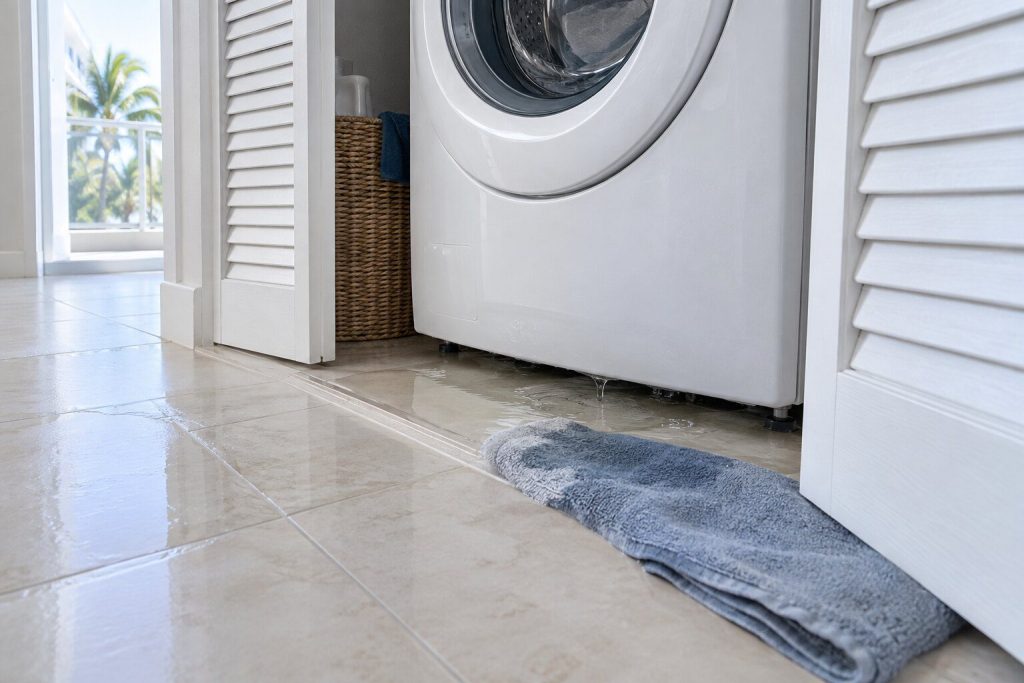
Where the water appears decides the repair, so the first job is watching rather than mopping. Front of a front-loader is the door boot or the glass; behind the machine is a hose or the inlet valve; water that appears only during the drain is the pump, a clamp, or a standpipe that cannot take the flow. And in this climate the door boot is the one we find most.
- Front, back or only-on-drain — three different repairs
- A door boot in Miami never dries between washes and eventually perishes at the fold
- Fill hoses have a service life, and the ones that burst flood a building
What we do on it
Repairs we carry out on Frigidaire washers
Starting figures for this equipment in South Florida. The exact cost is confirmed after an on-site diagnostic — and this is not the whole list of what can go wrong, so call if your problem is not here.
-
from $89 Diagnostic visit
We find out what is wrong before anybody quotes a part. On this make the first thing established is age, because the badge sells the appliance that came with the apartment and we open machines at every stage of life — a two-year-old range and a fifteen-year-old washer in the same building. The fee comes off the bill when you go ahead with the work, and where the answer is that the repair is not worth doing, you get that answer plainly and it is still the same fee.
- Age and model first: this badge is repaired at every stage of life
- The number before the work, in writing, and it is credited toward the repair
- Where the machine is not worth fixing we say so instead of selling a part
-
from $119 Appliance maintenance
The work that stops the calls we would otherwise be taking in August: condensers cleared, dryer ducts checked, dishwasher filters and seals looked at, water lines and shut-offs confirmed. In this climate maintenance is not a formality — a condenser that breathes dust in a Miami summer is the single most preventable refrigeration failure, and a dryer duct that nobody has cleaned is the most preventable fire risk in the apartment.
- Condenser, seals, ducts, filters and shut-offs, on the machines that have them
- Written down: what was cleaned, what was measured, what is starting to go
- Booked for several appliances in one visit, which is how it is worth doing
-
from $139 Appliance installation
Fitting a new machine properly and leaving the old one gone: level, connected, tested and checked for the things that cause a call-out three weeks later. On this badge most of what we install is freestanding or slide-in, which is straightforward — and the two that are not, a wall oven in a column and a beverage cabinet built into a run, are exactly where a bad installation shows up later as a repair.
- Level, connected, tested — and the old machine taken away
- Water, gas and vent connections left right, not just left working
- Built-in cabinets get a clearance check, which is where later problems begin
-
from $245 Control board repair
The board is the part most often blamed and least often to blame. A machine that is dead, resetting, or ignoring half its own panel usually has a supply problem, a failed sensor or a connector that has corroded in this humidity — and all three imitate a failed board convincingly. We measure what reaches the board before quoting one, because on this badge a board is frequently a large share of what the appliance is now worth.
- Measured before it is quoted: supply, sensors and connectors first
- Humidity corrodes connectors here, and that looks exactly like a dead board
- On an older machine the board is compared with the value of the appliance, out loud
-
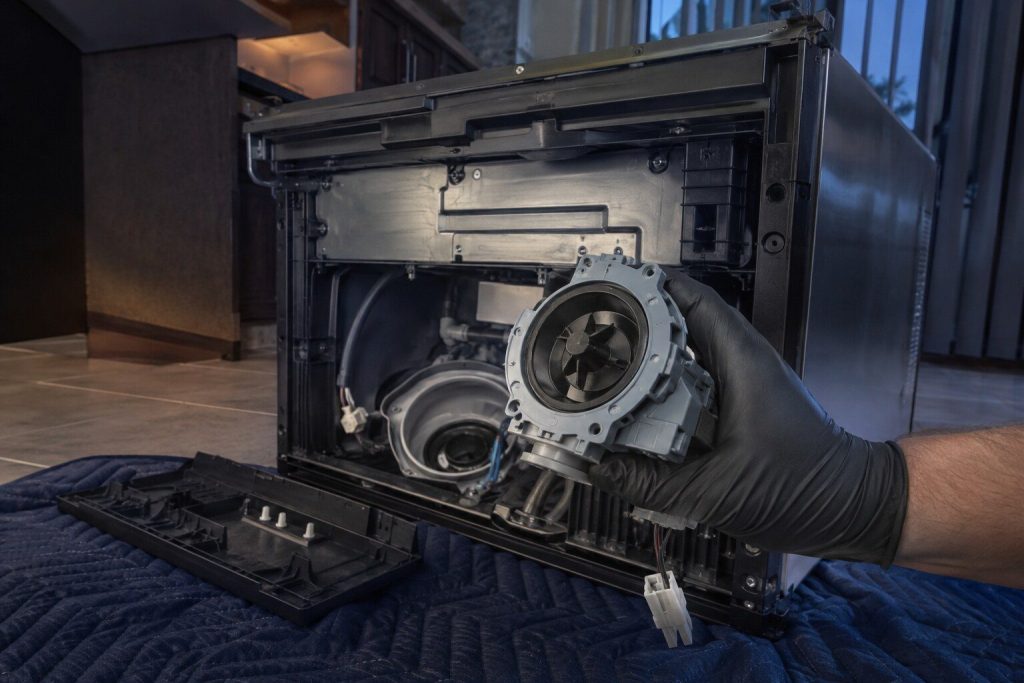
from $165 Washer drain pump replacement
A machine that fills, washes and then sits full. On the older Frigidaire front-loaders that make up most of what we open here, the pump is behind a filter trap that almost nobody has ever emptied, and a coin, a hairpin or a child's sock is as likely as a failed pump. We open the trap first — it costs nothing and it ends a good share of these calls.
- The trap before the pump: coins and socks outnumber failed pumps
- A pump that hums without moving water is jammed, not dead
- The drain hose and the standpipe are part of this, especially in a condominium
-
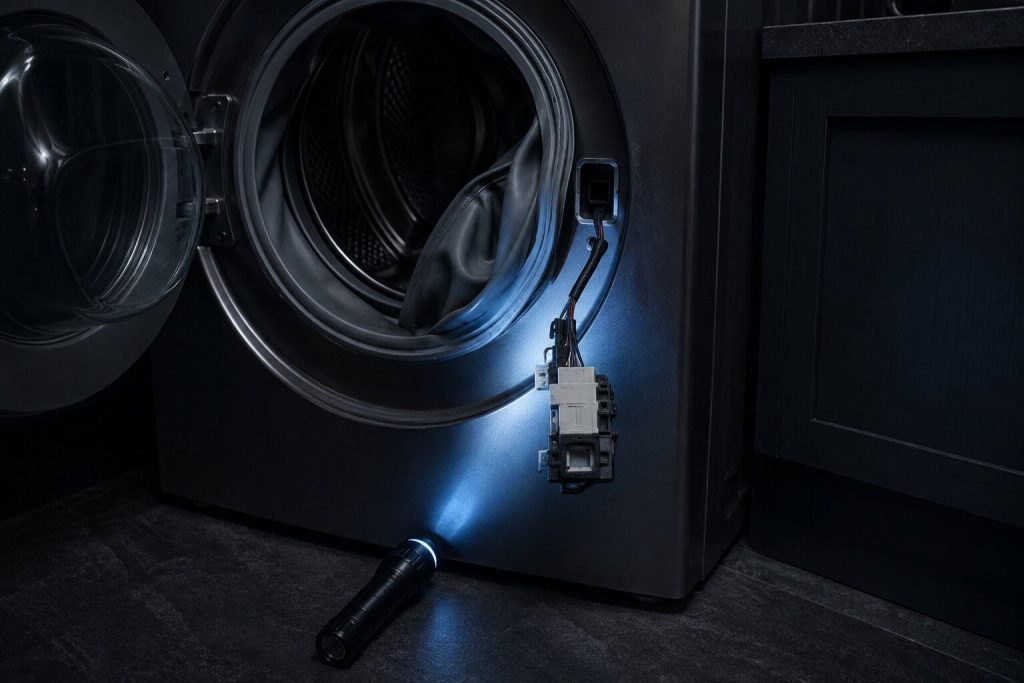
from $139 Washer door lock repair
A front-loader that will not start, will not unlock, or stops mid-cycle with the door light flashing. The lock is a safety interlock and the machine will not run without it, so this is another case where a refusal is the appliance being right. On older machines the lock is also one of the parts that has genuinely worn out rather than failed suddenly.
- The machine is refusing on purpose: the lock is an interlock
- Mid-cycle stops with a flashing door light point here first
- On older machines this is wear, not a sudden failure
-
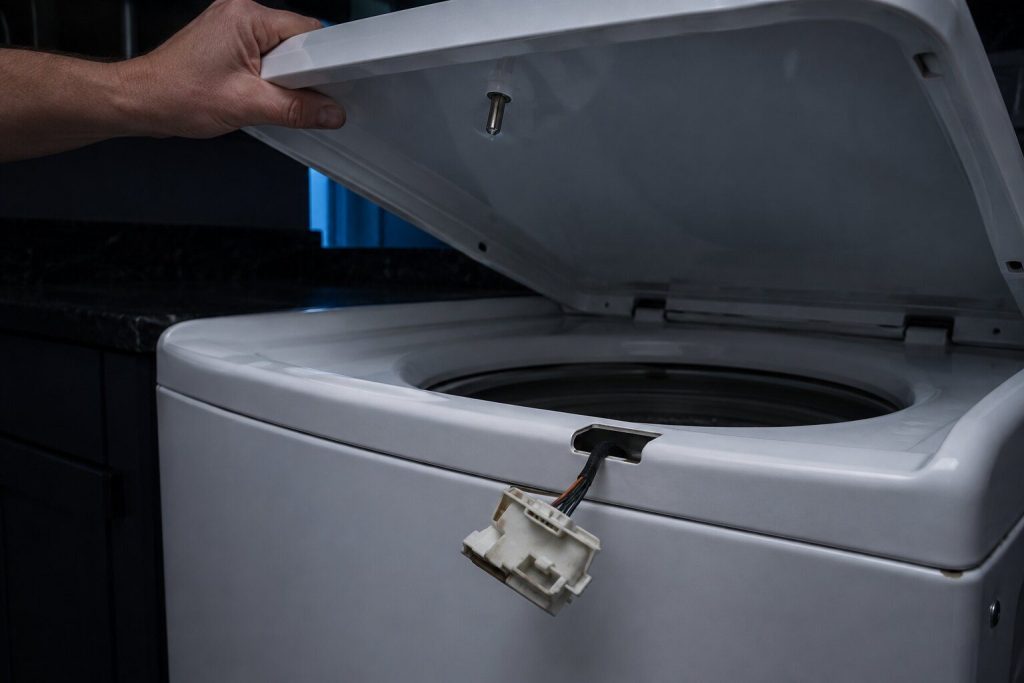
from $129 Washer lid switch and lid lock repair
A top-loader that fills and will not agitate or spin, or one that stops as soon as the lid is touched. On the machines this badge sold in volume the lid switch is a small mechanical part in a wet environment, and it is one of the most common single failures on an older top-load washer anywhere in South Florida.
- Fills but will not spin, on a top-loader, points here before the motor
- A small mechanical switch in a wet place — ordinary wear on an older machine
- The strike on the lid matters as much as the switch in the frame
-
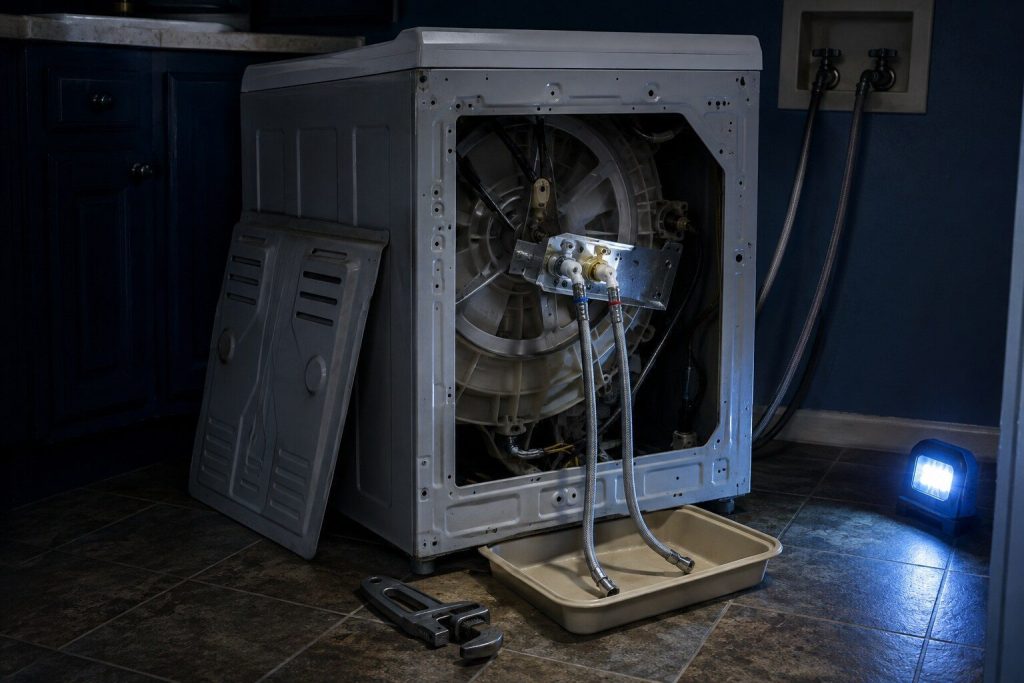
from $129 Washer water inlet valve repair
No water, water only on one temperature, a machine that fills slowly, or one that keeps filling when it is switched off. The valve is two solenoids and two screens in one body, and the screens block with the scale and grit that come with older buildings. A machine that fills when off is the one to attend to quickly — that is a flooded floor waiting for an unattended night.
- One temperature working and the other not is the valve, not the tap
- The inlet screens block with scale and grit from older plumbing
- Filling while switched off is urgent, not an inconvenience
-
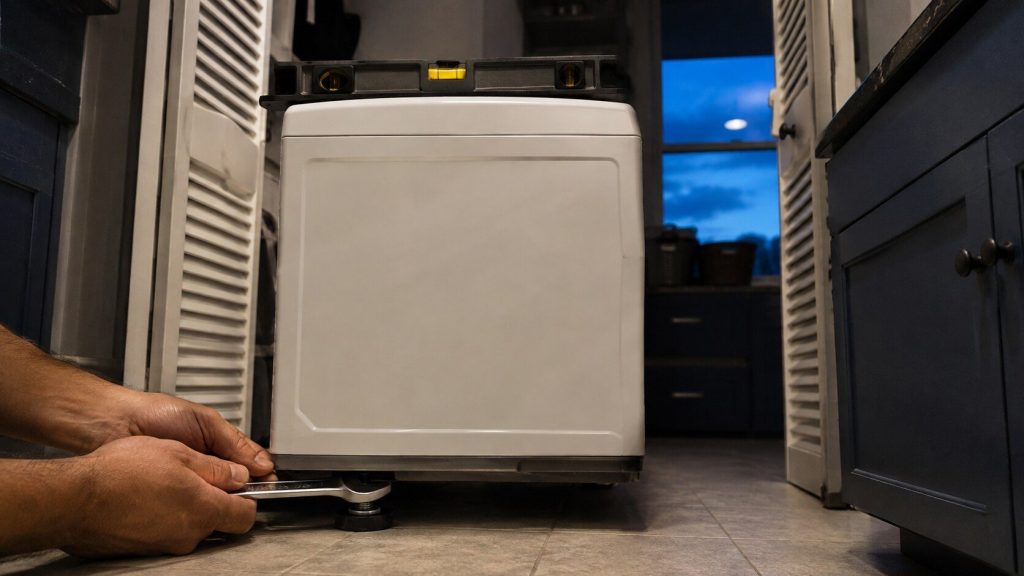
from $185 Washer not spinning and balance repair
A load that comes out soaked because the machine gave up on the spin, or a spin that walks the machine across the floor. Balance failures are the appliance protecting itself, so the useful question is why it cannot balance: the load, the level, the suspension, or on a front-loader the bearings that are on their way out.
- The machine is protecting itself; the question is what it cannot balance
- Level and load first, suspension and bearings second
- A walking machine in a condominium is a neighbor problem as well as a laundry one
-
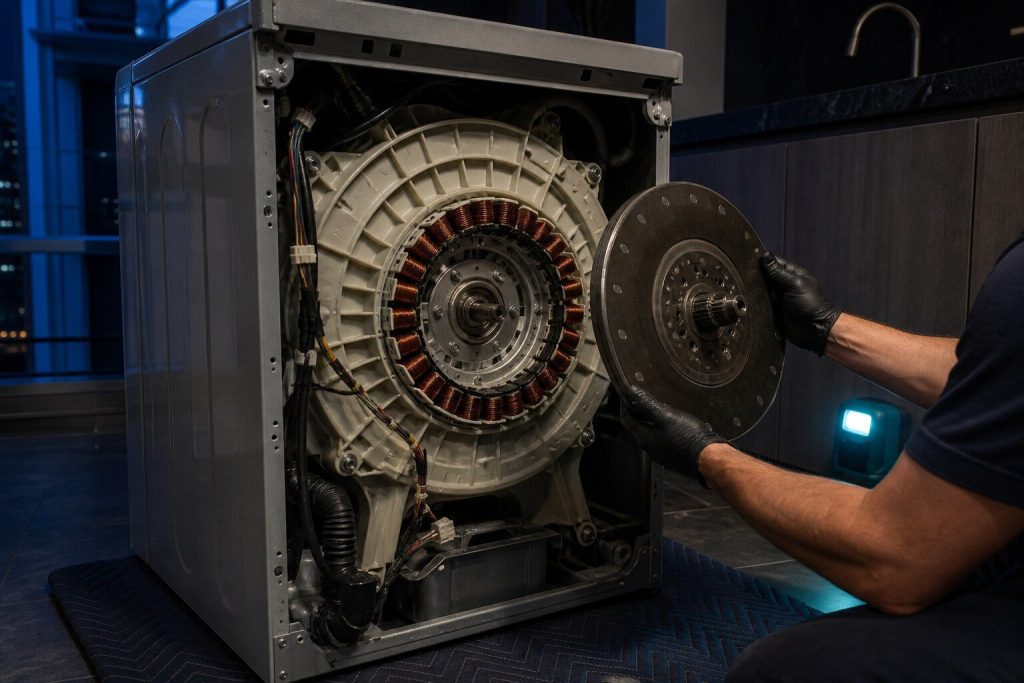
from $245 Washer motor and drive repair
A drum that does not turn, turns in one direction only, or turns while the machine screams. On the belt-driven machines this badge sold, a belt and an idler are an ordinary repair; on the direct-drive machines it is the rotor, the stator or the control that drives them. Which one you have decides both the price and whether the job is worth doing at all.
- Belt and idler on the older machines, rotor and stator on the newer
- A drum that turns by hand with resistance is a bearing, not a motor
- The price gap between the two designs is wide and is quoted before work
-
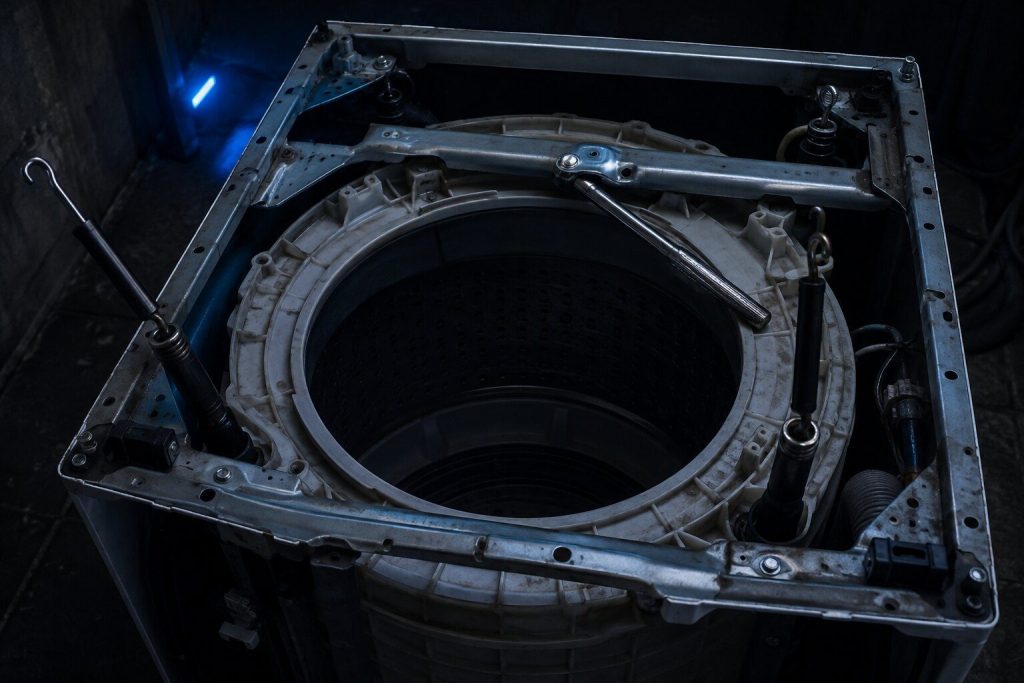
from $275 Washer bearing and suspension repair
The rumble that rises with the spin and eventually becomes a grinding you can hear through the wall. On a front-loader the outer tub is often a sealed assembly, so a bearing is a large job with a large part — and it is the repair where we most often advise an owner to put the money toward a new machine instead. We give you both numbers and let you choose.
- A rumble that rises with spin speed and gets worse every week
- On many front-loaders the tub is sealed and the part is most of the machine
- This is the repair we most often advise against, with the numbers to show why
-
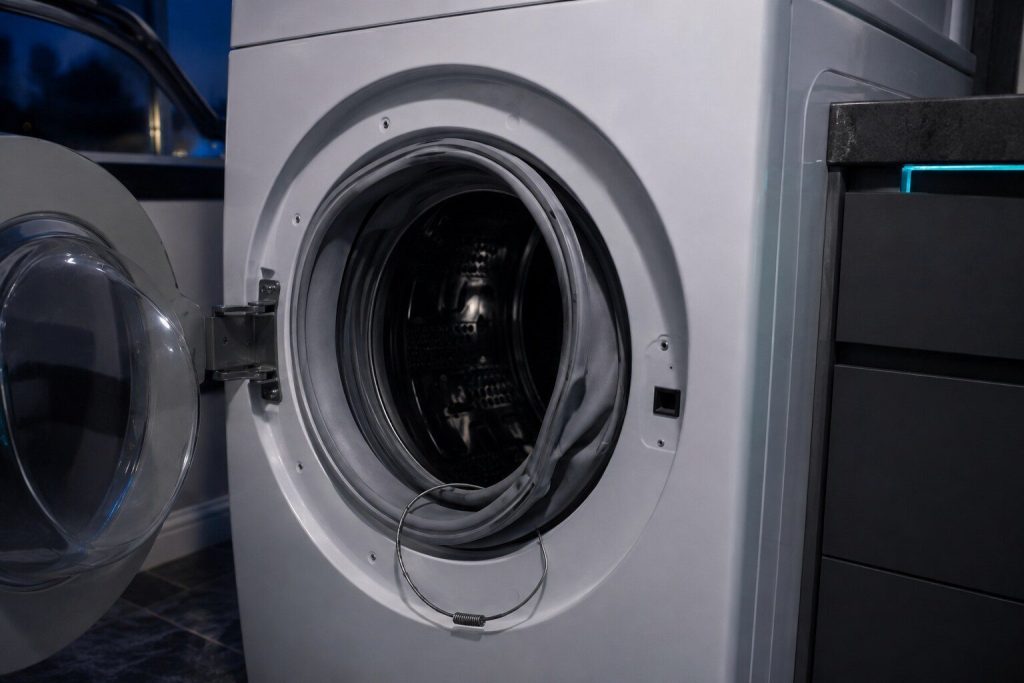
from $145 Washer leak repair
Water on the laundry-room floor, and the first job is finding where it comes from rather than which part to fit. Front of the machine points at the door seal or the glass; the back points at hoses and the inlet; water only during drain points at the pump, the clamp or a standpipe that is backing up. In a condominium a shared stack is a real possibility and gets ruled out before the machine is blamed.
- Where the water is decides everything that follows
- A door seal in this climate never dries and eventually perishes at the fold
- A shared stack backing up is checked before the machine is condemned
-
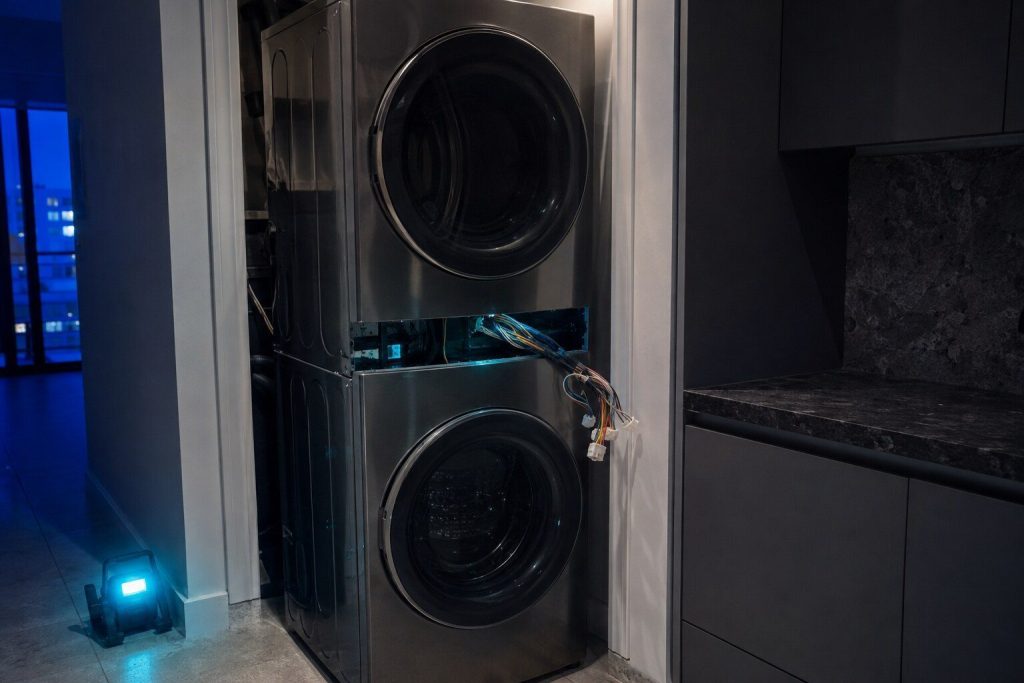
from $155 Stacked laundry center service
Frigidaire's laundry centers — a washer with a dryer above it in one cabinet — are common in South Florida apartments because nothing else fits the closet. They are two machines sharing a control panel and a frame, and the practical difference is access: there is no room at the sides, the drum is at head height, and the vent is usually behind the cabinet. Half of what makes these visits longer is the closet rather than the machine.
- Two machines in one cabinet, and no service access from the sides
- The vent behind a closet-mounted center is the commonest dryer complaint
- Access is planned before the visit, which is why we ask where it lives
In more detail
About Frigidaire washers
Why the pages here talk about old machines
Frigidaire currently lists nine laundry products against 142 refrigeration cabinets, and that ratio is not an accident of the catalog: the badge's laundry volume was earlier. So the machine in your closet is quite likely to be ten or fifteen years old, and the questions that matter are about parts availability and whether the repair is worth doing — which is exactly what a diagnostic answers and a phone estimate cannot.
Condominium laundry is its own problem
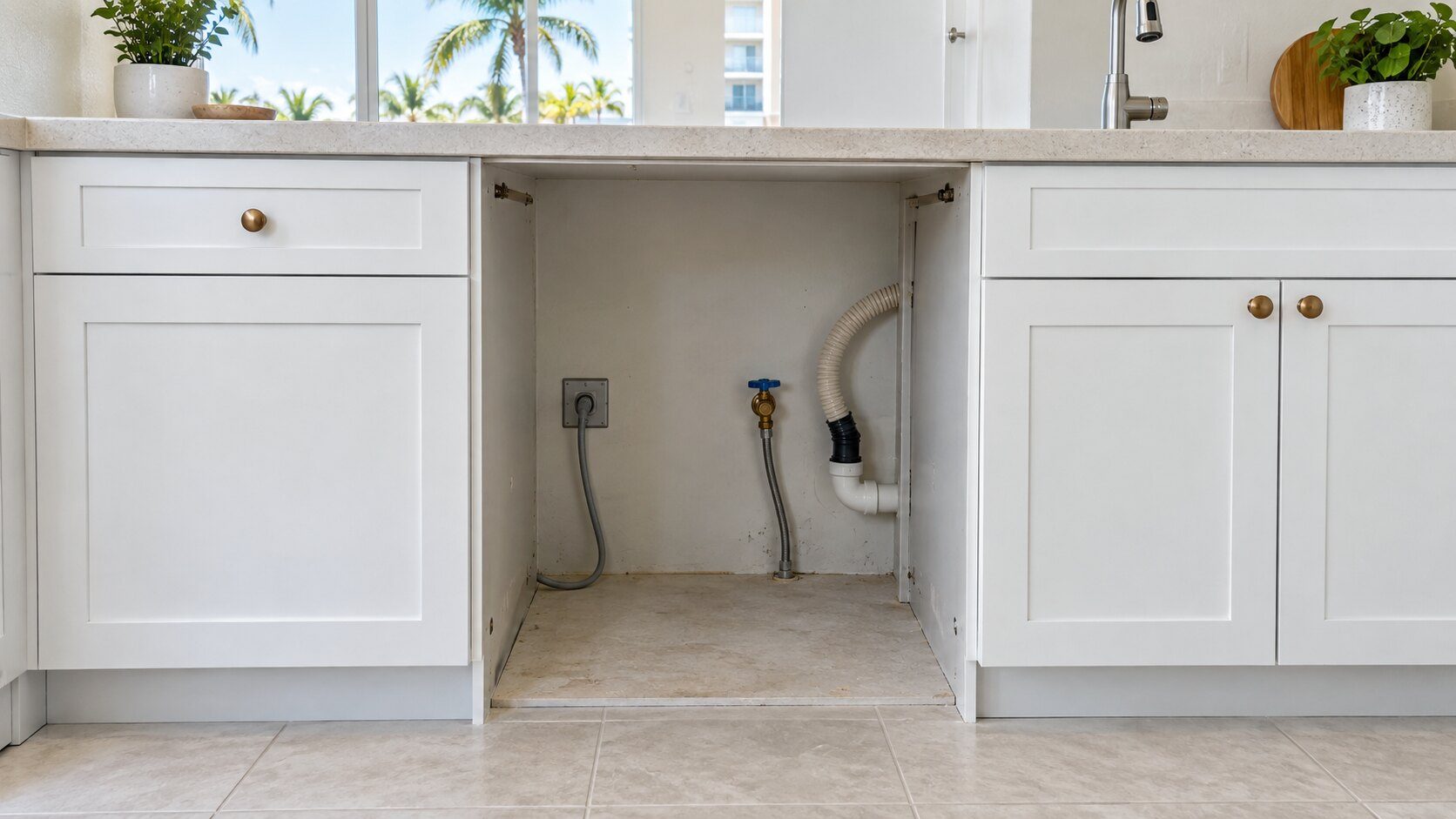
A stacked laundry center in a closet has no service access from the sides, a drain that usually joins a shared stack, and a door that opens into a corridor. Half of what makes these jobs longer than a house call is access rather than the problem, and it is why we ask where the machine is before we quote the visit rather than after.
This article is based on:
- Official manufacturer documentation
- Internal repair procedures
- Technician repair history
- Company quality standards
Before you book
Questions about Frigidaire washers
It fills and drains but will not spin.
On a front-loader the usual suspects are the door lock, the belt and the motor control; on a top-loader it is more often the lid switch, the drive or an unbalanced load the machine has decided not to fight. Tell us which machine you have and whether the drum turns by hand — those two answers narrow it before we bring anything.
The seal on the front-loader smells and looks black.
That is the climate as much as the machine. A door seal in Miami never fully dries between cycles, and the fold at the bottom holds water and lint. It cleans, and where the rubber has perished it replaces — but the habit that prevents it, leaving the door ajar between washes, is worth more than either of those.
There is water on the floor and the machine says nothing.
Work out where first, because it changes the visit. Water at the front of a front-loader is usually the seal or the door glass; water at the back is a hose or the inlet; water that appears only during drain is the pump, the hose clamp or the standpipe backing up — and in a condominium a stack shared with the flat above is a real possibility we check before condemning the machine.
Where we do it
Across Miami-Dade, Broward, and Palm Beach
Same terms everywhere we go: an on-site diagnostic first, the price agreed in writing, and the exact figure confirmed once we have seen the unit.
Neighborhoods people ask for by name