Maintenance & Prevention
The Frigidaire Dishwasher Filter, and the Five Minutes That Prevent a Drain Call
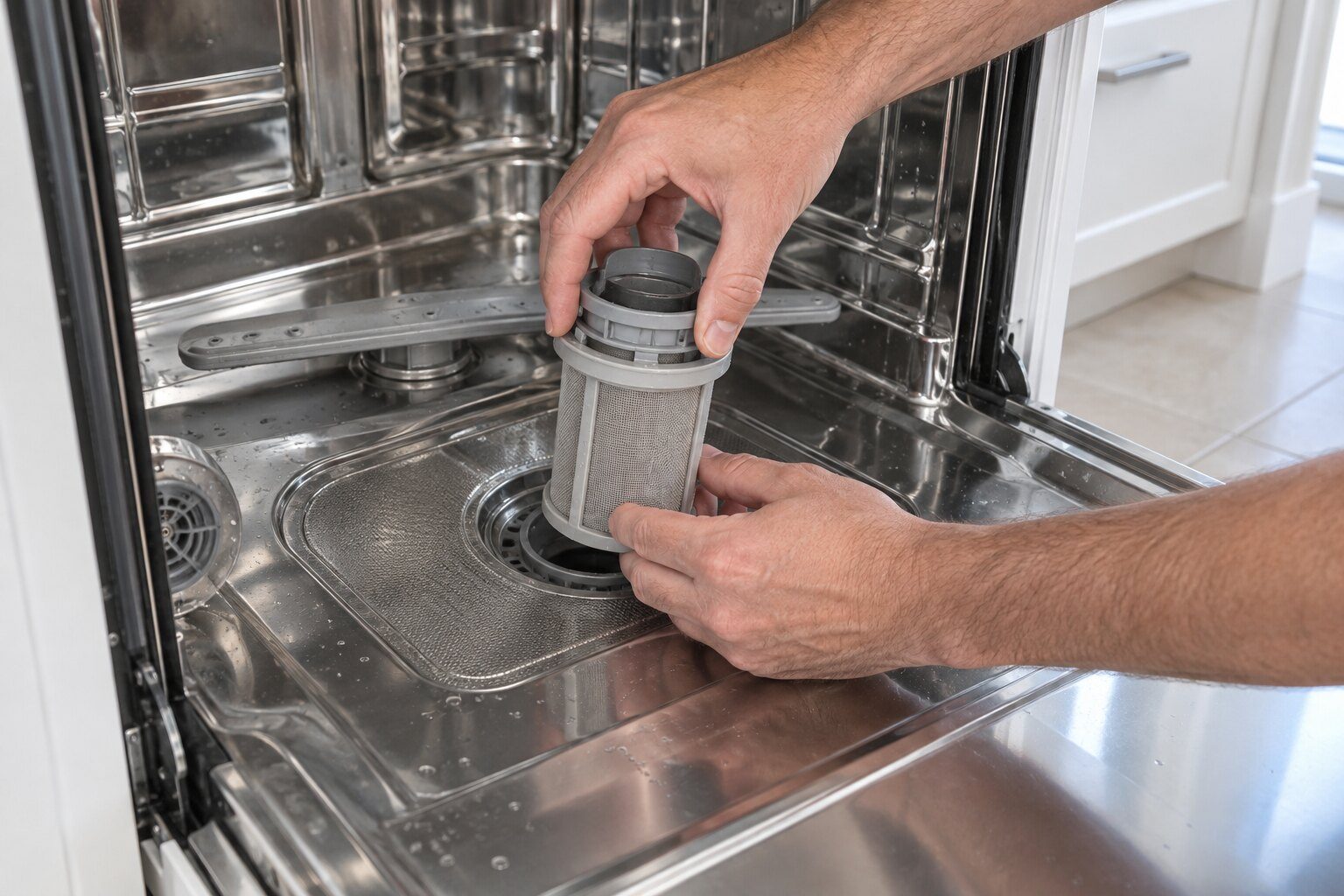
Pull the lower rack right out. In the floor of the tub toward the back there is a cylinder wrapped in a coarse mesh; twist it about a quarter turn counter-clockwise and lift it straight up. Underneath there is usually a flat plate with a finer mesh, and that lifts out too — it is the one that actually clogs. Rinse both under a hot tap with a soft brush for anything greasy, then look into the empty sump with a light before refitting, because glass chips and produce stickers collect there below where the filter can catch them. Everything goes back the same way round and the cylinder has to lock, since a filter that is seated but not locked lets debris straight into the pump while looking correct from above. Five minutes, every couple of months, no tools. This maker's own instruction for its i40 code — clogged filter or sump — is exactly this job.
The full guide
How to clean a Frigidaire dishwasher filter is a five-minute job that most households do not know exists, which is why it turns into a drain call about a year later.
How to clean Frigidaire dishwasher filter: these machines were designed around it
Older dishwashers ground food up with a small chopper and flushed it down the drain. That worked and it was loud.
The generation these belong to went the other way. A fine filter catches the debris, the machine runs quietly enough to sit in an open-plan kitchen, and the owner takes the filter out every so often and rinses it.
That trade is the whole reason a modern dishwasher is quiet, and it means the filter is not a service item. It is an owner item, like the lint screen in a dryer — the one part of a dishwasher that expects a pair of hands every couple of months.
The five minutes
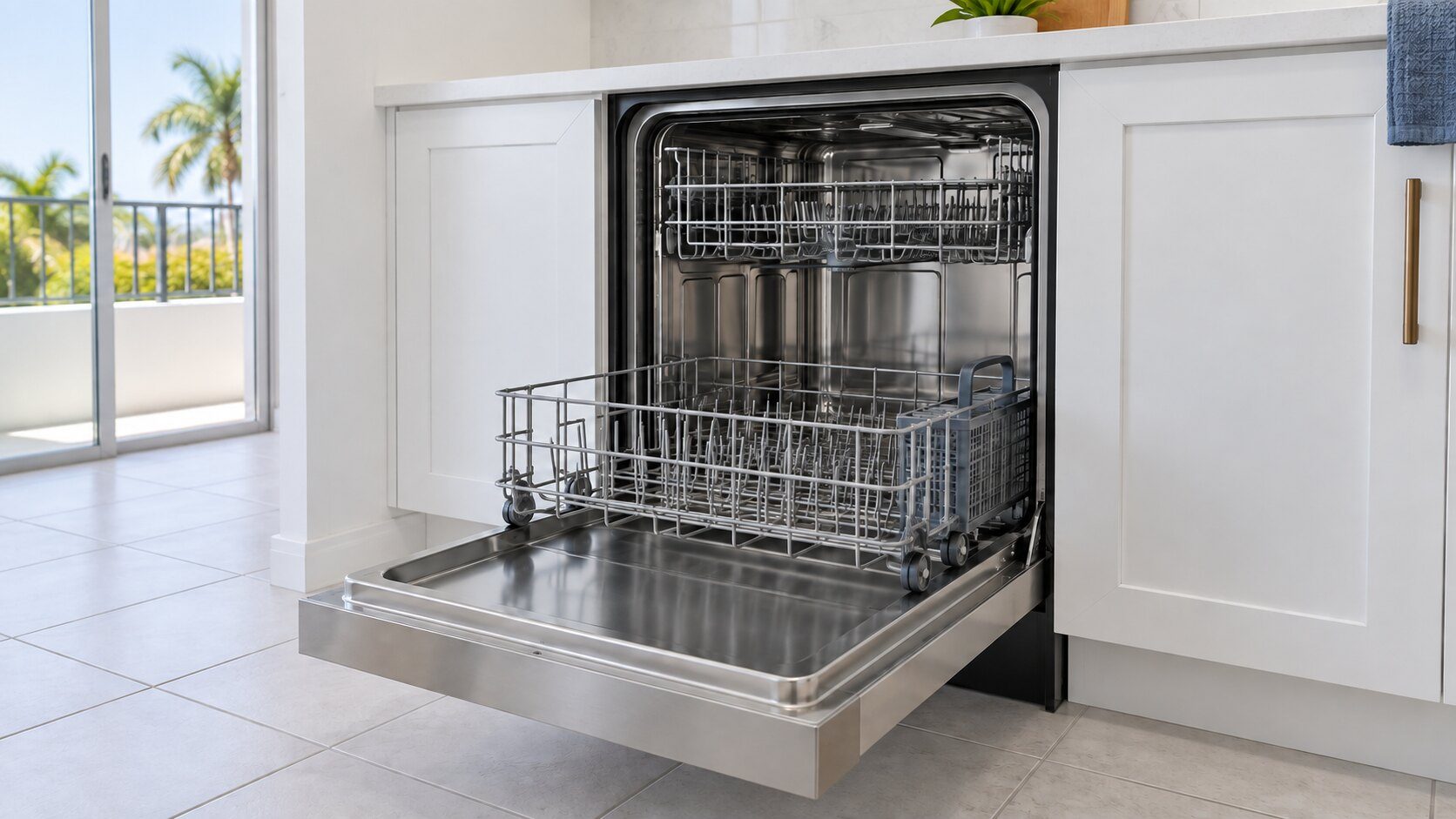
Pull the lower rack right out so you can see the floor of the tub.
Toward the back there is a cylinder wrapped in a coarse mesh. Twist it about a quarter turn counter-clockwise and lift it straight up. It comes away in your hand — no tools, no force. If it feels stuck it is usually grease rather than a mechanism, so dry your hands for grip and try again.
Underneath there is normally a flat plate with a much finer mesh. That lifts out too, and that is the one that actually clogs.
Rinse both under a hot tap, soft brush for anything greasy. Nothing abrasive, no detergent needed.
Look underneath while it is out
This is the part everybody skips and it is worth the extra thirty seconds.
With both filters removed you can see the sump — the small well that feeds the drain pump. Shine a light into it. What collects there is glass chips, produce stickers, occasionally a small bone or a bottle cap, and all of them got there because they were small enough to pass the mesh.
That is the space that causes grinding noises and stopped pumps, and the filters cannot catch what is already in it. Picking it out with your fingers takes a moment and it is the most valuable thirty seconds on this page.
Refit it properly
Everything goes back the same way round, and the cylinder has to turn and lock. Most of them click.
A filter sitting in place but not locked is worse than no filter at all, because the machine will pump debris straight past it into the pump housing while looking completely correct from above. If it does not feel seated, take it out and start again.
This is the maker's own answer to a code
Worth knowing, because it makes the job less optional.
This maker publishes i40 on its dishwashers — *clogged filter or sump* — and its own stated remedy is to clean out the glass trap and re-run the machine. Not a part, not a visit: this job.
i20 is the neighbouring one — *did not drain properly* — and a loaded filter is one of the two common causes behind it. The other is the knockout plug in the garbage disposal, which in a kitchen fitted to a schedule is left in often enough to be the first thing we check.
What it prevents
Two of the most common calls we take on this badge.
Drain problems. A packed filter starves the pump and recirculates what it should have caught. The machine drains slowly, then partially, then finishes with water standing in the tub.
Poor cleaning. The same water goes round and round carrying the same debris, which is where grit on glasses comes from. Households change detergent, add rinse aid and run hotter cycles, and the answer was in the floor of the tub the whole time.
Neither needs a part when it is caught at this stage.
When it has never been out
On a six or eight-year-old machine that has never had the filter removed, expect the first one to be unpleasant and to take longer than five minutes.
The mesh will be greasy rather than dirty — warm soapy water and a brush, not a rinse. The flat plate may be packed solid enough that it does not lift easily, and it should be worked rather than forced, because the tabs are plastic. The sump will almost certainly hold something.
None of that is damage. What it does mean is that the machine has been washing in recirculated debris for years, and households often tell us afterwards that it cleans better than it has in a long time. That is not the filter improving the machine — it is the filter no longer preventing it working.
And the smell
A dishwasher in this climate is a warm, damp, enclosed box with food residue in it, which is a fair description of somewhere things grow.
Most smell complaints trace to three places: the filter, the fold of the door seal, and the drain hose loop under the sink. Clearing the filter regularly removes the food everything else depends on, and it does considerably more for the smell than running vinegar through an empty machine.
If it turns out to be a repair
What this leads to, and what it costs
Every job on this site is priced the same way: an on-site diagnostic first, the figure agreed in writing before anybody starts.
-
Dishwasher error code i40
Frigidaire dishwasher error code i40: The machine is asking to be cleaned, and it is the code most worth acting on early because what it prevents is the drain repair. Which machines can raise it, what the maker publishes about it, and what to do next.
What this one means -
Dishwasher error code i20
Frigidaire dishwasher error code i20: The machine could not empty itself, and the maker's own list starts where we would: with the knockout plug in the garbage disposal. Which machines can raise it, what the maker publishes about it, and what to do next.
What this one means -
Dishwasher not draining
On these machines this is usually something caught rather than something broken, and the filter at the bottom of the tub is the first place to look — it is a two-minute job, most owners have never been shown it, and it ends a large share of these calls. The second place is not in the dishwasher at all: the drain hose, the air gap and the disposal connection under the sink.
- The filter and the sump first: this is the answer more often than a pump is
- A new disposal with its knock-out plug still in place blocks every dishwasher fitted to it
- Slow draining and not draining at all point at different halves of the list
-
Dishwasher not cleaning service
Dishes coming out gritty, cloudy or with detergent still in the cup. Almost always water not reaching the dishes rather than water not being hot enough: blocked spray arms, a filter that has been in place for a year, a tall item interrupting the upper feed, or a supply that is arriving cold. In this water, scale and rinse aid are a bigger part of the story than detergent brand.
- Arms, filter and inlet before anybody talks about a heater or a board
- Loading and water hardness explain a real share of these calls
- Detergent still in the cup is a dispenser or a blocked arm, not a bad tablet
Questions people ask about this
How to clean a Frigidaire dishwasher filter if it will not twist?
Make sure the lower rack is fully out and nothing is resting on it, then try again with a dry hand for grip. Grease makes it slippery rather than stuck, and it should never need force — forcing it is how the plastic tabs break.
Does a dirty filter really cause a drain problem?
It is one of the two commonest causes we find. A packed filter starves the drain pump and recirculates the debris it should have caught, so the machine drains slowly, then partially, then not at all. That is what the i20 code ends up reporting.
Maintenance & Prevention
More guides like this one
-
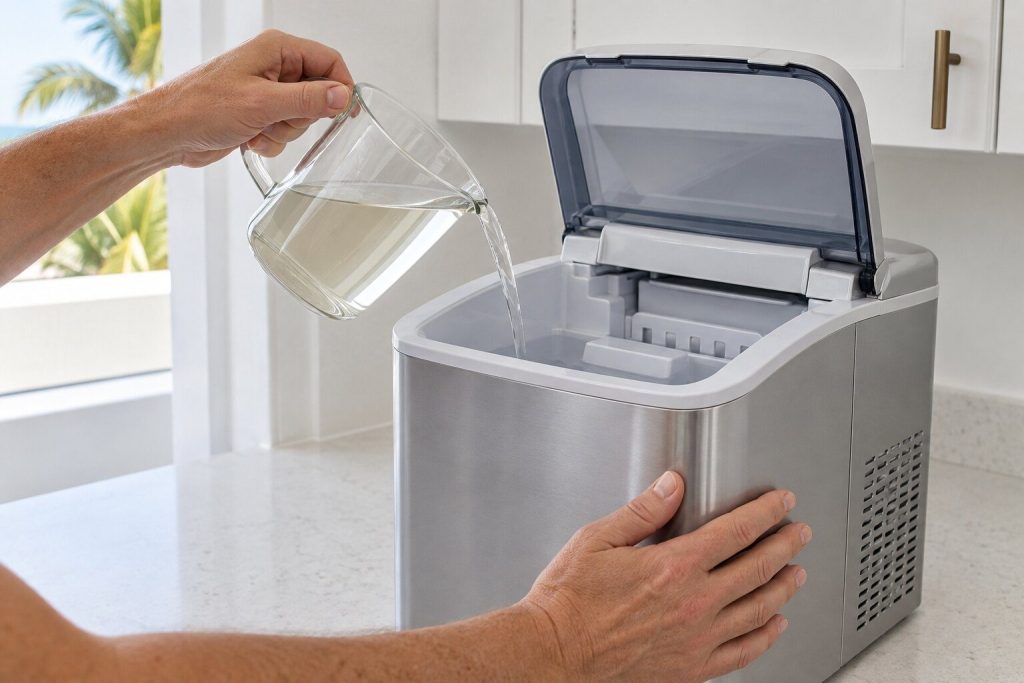
Descaling a Frigidaire Countertop Ice Maker With Vinegar
South Florida water scales the evaporator fingers, and scale is an insulator. A machine gone slow and cloudy usually needs descaling, not repair.
Read more -
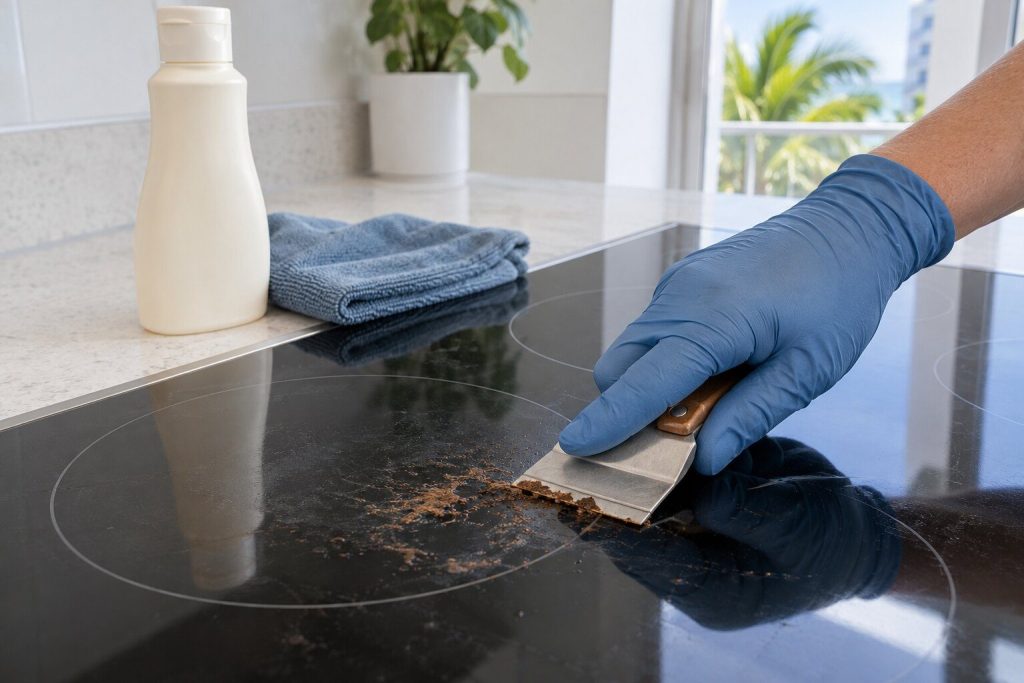
Cleaning a Ceramic Cooktop Without Scratching It
Three things mark these permanently, and one tool everybody is afraid of is the right one. A marked top is not repairable, so the method matters.
Read more -
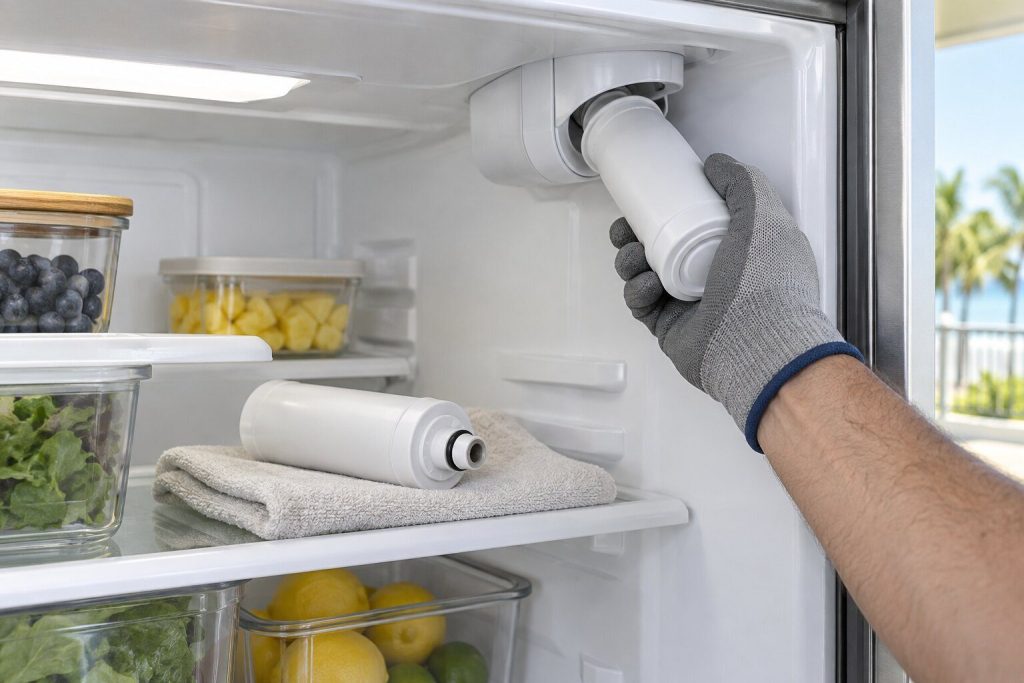
How Often a Frigidaire Refrigerator Water Filter Actually Needs Changing
Six months is the label. The honest answer is the water and the household — and the part nobody mentions is what happens in the first ten minutes afterwards.
Read more
Tell us the model number and what it is doing.
This article is based on:
- Official manufacturer documentation
- Internal repair procedures
- Technician repair history
- Company quality standards