Maintenance & Prevention
Descaling a Frigidaire Countertop Ice Maker With Vinegar
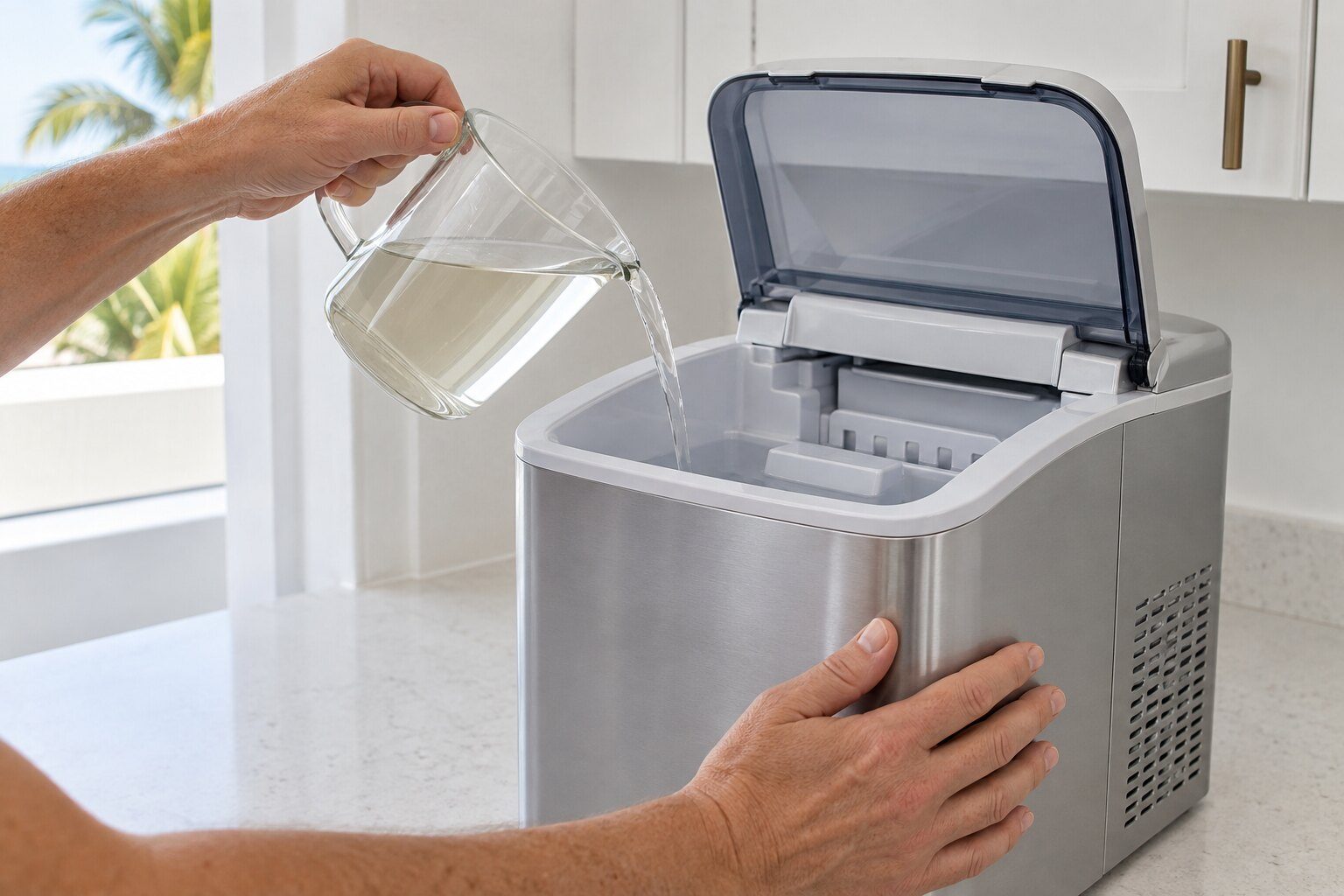
Empty the reservoir and the basket, then fill the reservoir with one part white vinegar to three parts water. Run one full ice-making cycle and discard the ice it makes — it will look cloudy and misshapen, which is the point. Drain the reservoir completely through the plug underneath, refill with clean water, and run at least two more cycles, discarding the ice from both. Wipe the basket and the interior with a soft cloth while it is empty. On a machine that runs daily on unfiltered tap water in this territory, that is worth doing every two to three months rather than the six months a manual assumes, because the mineral content here is high enough to leave a visible film within weeks. Where scale has had a year to build, one vinegar pass will not shift it and repeated soaking is harder on the pump seals than one proper descale with a purpose-made solution.
The full guide
How to clean a Frigidaire ice maker with vinegar is a maintenance question that turns out to be a repair question, because on these machines descaling *is* the repair most of the time.
How to clean Frigidaire ice maker with vinegar: what is actually happening inside
This maker builds three countertop ice makers and no plumbed undercounter cabinet at all, so what we are talking about is a machine with a reservoir you fill by hand, a small pump, and a set of metal fingers that get very cold.
Water is pumped over those fingers, freezes onto them in a layer, and is then released as cubes. Every time that happens, the minerals in the water stay behind.
In South Florida there are a lot of minerals in the water. Over weeks they build a film on the fingers, and scale is an insulator — so the fingers can no longer pull heat out of the water as quickly. The freeze takes longer, the cubes come out cloudy and soft because they never fully hardened, and the pump is working against a restriction it did not have when it was new.
That is the whole failure, and it is why a machine "going slow" is usually not going wrong.
The method
One part white vinegar to three parts water, filled to the normal line.
One full cycle — or the clean cycle if the machine has one, which runs the pump without freezing and circulates the solution more thoroughly. Discard everything it produces.
Drain completely through the plug underneath, and tip it to get the last of it out.
Two more cycles on clean water, discarding the ice from both.
That last step is the one people cut short, and it is the reason a machine tastes of vinegar for a week afterwards. Two rinses is the minimum, three if you can be bothered.
Every two to three months, not every six
Manuals tend to say six months. That figure is written for average municipal water, and this county's is harder than average.
On a machine running daily on unfiltered tap water here, two to three months is realistic. On filtered or bottled water in the reservoir it stretches considerably — and using filtered water is the single cheapest way to make this whole job less frequent.
The machine will also tell you when it is due, if you are watching: the first sign is always cycle length, not appearance. A batch that used to take twelve minutes and now takes eighteen is scaled, several weeks before anybody notices the cubes have gone cloudy.
When vinegar is not the right tool
Two cases.
A year or more of buildup. One vinegar pass will not shift hardened scale, and the temptation is to repeat it four or five times. That is harder on the pump seals than one pass with a purpose-made food-safe descaler, which is formulated for exactly this and costs a few dollars.
A smell rather than a slowdown. Scale has no smell. A machine that smells is a machine that has had standing water in it in a warm kitchen, and that is a cleaning job — empty it, wash the reservoir and basket, and leave the lid open to dry between uses.
Never bleach. It does nothing to a mineral deposit and it is hard to rinse fully out of a pump.
The two things that look like scale and are not
A machine that makes one batch and then waits. That is heat, not scale. These shed their heat into the room they stand in, so a unit pushed back against a wall or under a cupboard hits its high-temperature cut-out after the first batch and sits there looking broken. Pull it forward four inches.
Small or hollow cubes on a machine that is otherwise fast. That is water level rather than mineral buildup — the reservoir is low, or the pump is not lifting properly.
And the one thing worth doing every week
Empty the basket.
Ice in a countertop machine is not being kept frozen — the basket is not refrigerated, it is just insulated. Cubes sitting there melt slowly and refreeze into each other, and the household ends up chipping at a solid block and concluding the machine has failed.
Take what you need, and tip the rest out at the end of the day. It costs nothing and it prevents the most common complaint these machines generate.
If it turns out to be a repair
What this leads to, and what it costs
Every job on this site is priced the same way: an on-site diagnostic first, the figure agreed in writing before anybody starts.
-
from $89 Ice machine descaling
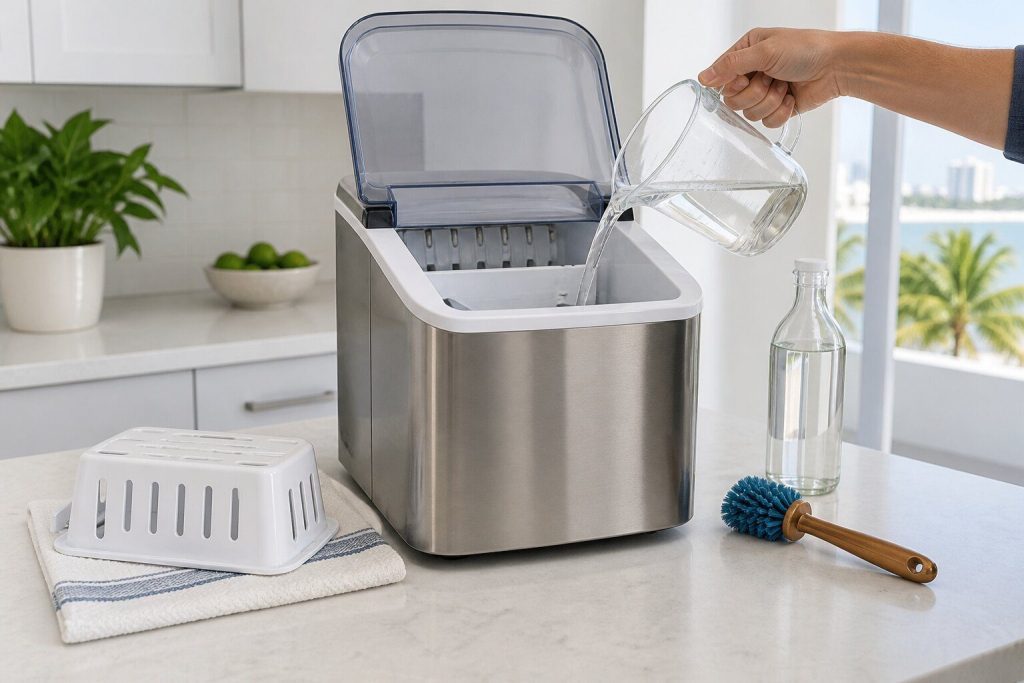
Soft, cloudy or slow ice on a countertop machine, or a cycle that has become long and noisy. Scale is the ordinary enemy of these appliances here, and the routine is the maker's own: a descaling solution through the water path, a rinse cycle, and the reservoir and pump cleaned by hand. It is maintenance rather than repair, and doing it twice a year is the difference between a machine that lasts and one that does not.
- The commonest cause of slow, soft or cloudy ice on a countertop machine
- The maker's own routine, not a household improvisation
- Twice a year in this water is the honest interval
-
from $99 Countertop ice machine service
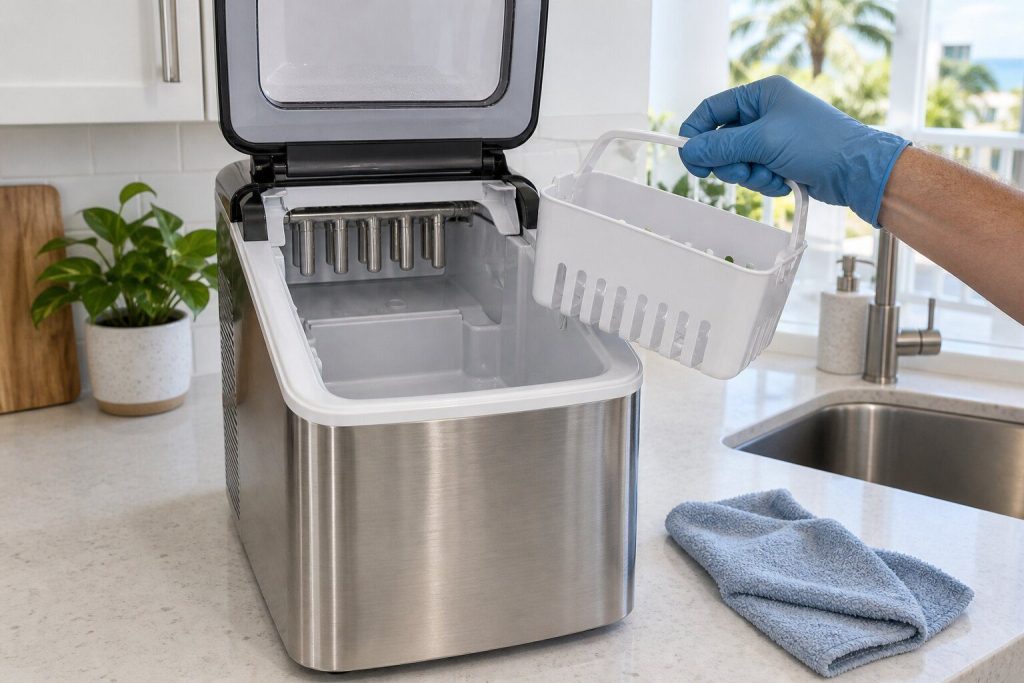
Frigidaire's standalone ice makers are three countertop machines — a reservoir you fill by hand, a pump, a set of chilled fingers and a basket the machine does not keep frozen. They fail in small-appliance ways, and we are straightforward about the economics: scale, a pump or a sensor is worth doing, and a sealed-system failure on a machine of this class usually is not.
- A countertop appliance, not a plumbed cabinet — this badge builds no undercounter machine
- Scale, pump priming and the full-basket sensor cause most of it
- We say when a repair is not worth the money instead of taking it
-
It runs, and the basket stays empty Countertop ice maker making little or no ice
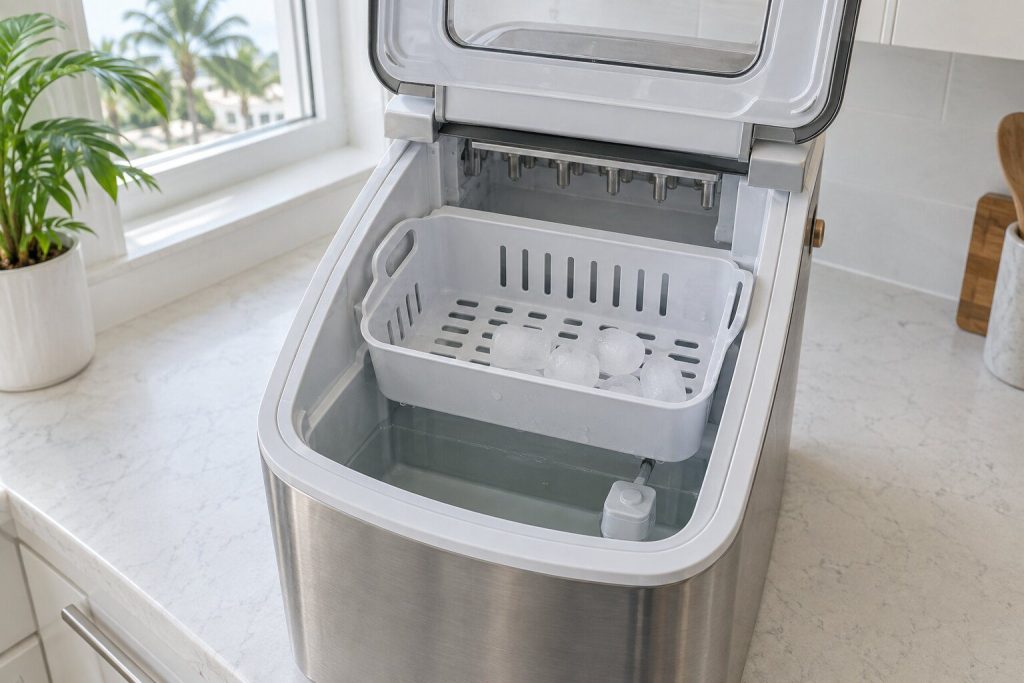
Frigidaire's standalone ice makers are countertop machines you fill by hand, and the failures are small-appliance failures: scale in the water path, a pump that has lost its prime, or the sensor that decides the basket is full being fooled by splash. Before anything else, know one design fact — the basket is not refrigerated, so ice melting back into the reservoir is normal and not a failure.
- The basket is not refrigerated: melting back into the tank is by design
- Scale is the ordinary enemy of these machines in this water
- A full-basket sensor fooled by splash stops a perfectly good machine
Questions people ask about this
How to clean a Frigidaire ice maker with vinegar if it has a clean button?
Use it — fill the reservoir with the vinegar solution first, then run the clean cycle, then drain and run two clean-water cycles the same way. The button runs the pump without freezing, which circulates the solution more thoroughly than an ice cycle does.
Can I use bleach instead?
No. Bleach does nothing to scale, which is a mineral deposit rather than a growth, and it is difficult to rinse out of a reservoir and a pump completely. Vinegar or a food-safe descaler are the two right answers.
Maintenance & Prevention
More guides like this one
-
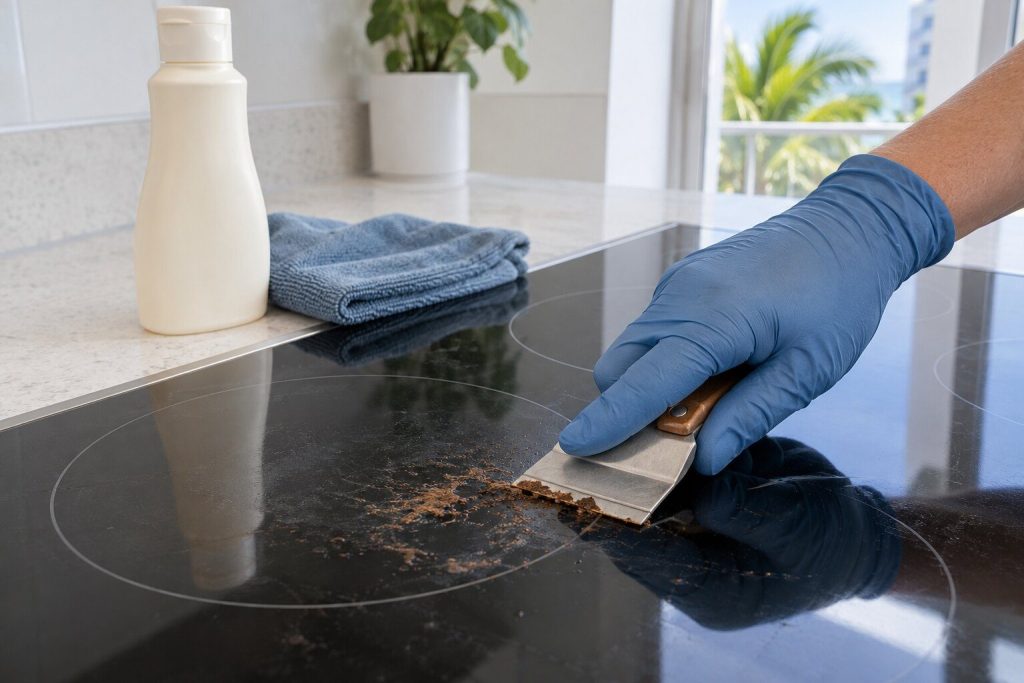
Cleaning a Ceramic Cooktop Without Scratching It
Three things mark these permanently, and one tool everybody is afraid of is the right one. A marked top is not repairable, so the method matters.
Read more -
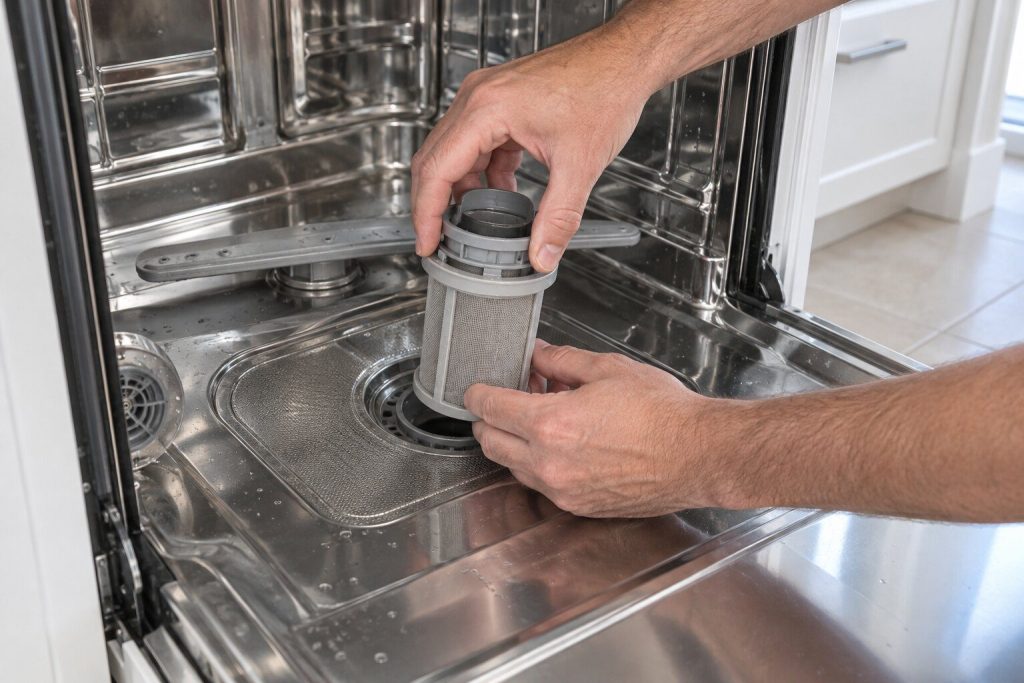
The Frigidaire Dishwasher Filter, and the Five Minutes That Prevent a Drain Call
It twists out by hand, it is an owner item like a lint screen, and the maker's own answer to the i40 code is to clean it.
Read more -
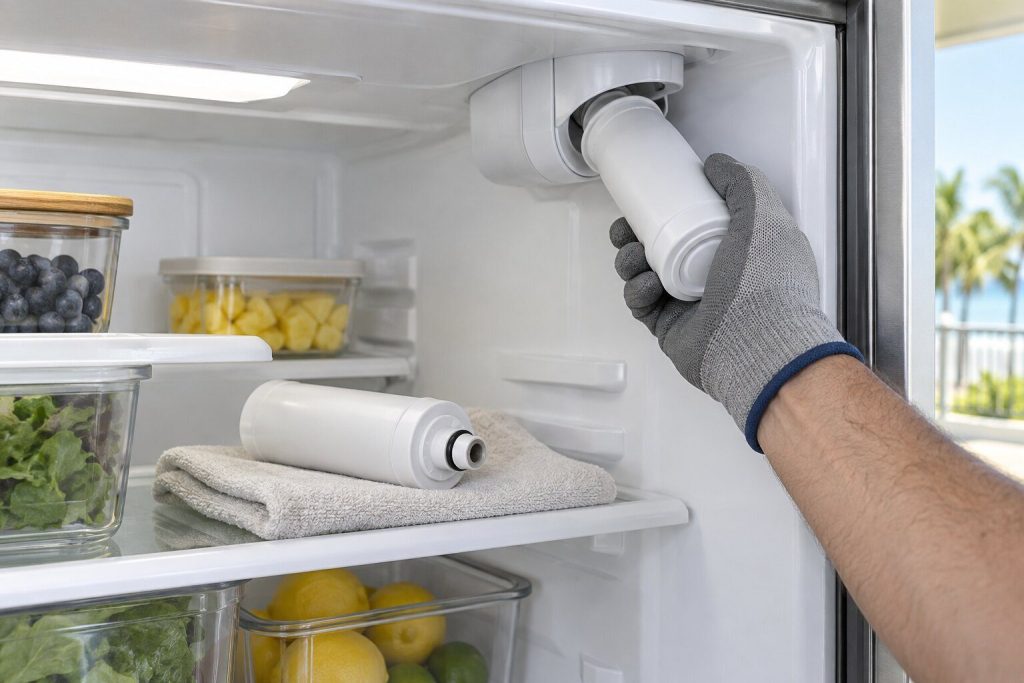
How Often a Frigidaire Refrigerator Water Filter Actually Needs Changing
Six months is the label. The honest answer is the water and the household — and the part nobody mentions is what happens in the first ten minutes afterwards.
Read more
Tell us the model number and what it is doing.
This article is based on:
- Official manufacturer documentation
- Internal repair procedures
- Technician repair history
- Company quality standards