Common Problems
How Long a Frigidaire Refrigerator Lasts, and What Actually Ends One
Twelve to fifteen years is the range most of these cabinets reach, and in South Florida the low end of that is more common than the high end. But the number is the least useful part of the answer. What decides whether a particular refrigerator is finished is which part has failed: a fan, a defrost heater, a thermostat, a door seal, a control board or an ice maker module are all stocked parts on this badge and all worth fitting on a ten-year-old cabinet. A failed compressor or a leak in the sealed system is the other conversation, because that repair costs a large fraction of a new machine and comes with no promise about the rest of it. So the honest version is: this cabinet lasts until its sealed system fails, and how soon that happens depends mostly on how hard it has been made to work — which in this climate means the condenser coil and the door seal.
The full guide
How long do Frigidaire refrigerators last is a question with a number for an answer and a much more useful answer behind the number.
How long do Frigidaire refrigerators last? The number, and why it settles nothing
Twelve to fifteen years is what these cabinets typically reach. In this territory the lower half of that range is more common, and a cabinet in a garage or a screened service area is often finished several years earlier than the same model in an air-conditioned kitchen.
But nobody stands in front of a warm refrigerator wondering about averages. The real question is whether *this* one is worth another repair, and the year on the plate is close to irrelevant to that.
One part decides it, and it is not the one people expect
There are two categories of failure inside a refrigerator and they behave completely differently.
Everything outside the sealed system. The evaporator fan, the condenser fan, the defrost heater, the defrost thermostat, the main control board, the door seal, the ice maker module, the water valve, the dispenser. All of them fail. All of them are replaceable, and on this badge all of them are stocked parts rather than three-week orders. A twelve-year-old cabinet that needs one of these is a repair, and usually a single visit.
The sealed system. The compressor, the condenser, the evaporator and the refrigerant sealed inside them. When that fails — a compressor that will not start, or a slow leak that leaves the cabinet unable to reach temperature no matter what else is right — the repair is a large fraction of what a new machine costs, it takes specialist recovery equipment, and it comes with no promise at all about the ten-year-old parts around it.
That is the whole decision. Not the age: which half of the machine.
Why this matters more on this badge than on most
This is a volume brand. The cabinet was inexpensive when it was new, and in a great many of the homes we work in nobody chose it — it came with the condominium, or the landlord fitted it.
That cuts both ways, and it is worth being straight about both.
Against the repair: a new equivalent cabinet is not an enormous sum, so the point where fixing stops making sense arrives earlier than it does on a badge where the replacement is five figures.
For the repair: the parts channel behind this make is the widest we work with. A fan motor, a heater, a thermostat or a seal is on the van rather than on order, which means the visit that finds the problem is frequently the visit that fixes it. That keeps the labor down and it keeps a perfectly sound cabinet in service for years past the point where a slower parts supply would have written it off.
What shortens one of these here, specifically
Two things, and neither of them reports itself.
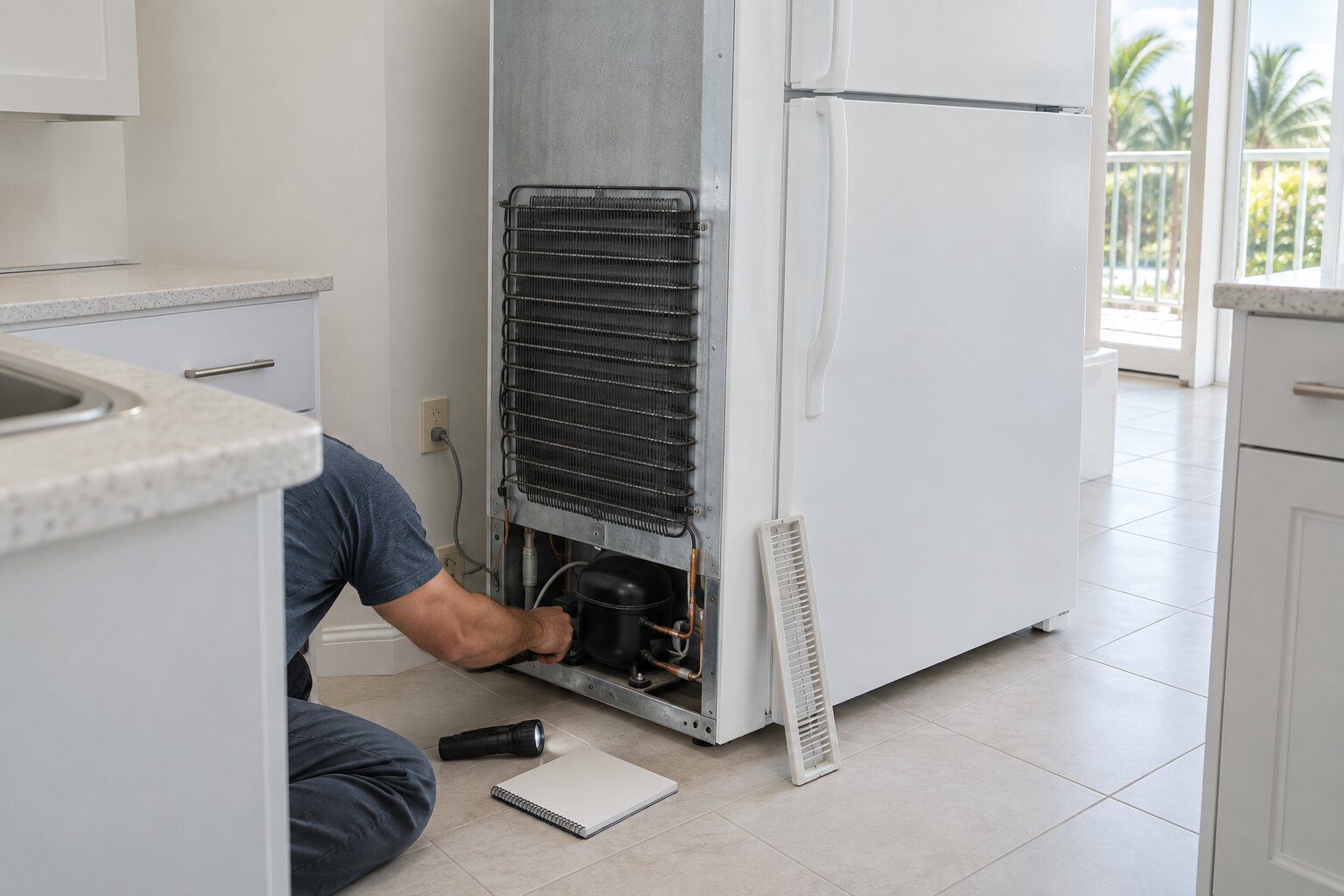
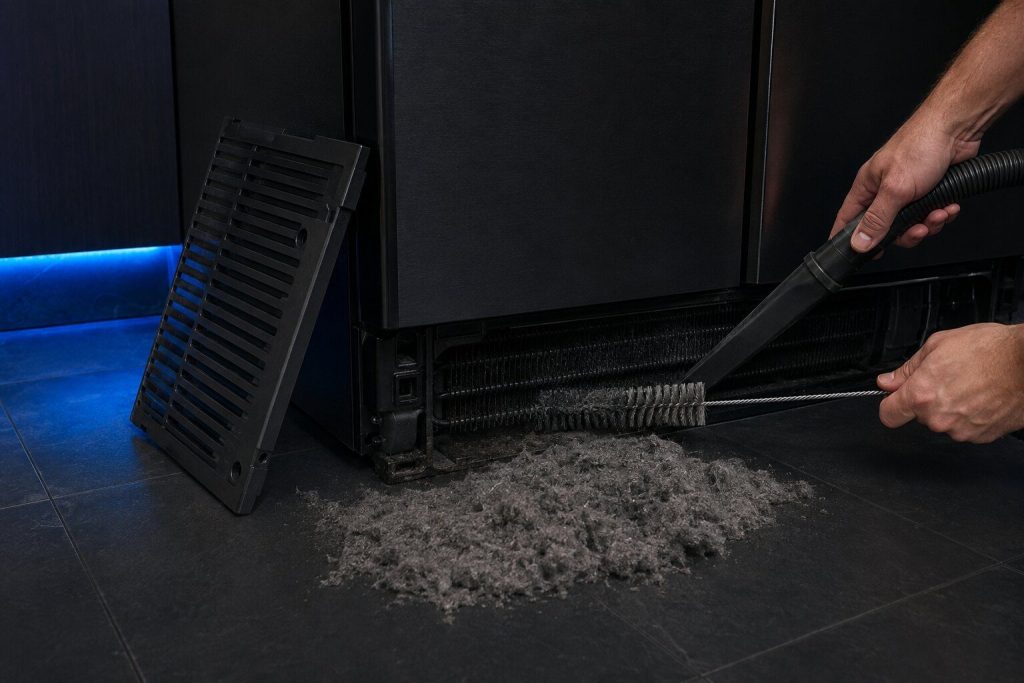
The condenser coil. On most of these cabinets it sits behind a snap-off grille a few inches off the floor. In a ground-floor apartment with a pet and windows that open, it builds a visible mat of dust and hair within a year. The machine keeps working the entire time this happens — it simply runs longer and longer to reach the same temperature, and the compressor is what pays for that. Nothing on the panel mentions it. It is the single cheapest thing that can be done to extend one of these, and the one most often skipped.
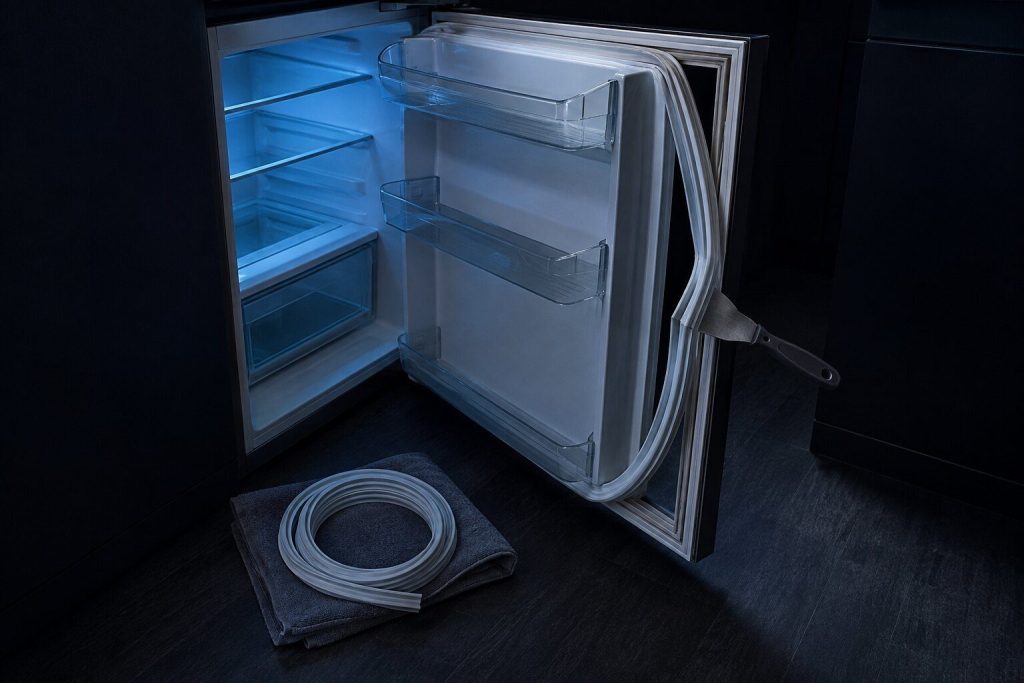
The door seal. A gasket that has hardened lets warm, wet air into the cabinet all day. In this climate that is not an efficiency question, it is a frost question: humid air is exactly what buries an evaporator coil, and a coil in ice makes the compressor run without ever satisfying the thermostat. A dollar bill closed in the door and pulled out at ten points around it will tell you in a minute whether yours still seals.
Neither of those is dramatic and neither triggers a code. They just quietly move the sealed system's failure forward by years.
The layout that decides what a failure looks like
The largest family in this maker's catalog is the plain top-freezer, and the side-by-side is close behind. Both are single-evaporator cabinets: one cold source, one fan, one air path, with the fresh-food section getting only what the freezer gives it.
That is worth knowing because it explains the most common complaint we get on this badge — a warm refrigerator over a freezer that still looks completely healthy. On a two-evaporator machine that really would suggest two problems. Here it is one, it is usually in the air path or the defrost circuit, and it is almost always a stocked part rather than the sealed system.
In other words: the failure that frightens people most on these cabinets is usually the cheap one.
When we say do not repair it
We would rather tell you at the diagnostic than after parts have been ordered, and there are three cases where the arithmetic genuinely says stop.
A compressor on a cabinet over about ten years old. A refrigerant leak in the evaporator, which is inside the foam and not practically repairable. And a cabinet that has already had two unrelated repairs in a year, which is usually telling you something about the whole machine rather than about any one part.
Outside those three, on this badge, the repair usually wins — and it wins by more than people expect, because the parts are already on the van.
If it turns out to be a repair
What this leads to, and what it costs
Every job on this site is priced the same way: an on-site diagnostic first, the figure agreed in writing before anybody starts.
-
from $109 Condenser cleaning
The cheapest thing that can be done to a refrigerator in South Florida, and the one most often skipped. A condenser matted with dust and pet hair cannot reject heat, so the compressor runs longer, the cabinet drifts in the afternoon and the machine ages years in a summer. On a garage freezer or a beverage cabinet built into a cabinet run it matters more still, because the air around them is warmer to begin with.
- The most preventable refrigeration failure there is in this climate
- Long run times and afternoon drift are the symptoms it fixes
- Worth booking with other work rather than alone
-
from $129 Door seal replacement
A gasket that has hardened, torn or stopped pulling the door shut lets warm wet air into the cabinet all day. In Miami that shows up as sweating along the door frame, ice building at one corner of the freezer, and a compressor that never rests — and the seal is one of the few parts on a refrigerator where age alone is a good enough reason to replace it.
- Sweating on the frame and ice in one corner are the usual signs
- Seals die faster here: they never fully dry between openings
- Cheap next to what a leaking door does to run time and food
-
It runs, the light comes on, and the food is warm Refrigerator not cooling
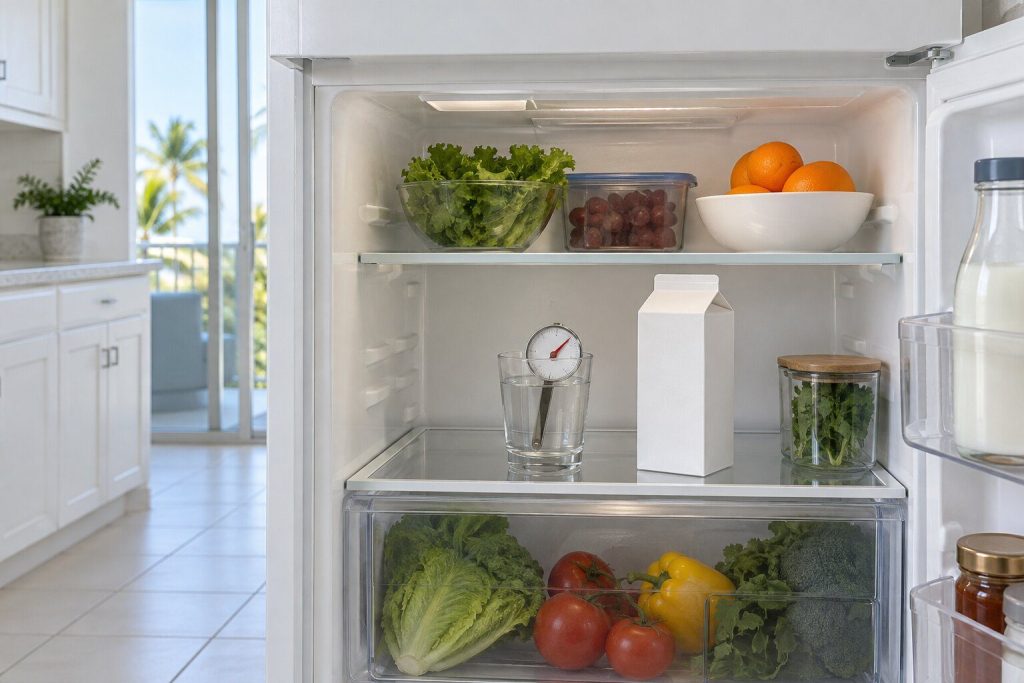
The cabinet is doing something — you can hear it — and it is still not cold. On most of the machines this badge sells there is nothing on the front to read, so the first useful thing you can do is not a repair at all: put a thermometer in each compartment and note the two numbers an hour apart. That pair tells us more than any description of the noise, and it is the difference between an hour of guessing and a visit that arrives with the right parts.
- A cold freezer with a warm fridge is an air problem, not a refrigerant one
- Both halves drifting together is the dearer diagnosis, and worth knowing before we arrive
- Three free things — a blocked vent, a stuffed condenser, a door held ajar — end a real share of these
-
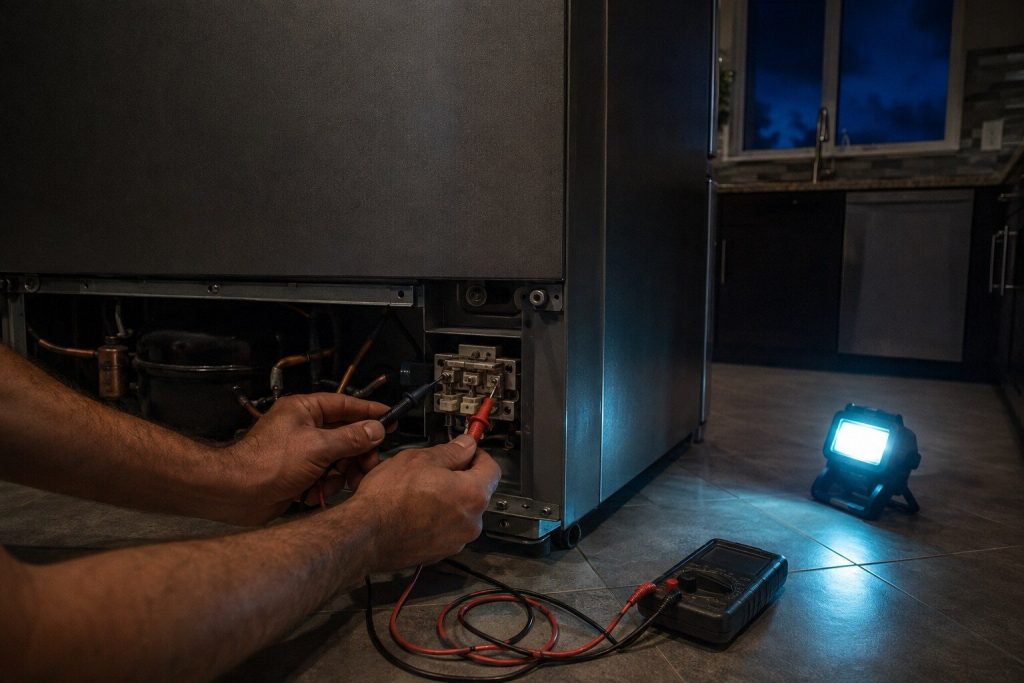
from $139 Refrigerator not cooling repair cost
What refrigerator not cooling repair costs on a Frigidaire in South Florida, from $139, and what moves that figure up or down. No final price is published anywhere on this site: the exact cost is confirmed on site after the diagnostic and agreed in writing before anything is opened.
- from $139, and the three things that move it
- A parts channel as wide as any on this fleet, which holds the floor down
- Confirmed on site in writing, and we say when a repair is not worth doing
Questions people ask about this
How long do Frigidaire refrigerators last compared with other makes?
About the same, and the difference that matters is not the badge — it is what a repair costs when something does fail. On this make the common parts are stocked rather than ordered, so a ten-year-old cabinet is usually worth fixing where the same age on a premium built-in might not be.
Is it worth repairing a refrigerator that is twelve years old?
It depends entirely on the part. A fan motor, a defrost heater or a door seal on a twelve-year-old cabinet is straightforward arithmetic in favor of the repair. A compressor is not, and we will say so with the numbers rather than sell you the work.
Common Problems
More guides like this one
-
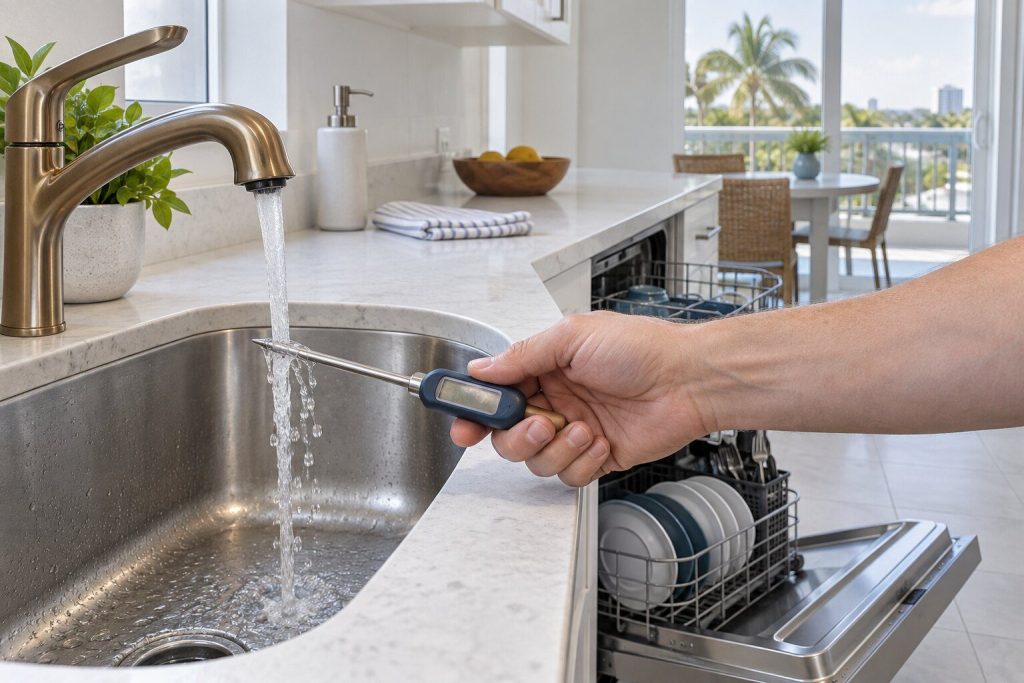
Why a Frigidaire Dishwasher Cycle Takes as Long as It Does
Two to three hours is normal, and the reason is heat. The machine waits for its water — about a minute or two of delay for every degree of temperature rise.
Read more -
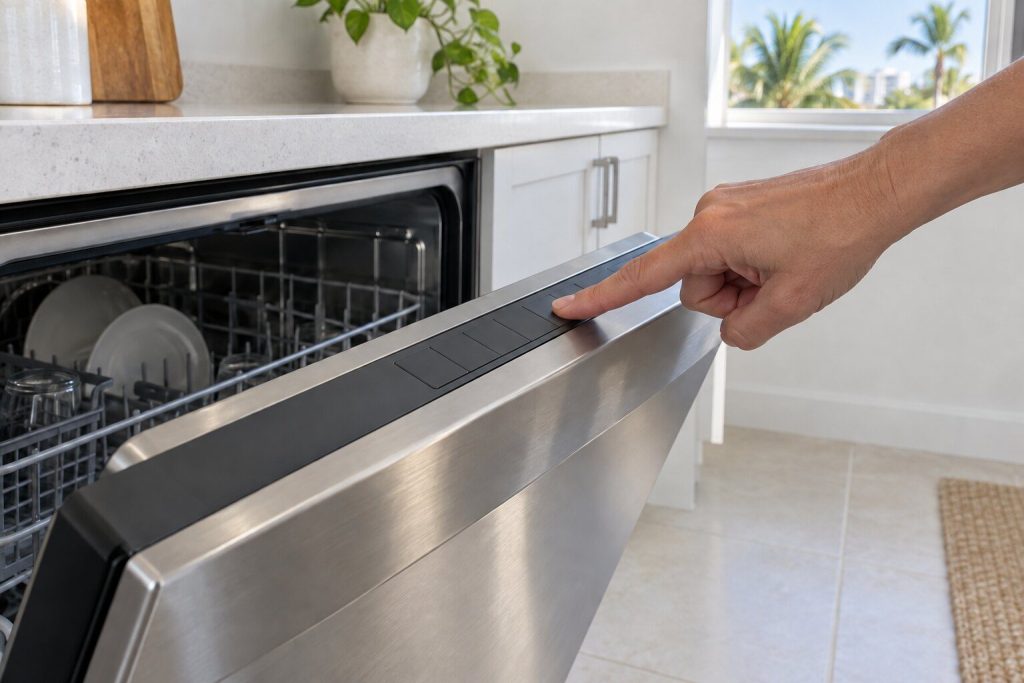
Unlocking a Frigidaire Dishwasher That Is Ignoring Every Button
Three different things get confused here: the control lock, a delay start counting down, and a door latch switch that is not making contact.
Read more -
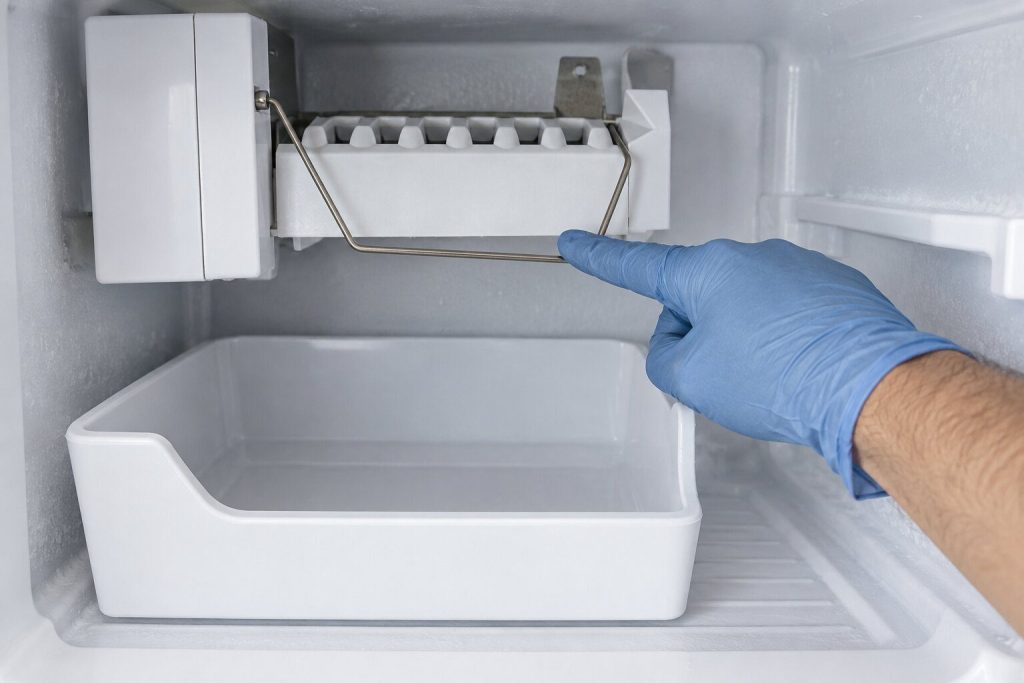
How to Tell Whether Your Frigidaire Ice Maker Is Actually Switched On
A wire arm knocked up by a box of frozen food is the cheapest reason a household goes a week without ice — and it looks exactly like a broken ice maker.
Read more
Tell us the model number and what it is doing.
This article is based on:
- Official manufacturer documentation
- Internal repair procedures
- Technician repair history
- Company quality standards