Common Problems
How Long a Frigidaire Oven Should Take to Preheat, and What a Slow One Means
Ten to fifteen minutes to reach 350 degrees is normal on these ovens, and fifteen to twenty to reach 425. What the beep tells you is that the air in the cavity has arrived at the setting — not that the oven has. The walls, the racks and the door are still catching up, and for anything that depends on radiant heat, giving it another ten minutes past the beep is what separates a first batch that behaves from one that does not. A genuinely slow preheat is a different thing and usually means the oven is heating on half of what it has: on an electric range there are two elements, and a range that takes half an hour to reach 350 while eventually getting there is almost always one of them out. The other cause is a temperature sensor reading high, which makes the oven stop heating too early — that one usually shows up as poor baking rather than as slow preheating.
The full guide
How long does a Frigidaire oven take to preheat has a straightforward answer and a much more useful footnote.
How long does Frigidaire oven take to preheat? The numbers
Ten to fifteen minutes to 350. Fifteen to twenty to 425. A little faster on convection, because the fan distributes the heat instead of waiting for it to find its own way around.
If your oven is inside those, it is behaving.
The beep is the air, not the oven
This is the part worth knowing, and it explains a complaint we hear constantly: *the first tray always comes out wrong and the second one is fine.*
The sensor that decides when to beep sits in the air near the back wall. When the air reaches 350, the oven says so. But the walls, the door, the racks and the trays are all still colder than that, and they are what supplies the radiant heat that browns a crust or sets the edge of a cake.
Give it ten more minutes past the beep, door closed, and the whole cavity arrives. That single habit fixes more baking complaints than any repair we sell.
It is also why an oven "runs cold" in a way a thermometer does not capture: the air is at temperature, the mass around it is not, and food notices the difference.
What normal actually looks like once it is hot
An oven does not hold a temperature — it cycles. The element comes on, the air passes the setting, the element goes off, the air falls below, the element comes back.
A swing of around twenty-five degrees either side of the mark is completely ordinary on a domestic oven. So a thermometer that reads 372 and then 328 has not caught a broken oven; it has caught a working one at two ends of the same cycle.
That matters here because it is the reason not to start adjusting things: if the *average* is right, nothing needs fixing.
When slow is a real problem
Half an hour to 350, but it eventually gets there. On an electric range this is almost always one element out of two. There is a bake element in the floor and a broil element in the roof, and on most preheats both contribute. With one of them dead the oven heats on half its capacity — slowly, correctly, and forever.
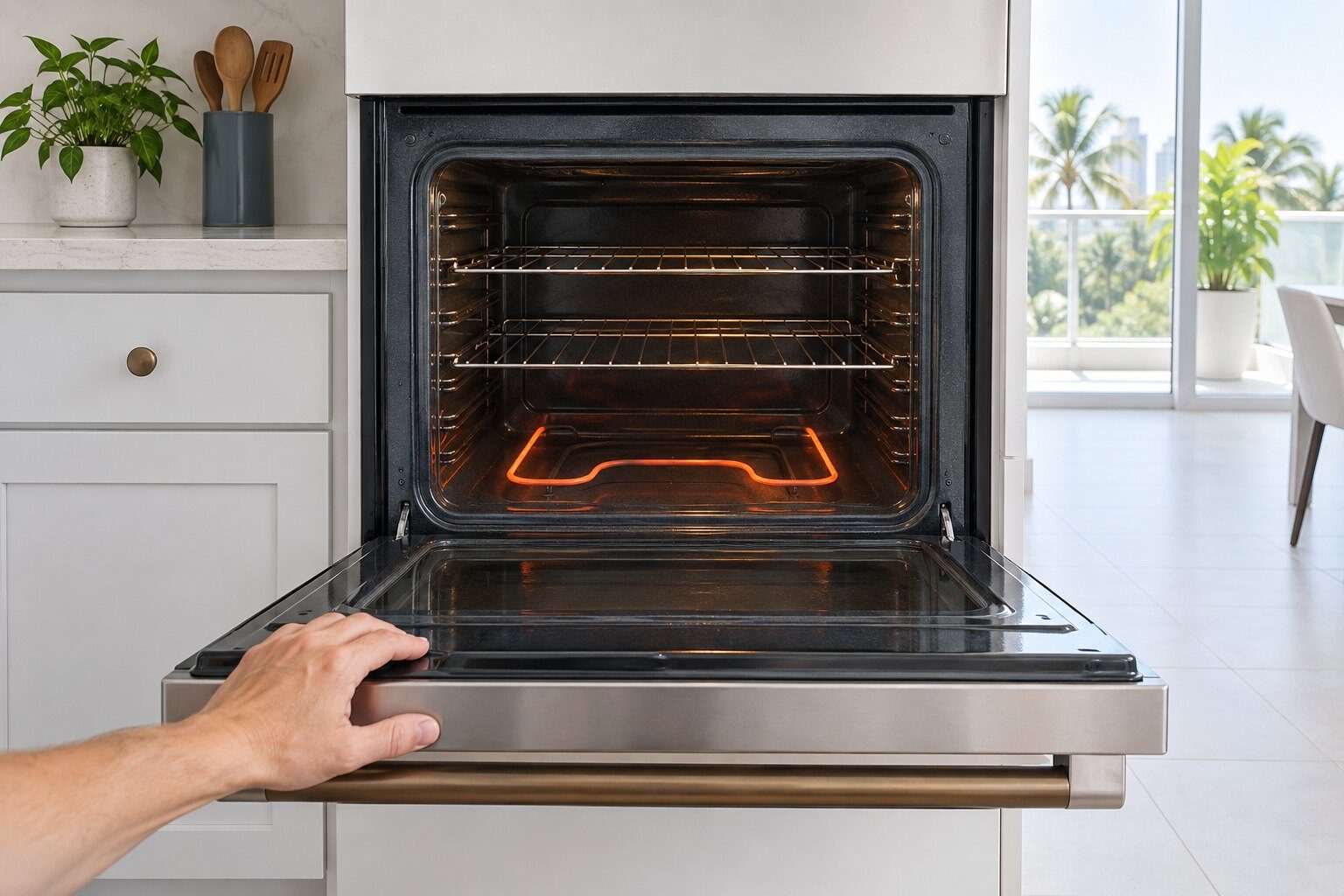
The test costs nothing: watch through the door glass during a preheat. Both should glow. A dark one is your answer.
It never arrives. Different problem, and stop timing it. Either the sensor is reading high — telling the control the cavity is hotter than it is, so it stops heating early — or an element has failed open. Both are measured with a meter rather than guessed at, and both are stocked parts on this badge.
It heats and then stops with a code. If the panel shows F10, that is thermal runaway: the oven has read a temperature higher than the one it was asked for and stopped itself. That is a protection working rather than a part failing, and the maker's own instruction is to turn the oven off and let it cool. It is the one code on this appliance not to keep resetting past — behind it is usually a relay welded closed or a sensor reading low, so the element stays energized past the setpoint.
F30 or F31 point at the oven sensor circuit — open or shorted — and both mean the oven's own measurement is unreliable.
Three habits that cost nothing
Preheat with the racks in. They are part of the mass. Sliding cold racks into a hot oven undoes part of the wait.
Do not open the door to check. A domestic oven loses a large fraction of its heat in a couple of seconds with the door open, and gets it back much more slowly than it lost it.
Do not put a tray on the floor of the oven. It blocks the bake element's radiant path and makes the whole cavity behave unevenly, which is then blamed on the oven.
And one thing about this maker's ranges
Frigidaire, Gallery and Professional are trim levels on one platform rather than different machines. The badge on the door predicts the finish and the panel; it does not predict the elements, the sensor or the board behind them.
So an oven that preheats slowly does not preheat slowly *because* it is the entry-level model. Preheat times on these are decided by the cavity size and by whether both elements are working, and nothing about the name on the front changes either.
If it turns out to be a repair
What this leads to, and what it costs
Every job on this site is priced the same way: an on-site diagnostic first, the figure agreed in writing before anybody starts.
-
Oven not heating
Two complaints wear one title, and separating them saves a visit. An oven that is stone cold is an element, an igniter or a supply problem; an oven that heats but stops well short is almost always the sensor or the calibration. A thermometer on the middle shelf tells us which one you have, and that decides what rides on the van.
- Stone cold and never-hot-enough are different repairs
- On gas, a weak igniter gives slow heat rather than no heat — the classic misdiagnosis
- An oven thermometer is the cheapest diagnostic tool in the kitchen
-
Oven temperature is wrong
Sometimes a failure, sometimes an oven behaving correctly and a recipe written for a different one. These cavities are allowed to swing either side of the setting as the thermostat cycles, and a new oven often runs truer — and hotter at the edges — than the twenty-year-old machine it replaced. A thermometer and three readings settle which of those you have.
- A cavity swings by design; the question is where the middle of the swing sits
- A drifting sensor is a part; a small consistent error is a calibration offset
- A door that leaks heat produces exactly this with nothing electrical wrong
-
Oven not heating repair
An oven that stays cold, or one that heats to something well short of what it was set to. On an electric cavity that is the bake or broil element, its relay, or the sensor the control is reading; on gas it is the igniter, which fails by drawing too little current to open the valve properly and produces weak, slow heat rather than none at all. Both are ordinary jobs with parts that are usually on the van.
- Cold and 'not hot enough' are two different diagnoses
- On gas, a weak igniter gives slow heat rather than no heat — the classic misdiagnosis
- The sensor is measured, not guessed at, before a control is quoted
-
Range error code F10
Frigidaire range error code F10: The oven is reading a temperature higher than the one it asked for and has stopped itself. Which machines can raise it, what the maker publishes about it, and what to do next.
What this one means
Questions people ask about this
How long does a Frigidaire oven take to preheat if it is convection?
Usually a little faster, because the fan moves the heat around instead of waiting for it to spread. What convection does not change is the walls and racks, so the ten minutes after the beep are still worth having for baking.
Should I preheat with the racks in or out?
In, and in the position you will bake at. The racks are part of the mass the oven has to bring up to temperature, and putting cold racks into a preheated oven undoes some of the wait you just sat through.
Common Problems
More guides like this one
-
Why a Frigidaire Dishwasher Cycle Takes as Long as It Does
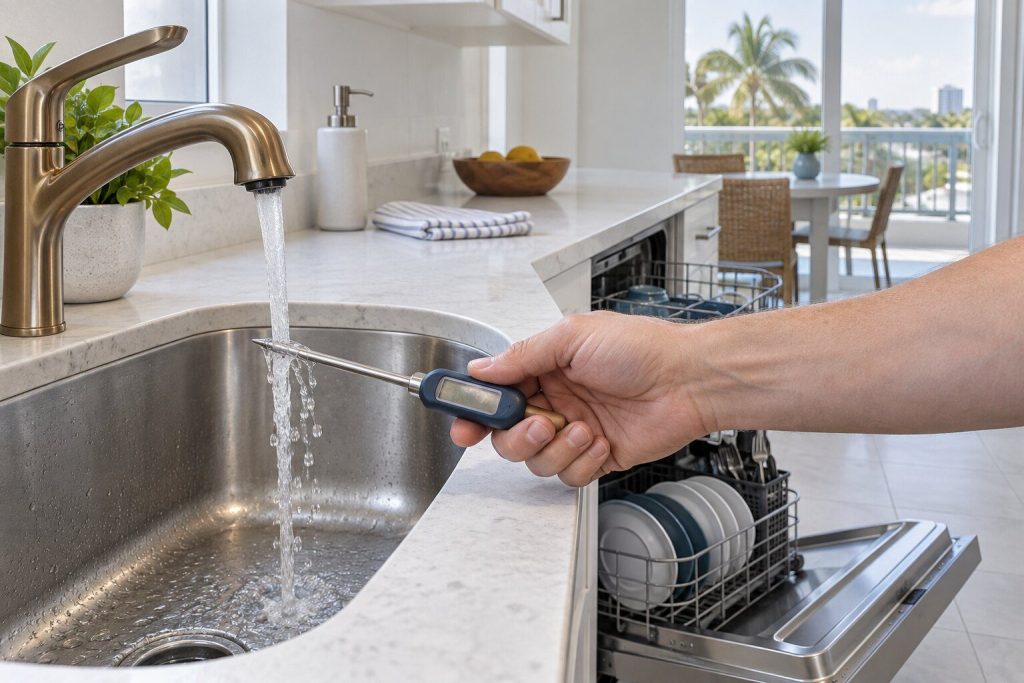
Two to three hours is normal, and the reason is heat. The machine waits for its water — about a minute or two of delay for every degree of temperature rise.
Read more -
Unlocking a Frigidaire Dishwasher That Is Ignoring Every Button
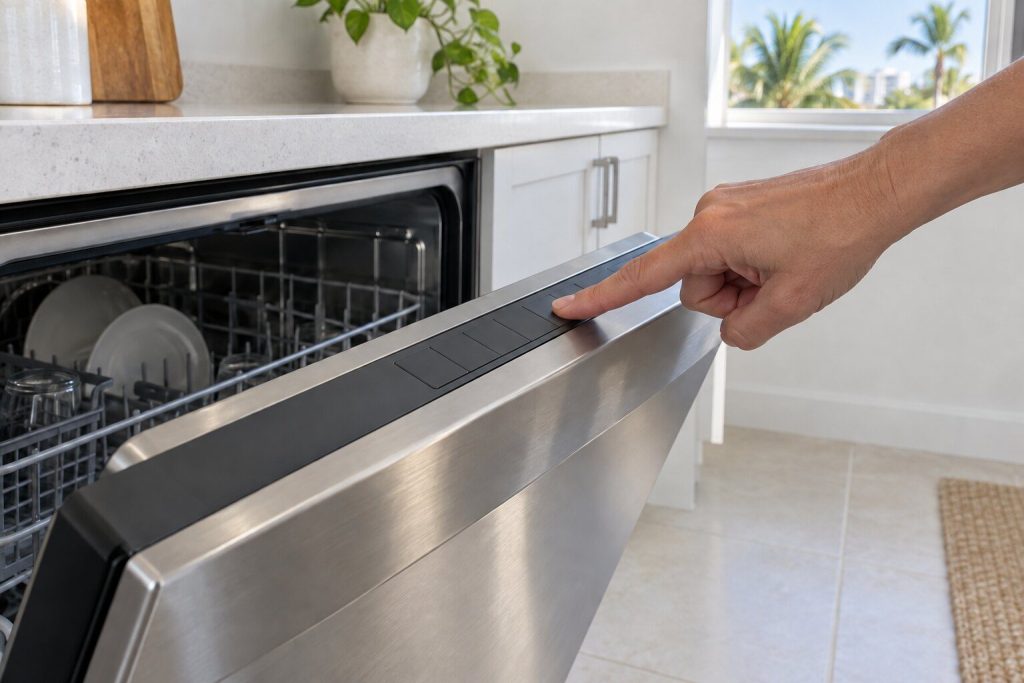
Three different things get confused here: the control lock, a delay start counting down, and a door latch switch that is not making contact.
Read more -
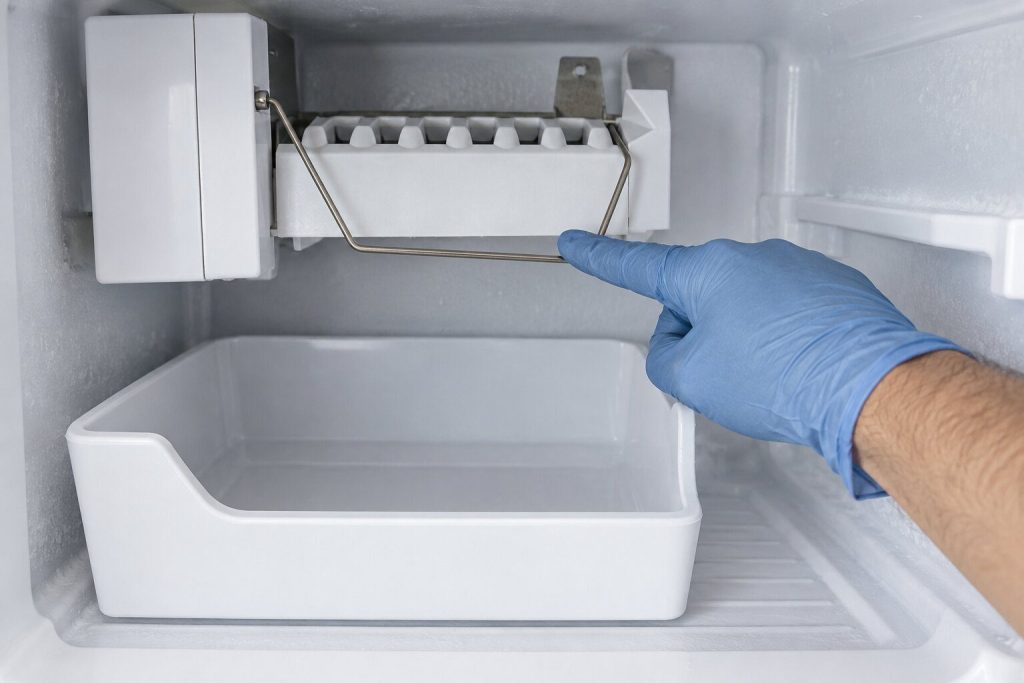
How to Tell Whether Your Frigidaire Ice Maker Is Actually Switched On
A wire arm knocked up by a box of frozen food is the cheapest reason a household goes a week without ice — and it looks exactly like a broken ice maker.
Read more
Tell us the model number and what it is doing.
This article is based on:
- Official manufacturer documentation
- Internal repair procedures
- Technician repair history
- Company quality standards