Appliance
Frigidaire refrigerators
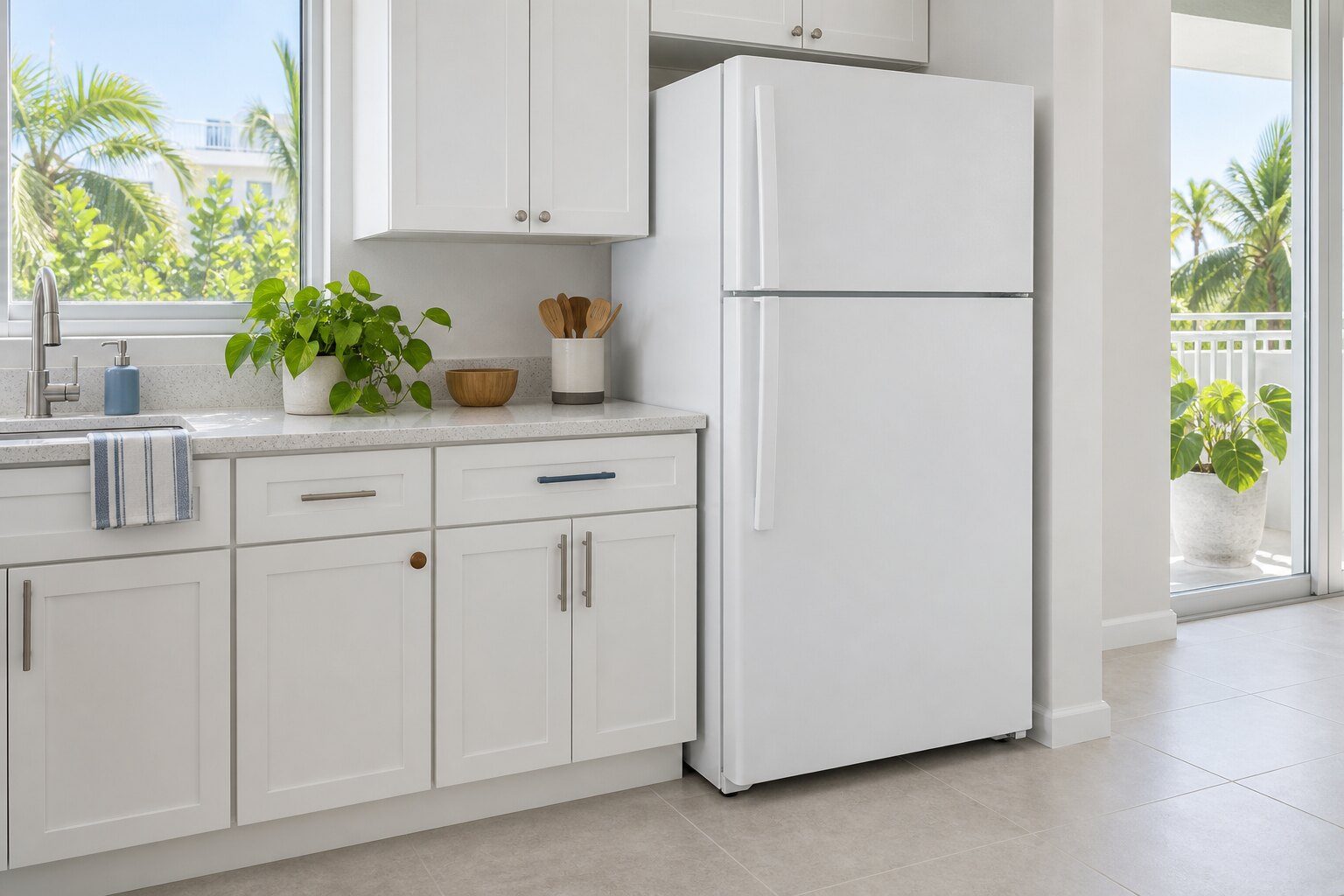
The deepest branch of this catalog by a distance: 142 cabinets, and the largest single family in everything Frigidaire currently sells is the plain top-freezer refrigerator — 55 of them. That number is the brand in one line. This is the refrigerator that came with the apartment, and half our calls are for a cabinet nobody chose. French door adds 44 and side-by-side 31, which is where the ice and water go wrong, and the two-cabinet compact and bottom-freezer families are small enough to name individually. In this climate the work concentrates on defrost, on door seals that never fully dry, and on condensers that live in salt air.
- 8 symptoms we are called out to
- From $89 diagnostic, credited to the repair
- 59 cities and neighborhoods covered
- OEM parts available on order
The short version
What this equipment is, for a repair
Configurations
Top freezer · French door · side by side
Access
Planned before the visit, not discovered on arrival
Parts
OEM, available on order
Diagnostic
From $89, credited to the repair
What goes wrong with it
Symptoms we are called out to on Frigidaire refrigerators
Each one covers the likely causes in the order they are worth checking, and what to do in five minutes before booking anything.
-
It runs, the light comes on, and the food is warm Refrigerator not cooling
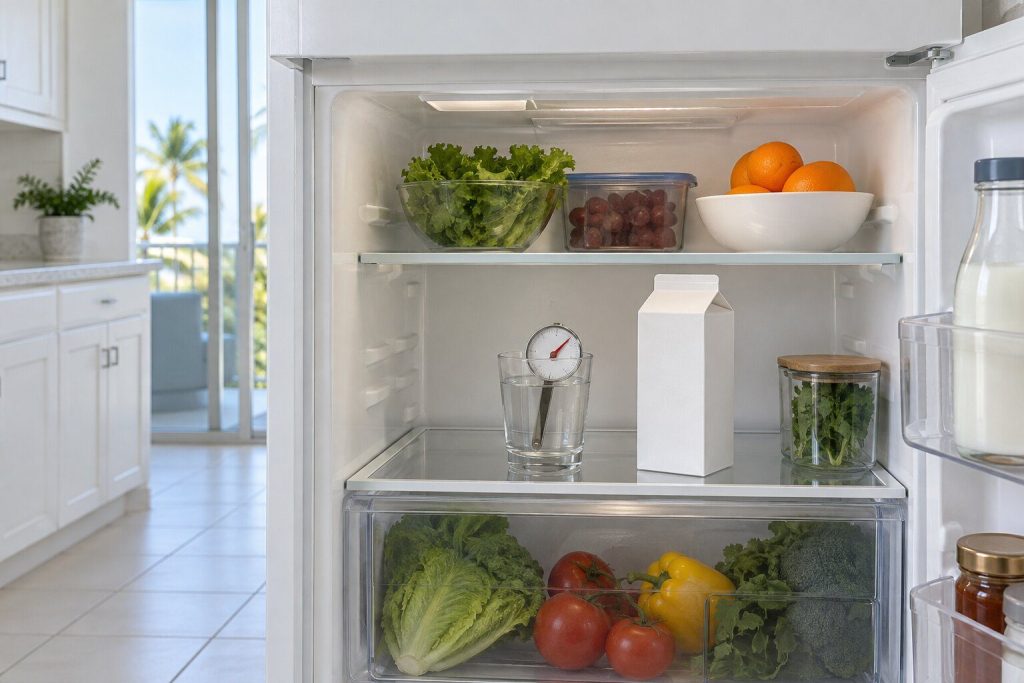
The cabinet is doing something — you can hear it — and it is still not cold. On most of the machines this badge sells there is nothing on the front to read, so the first useful thing you can do is not a repair at all: put a thermometer in each compartment and note the two numbers an hour apart. That pair tells us more than any description of the noise, and it is the difference between an hour of guessing and a visit that arrives with the right parts.
- A cold freezer with a warm fridge is an air problem, not a refrigerant one
- Both halves drifting together is the dearer diagnosis, and worth knowing before we arrive
- Three free things — a blocked vent, a stuffed condenser, a door held ajar — end a real share of these
-
A puddle on the floor, or water under the crisper drawers Water under the refrigerator
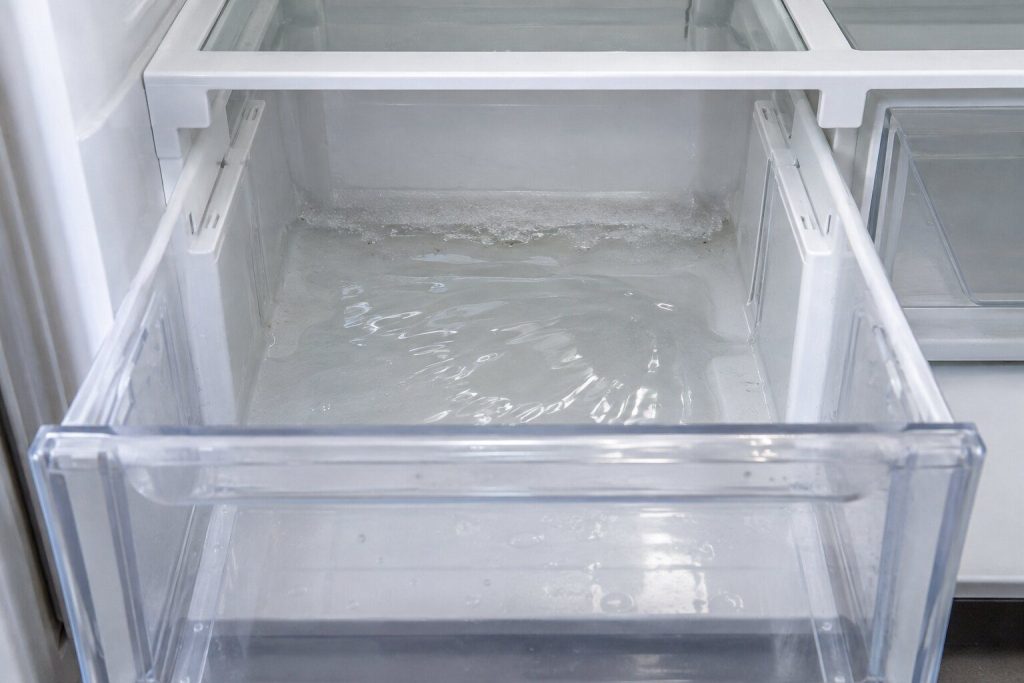
The commonest refrigerator call we take in South Florida, and usually the cheapest to put right. Where the water shows up is the whole diagnosis: under the drawers points at the defrost drain, on the floor at the front points at the drain pan or the door, and water at the back points at the supply line. Before you mop it, look and remember which of those three it was.
- Under the crisper is the defrost drain, and that is the usual answer here
- At the back is a water supply problem, which is the one that damages floors
- A cabinet that has been leaking for weeks is a cabinet-and-floor question too
-
Ice on the back wall, or a freezer that keeps growing a crust Frost building up inside
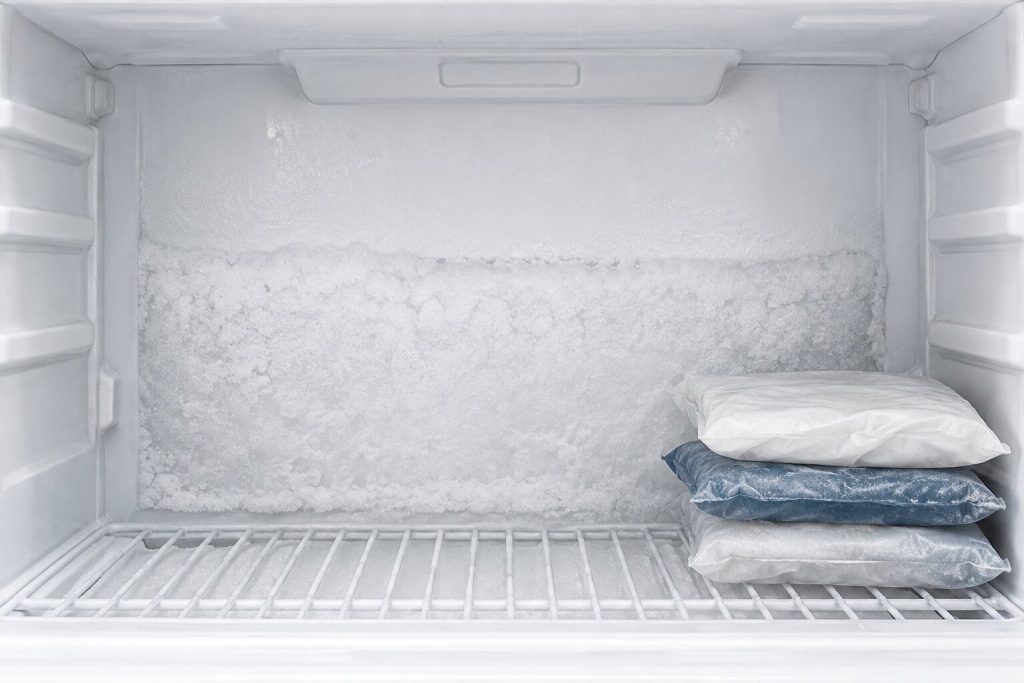
A frost-free cabinet is not supposed to accumulate anything, so frost is always a message. Where it is tells us which message: a sheet on the freezer back wall is the defrost circuit, frost around the door is a seal, and a fine crust over everything after a hot week is usually the humidity that came in through a door that was left ajar.
- A sheet of ice on the back wall is the defrost circuit, and it will not clear itself
- Frost at the door edge is a seal or an alignment question
- Chipping it out buys a week; the reason it formed decides whether it comes back
-
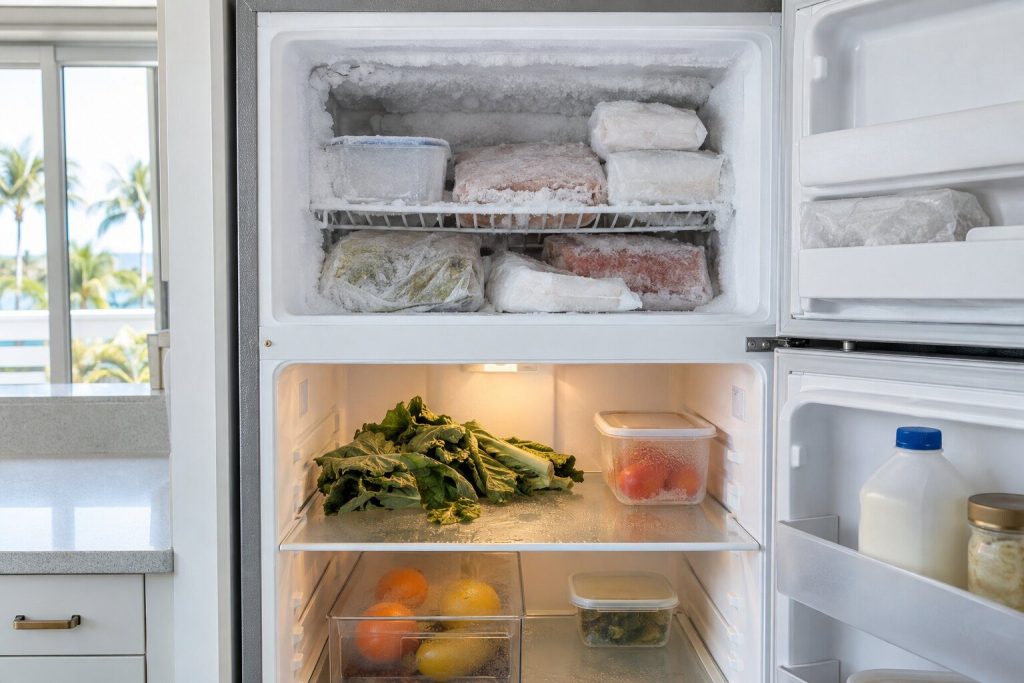
One half of the cabinet is fine and the other is not Fridge warm, freezer cold
This is the single most useful thing an owner can tell us about a refrigerator, because it rules out most of the expensive answers immediately. Almost every cabinet this badge sells makes its cold in one place and moves air to the other, so a cold freezer proves the sealed system is working and points the whole diagnosis at air: a fan, a damper, a duct or a coil under ice.
- A cold freezer proves the compressor and the refrigerant are doing their job
- The problem is air: fan, damper, duct or a coil under frost
- This is usually the cheaper half of the refrigeration repair list
-
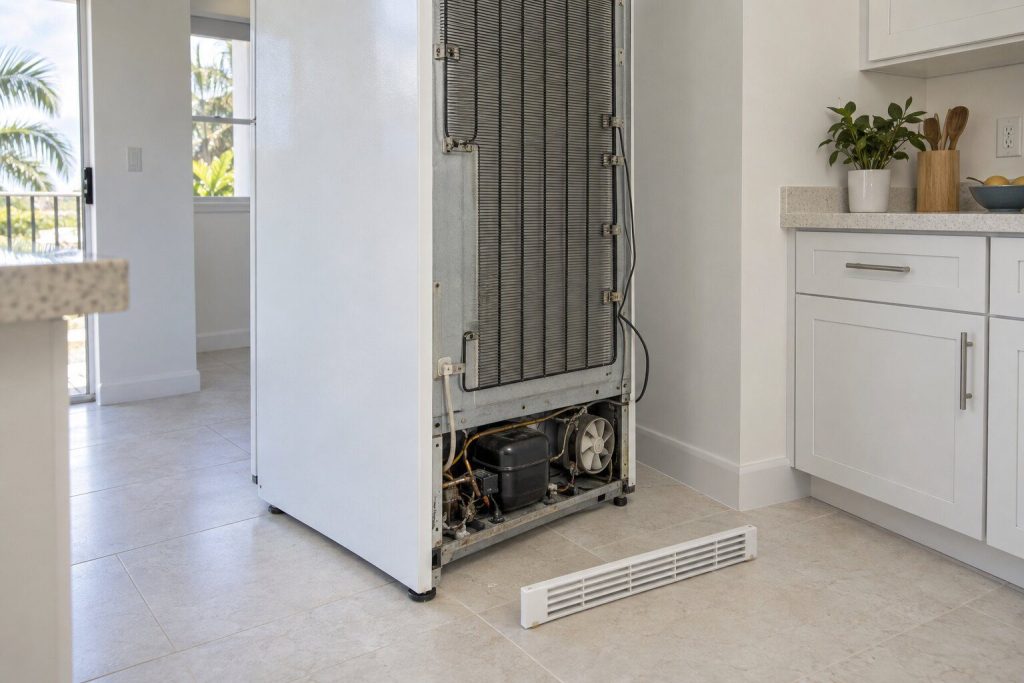
Chirping, rattling, buzzing or a bang from the back Refrigerator making a noise
Refrigerators are among the few appliances that give warning before they fail, and the noise is usually it. What matters is which noise: a chirp or squeal that comes and goes with the door is the evaporator fan, a rattle from the floor at the back is the condenser fan or the drain pan, and a click every few minutes with no cooling is the compressor relay. None of them are ignorable, and one of them is cheap this week and dear next month.
- A chirp that changes with the door is the freezer fan — cheap now, warm food later
- A rattle at floor level is usually the condenser fan or a loose drain pan
- Clicking with no cooling is the compressor relay and is worth attending to quickly
-
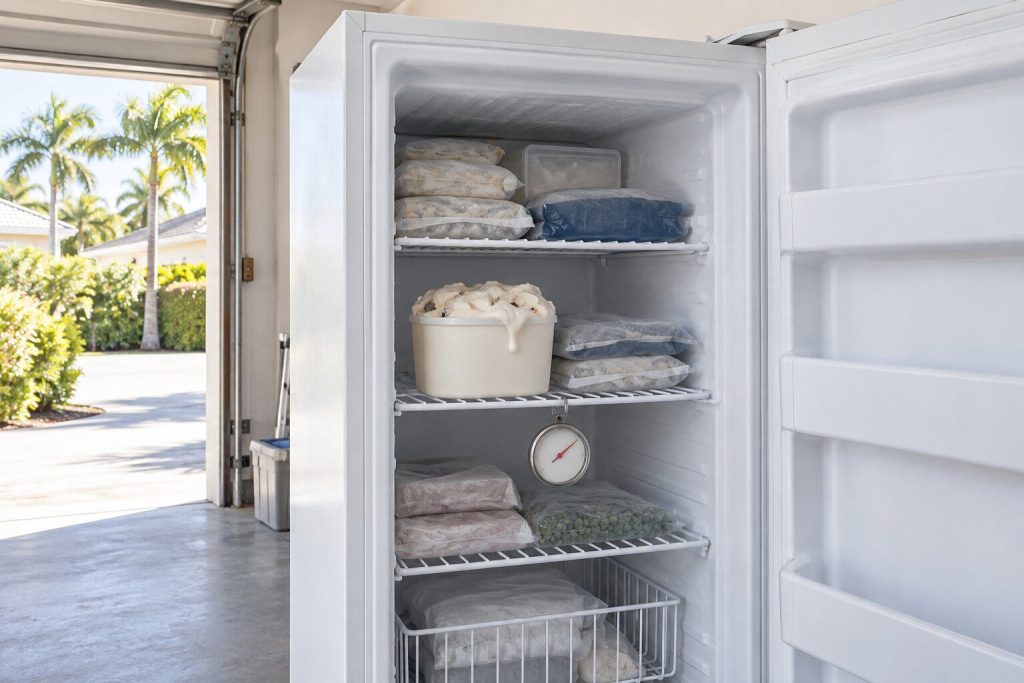
The cabinet is running and the food has gone soft Freezer not freezing
The expensive failure, because nothing announces it. A freezer that has drifted from 0°F to 20°F looks and sounds exactly like one that is working, and the first sign is usually the food. In South Florida there is an extra suspect that is not the machine's doing at all: a cabinet in a garage is being asked to work at an ambient it was never rated for.
- Nothing tells you until the food does — a thermometer is the whole early warning system
- A garage in August is not the room the cabinet was designed for
- Upright and chest freezers fail in different places, so say which you have
What we do on it
Repairs we carry out on Frigidaire refrigerators
Starting figures for this equipment in South Florida. The exact cost is confirmed after an on-site diagnostic — and this is not the whole list of what can go wrong, so call if your problem is not here.
-
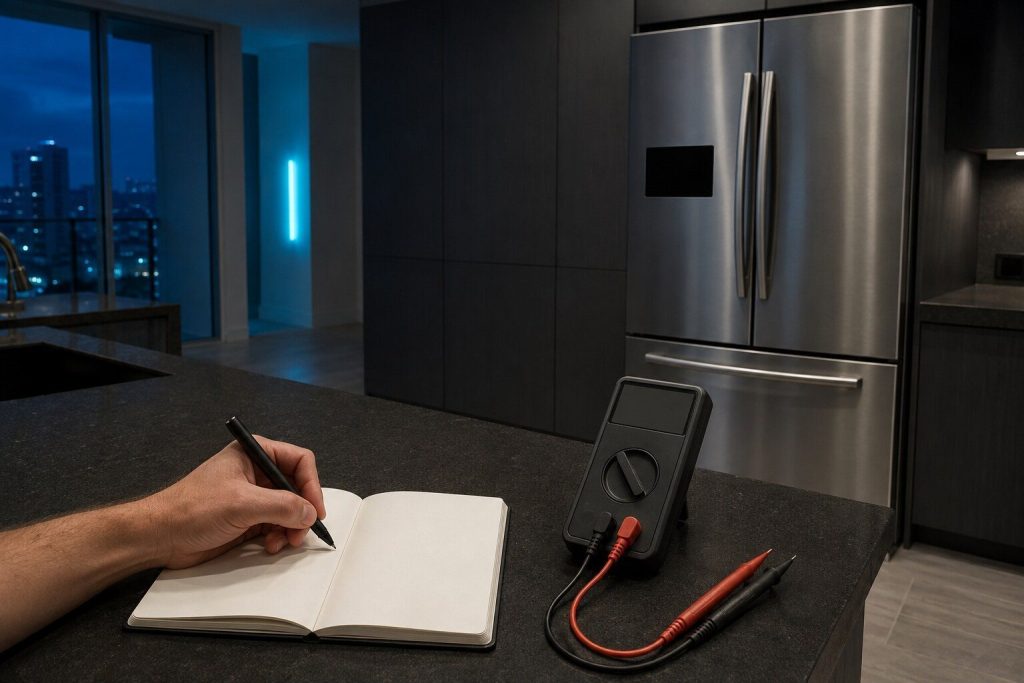
from $89 Diagnostic visit
We find out what is wrong before anybody quotes a part. On this make the first thing established is age, because the badge sells the appliance that came with the apartment and we open machines at every stage of life — a two-year-old range and a fifteen-year-old washer in the same building. The fee comes off the bill when you go ahead with the work, and where the answer is that the repair is not worth doing, you get that answer plainly and it is still the same fee.
- Age and model first: this badge is repaired at every stage of life
- The number before the work, in writing, and it is credited toward the repair
- Where the machine is not worth fixing we say so instead of selling a part
-
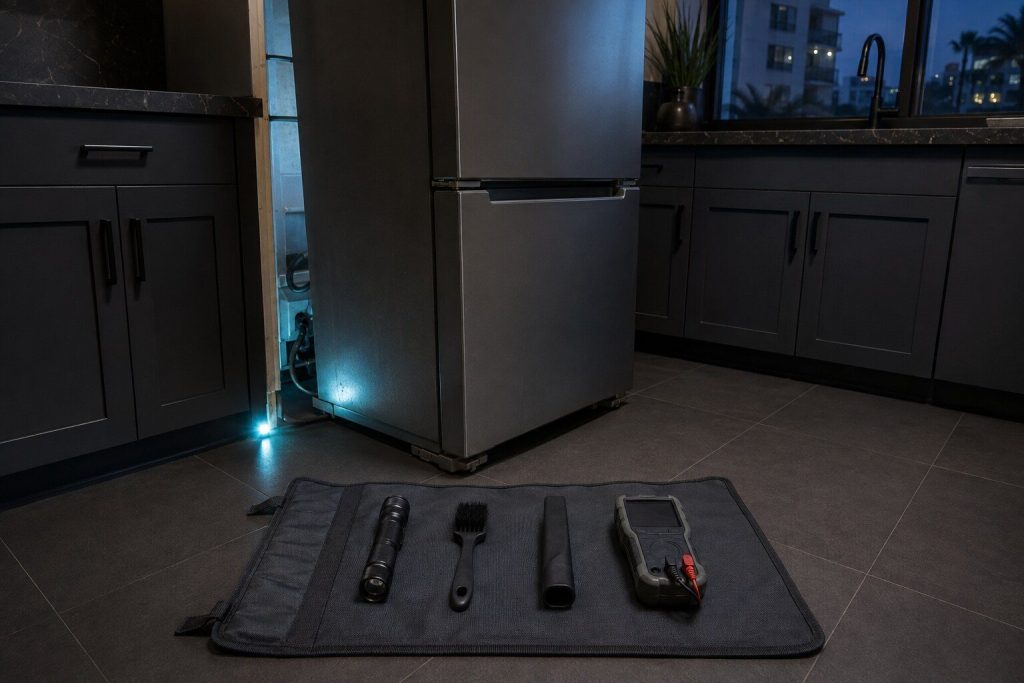
from $119 Appliance maintenance
The work that stops the calls we would otherwise be taking in August: condensers cleared, dryer ducts checked, dishwasher filters and seals looked at, water lines and shut-offs confirmed. In this climate maintenance is not a formality — a condenser that breathes dust in a Miami summer is the single most preventable refrigeration failure, and a dryer duct that nobody has cleaned is the most preventable fire risk in the apartment.
- Condenser, seals, ducts, filters and shut-offs, on the machines that have them
- Written down: what was cleaned, what was measured, what is starting to go
- Booked for several appliances in one visit, which is how it is worth doing
-
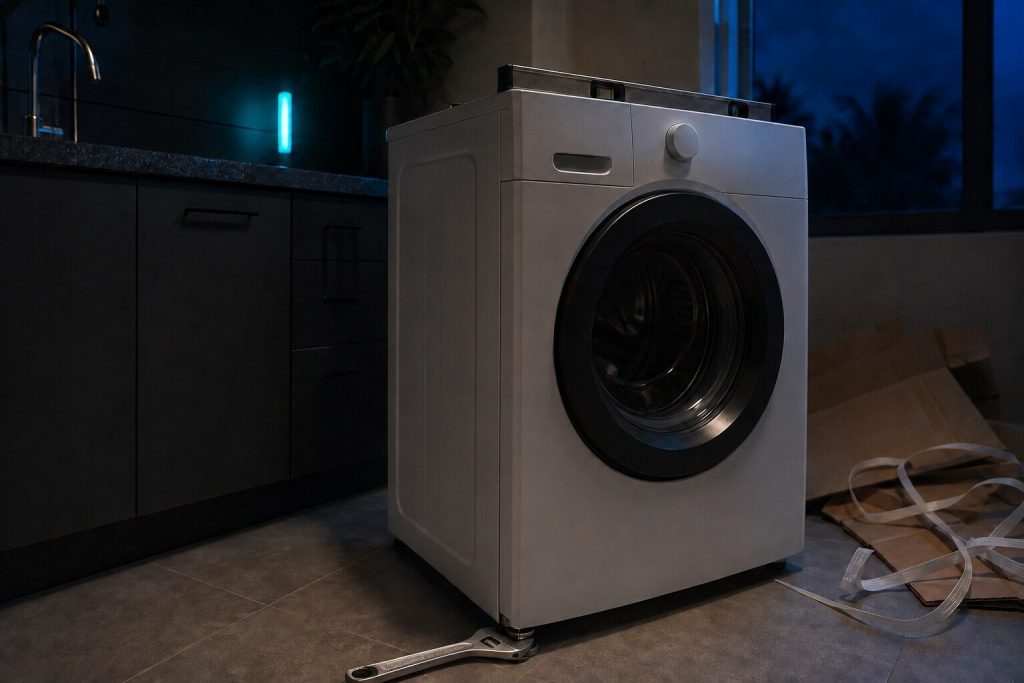
from $139 Appliance installation
Fitting a new machine properly and leaving the old one gone: level, connected, tested and checked for the things that cause a call-out three weeks later. On this badge most of what we install is freestanding or slide-in, which is straightforward — and the two that are not, a wall oven in a column and a beverage cabinet built into a run, are exactly where a bad installation shows up later as a repair.
- Level, connected, tested — and the old machine taken away
- Water, gas and vent connections left right, not just left working
- Built-in cabinets get a clearance check, which is where later problems begin
-
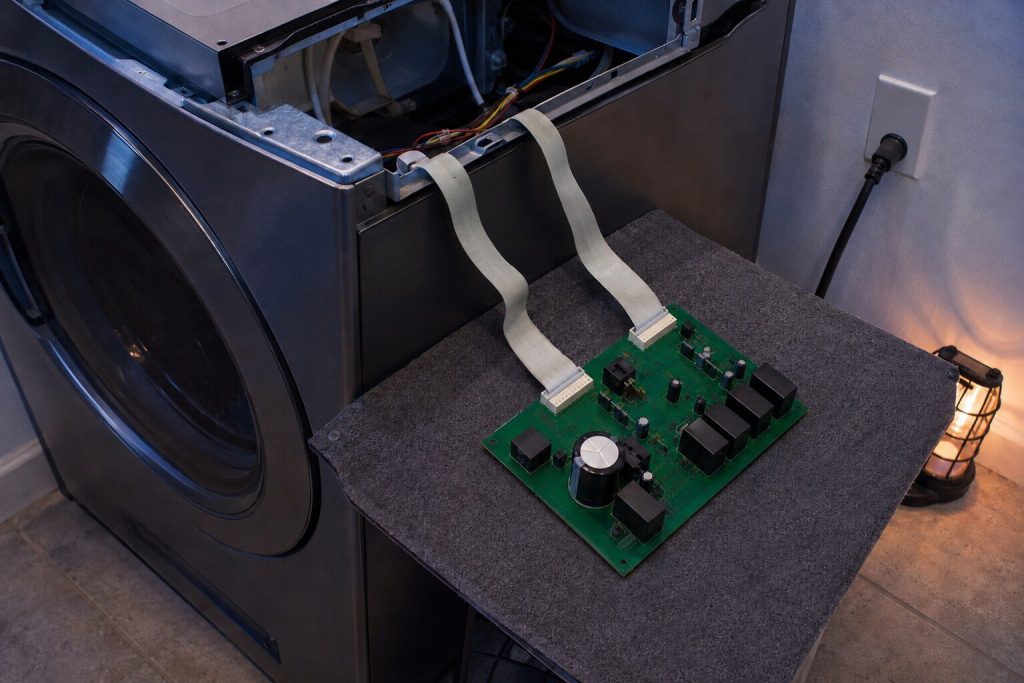
from $245 Control board repair
The board is the part most often blamed and least often to blame. A machine that is dead, resetting, or ignoring half its own panel usually has a supply problem, a failed sensor or a connector that has corroded in this humidity — and all three imitate a failed board convincingly. We measure what reaches the board before quoting one, because on this badge a board is frequently a large share of what the appliance is now worth.
- Measured before it is quoted: supply, sensors and connectors first
- Humidity corrodes connectors here, and that looks exactly like a dead board
- On an older machine the board is compared with the value of the appliance, out loud
-
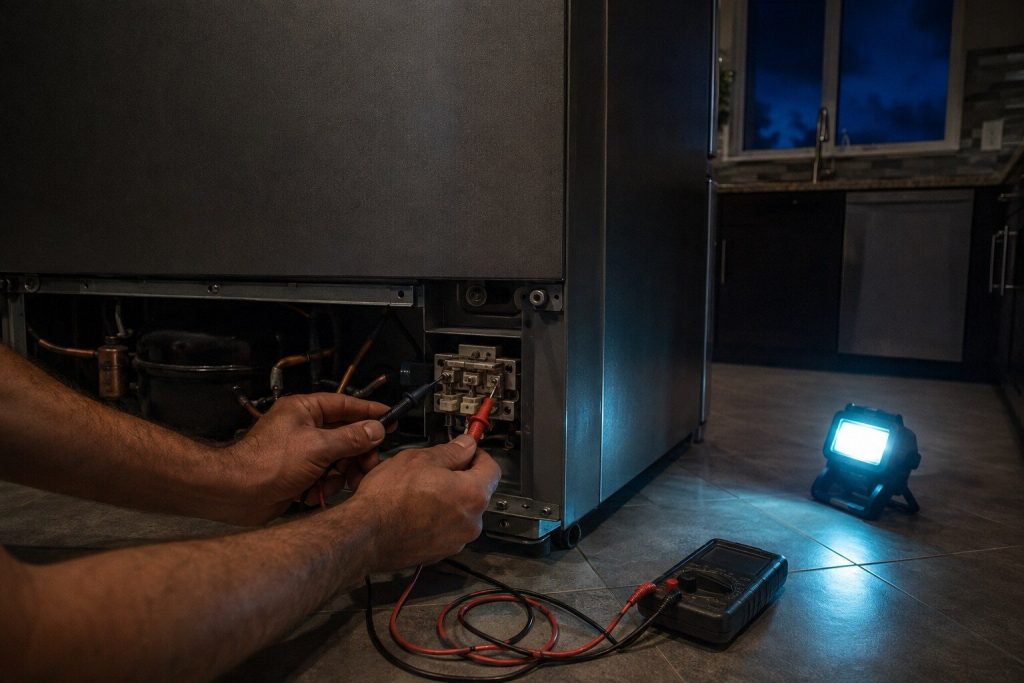
from $139 Refrigerator not cooling repair
A cabinet that runs and will not hold its temperature. On the top-freezer and side-by-side machines that make up most of this catalog there is very little on the panel to read, so this is an hour with instruments in a fixed order: the free causes, then the air path, then gauges. It is the visit where the age of the cabinet matters most, because the same symptom on a three-year-old French door and a fifteen-year-old top-freezer leads to two different recommendations.
- Instruments rather than a code lookup — these cabinets explain very little
- The free causes close more of these calls than any part fitted
- Refrigerant work is quoted only after gauges, never on the symptom alone
-
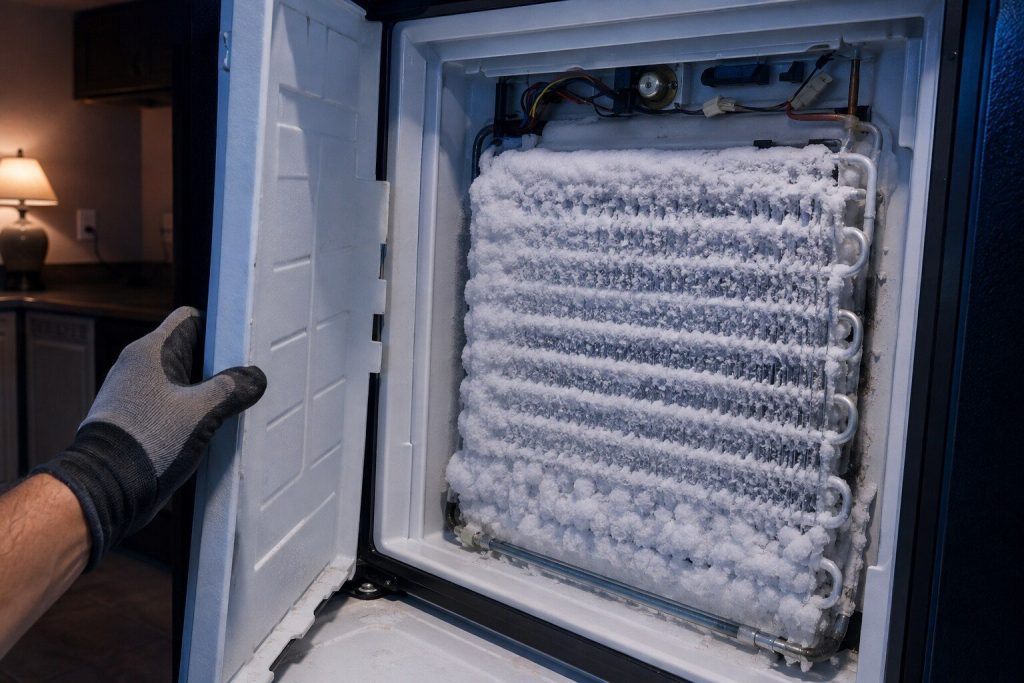
from $159 Defrost system repair
Frost where there should be none, a coil in a block of ice, or a cabinet that cools for a few days after every service call and then drifts again. Frost-free refrigeration has a heater, something that decides when to run it, and a drain to take the meltwater away — and in South Florida all three work harder than they were designed to, because every door opening lets in air that is carrying water.
- Heater, thermostat or sensor, and the control that decides between them
- This climate loads the defrost circuit harder than the design assumed
- A blocked drain is part of the same system and is checked in the same visit
-
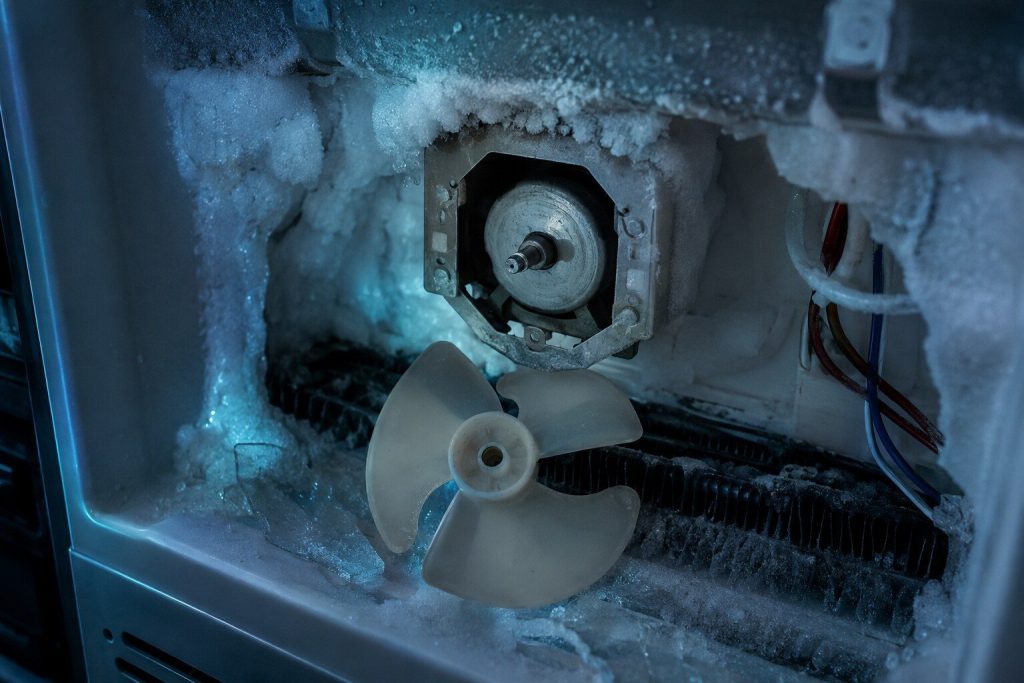
from $149 Evaporator fan repair
The fan behind the rear wall of the freezer moves the cold air that the fresh-food side depends on, so when it stops the freezer often looks fine and the refrigerator does not. It is one of the few refrigeration problems with an audible warning — a chirp, a rattle or a grinding that comes and goes with the door switch — and catching it at the noise stage is cheaper than catching it after a week of warm food.
- A warm fresh-food side with a cold freezer points here first
- Noise that changes when the door is held closed is the giveaway
- Ice around the blade is a defrost problem wearing a fan's clothes
-
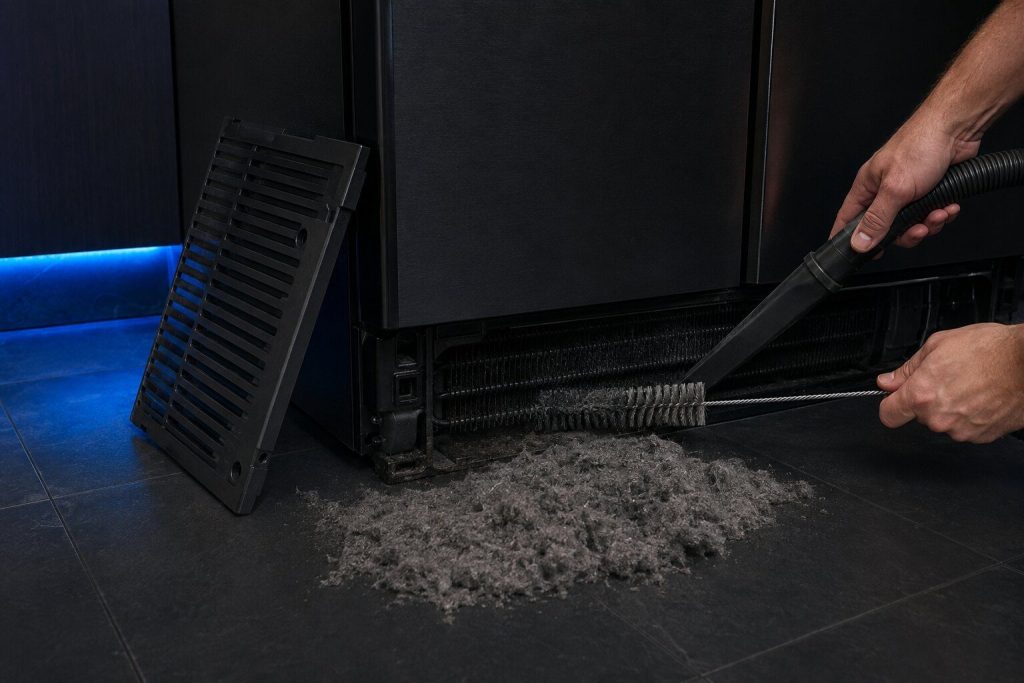
from $109 Condenser cleaning
The cheapest thing that can be done to a refrigerator in South Florida, and the one most often skipped. A condenser matted with dust and pet hair cannot reject heat, so the compressor runs longer, the cabinet drifts in the afternoon and the machine ages years in a summer. On a garage freezer or a beverage cabinet built into a cabinet run it matters more still, because the air around them is warmer to begin with.
- The most preventable refrigeration failure there is in this climate
- Long run times and afternoon drift are the symptoms it fixes
- Worth booking with other work rather than alone
-
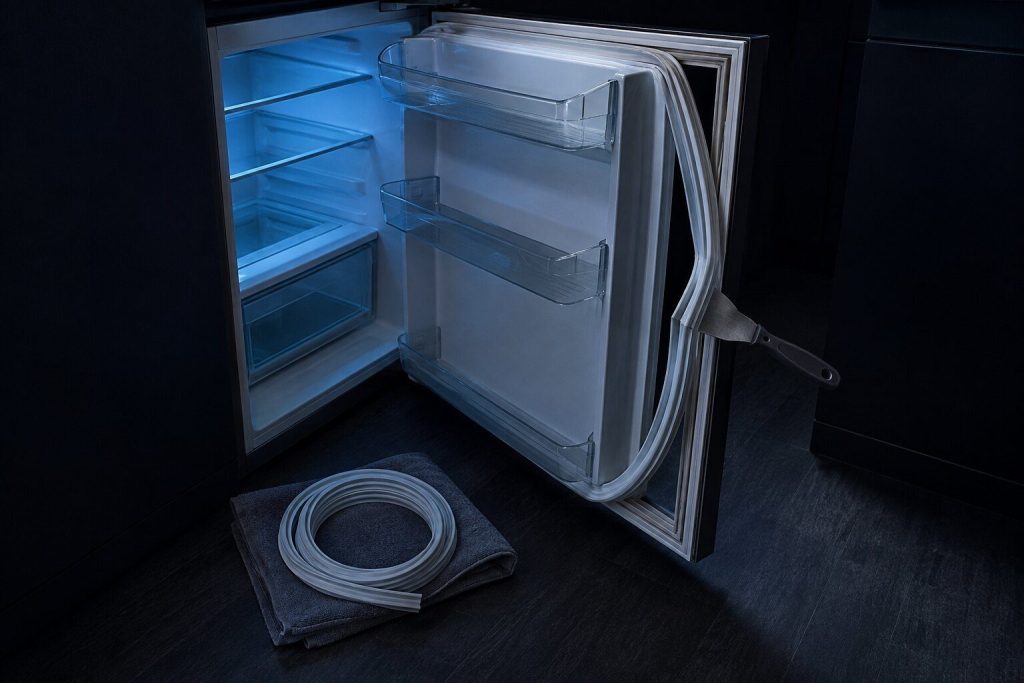
from $129 Door seal replacement
A gasket that has hardened, torn or stopped pulling the door shut lets warm wet air into the cabinet all day. In Miami that shows up as sweating along the door frame, ice building at one corner of the freezer, and a compressor that never rests — and the seal is one of the few parts on a refrigerator where age alone is a good enough reason to replace it.
- Sweating on the frame and ice in one corner are the usual signs
- Seals die faster here: they never fully dry between openings
- Cheap next to what a leaking door does to run time and food
-
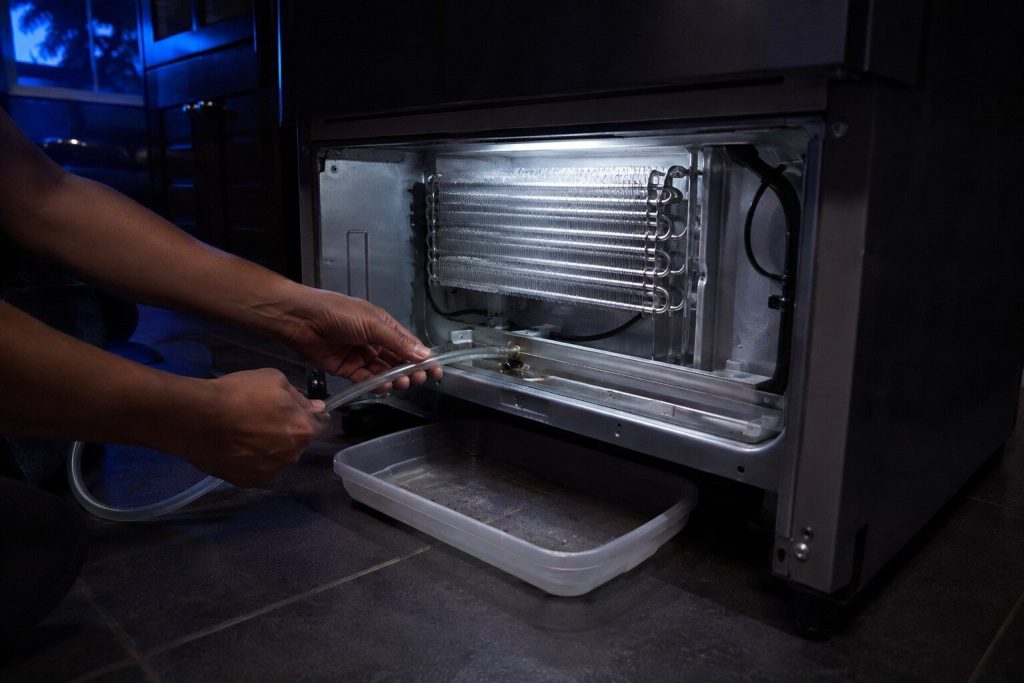
from $129 Refrigerator leak repair
Water under the crisper, water on the floor, or ice building in the bottom of the freezer. This is the most common refrigerator call we take in South Florida, and it has three usual causes that are told apart by where the water is: a blocked defrost drain, a water supply connection, or a door that is not sealing and letting the room condense inside the cabinet.
- Where the water is decides which of three causes it is
- A blocked defrost drain is the commonest by a distance in this climate
- Water at the back of the cabinet is a supply problem, not a defrost one
-
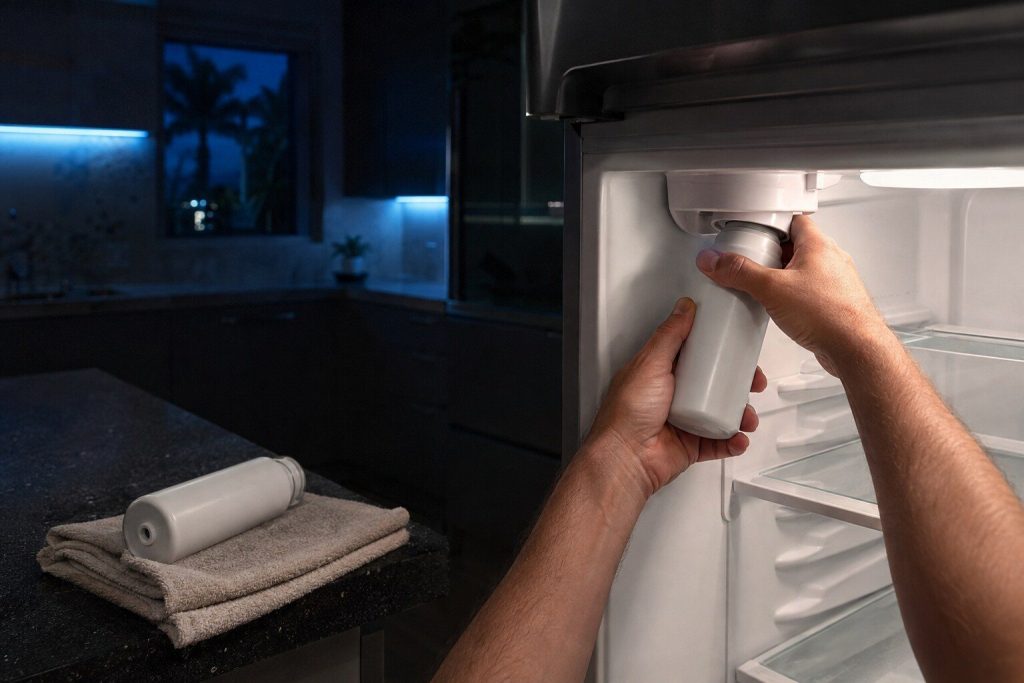
from $105 Water dispenser and filter service
Slow water, no water, a filter that will not seat or a dispenser that has started to taste of something. The circuit is short — supply, shut-off, filter, valve, tank, line, dispenser — and the answer is usually in the first half of it. On a French door or side-by-side cabinet this is also the circuit behind most 'no ice' calls, so the two get looked at together.
- One short circuit behind both the water and most of the ice complaints
- A filter past its date changes flow, taste and cube size at once
- A frozen tank in the fresh-food compartment is a temperature problem, not a plumbing one
-
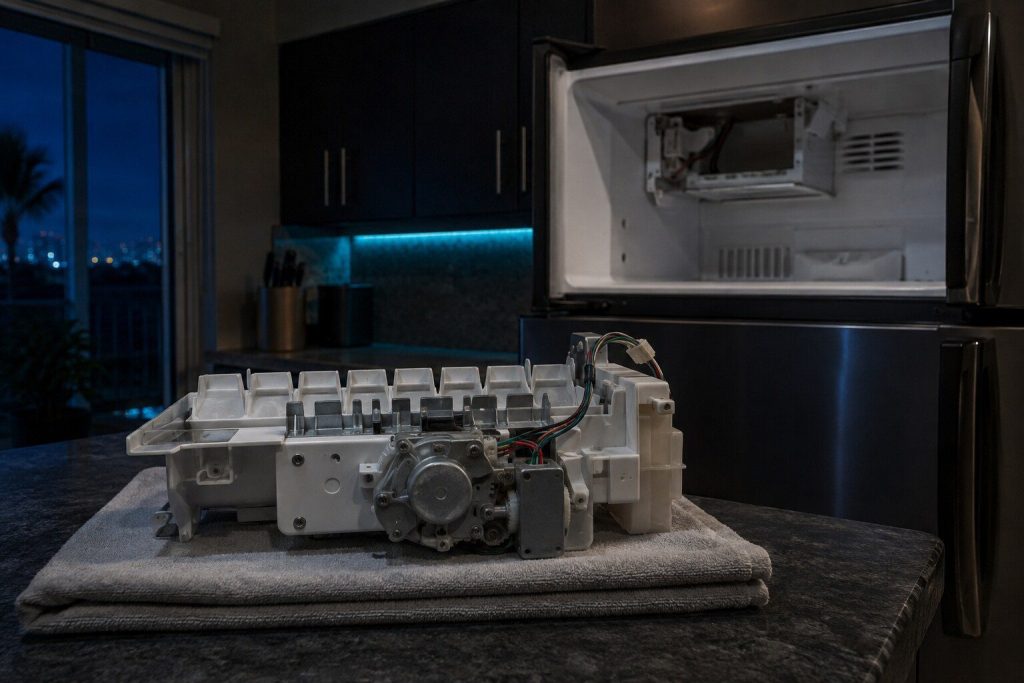
from $139 Ice maker repair
The module inside the refrigerator: no ice, hollow cubes, a bin frozen into one block, or a dispenser that grinds and delivers nothing. Half of these calls end on the water side rather than in the ice maker itself, which is why the first questions are about the filter and the dispenser rather than about the module.
- Half of these end at the filter, the valve or the fill tube
- Hollow or small cubes are a flow story, not a freezing one
- A bin frozen solid points at compartment temperature or a door seal
-
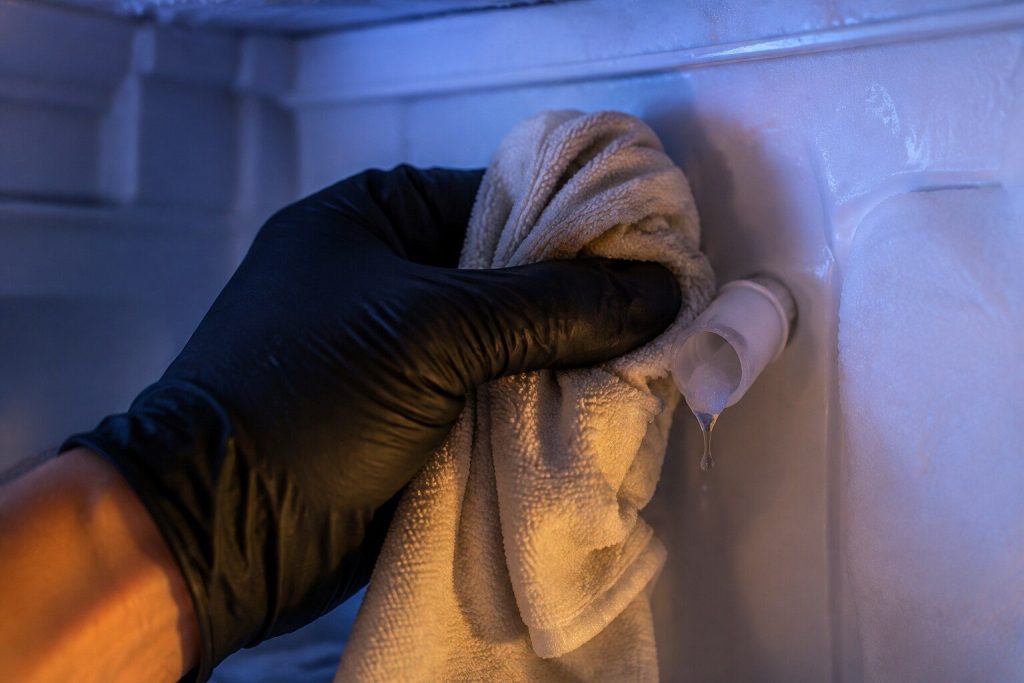
from $119 Ice maker water line and fill valve service
The supply half of the ice circuit, and the half that fails most: the shut-off at the wall, the line behind the cabinet, the filter and the inlet valve with its two solenoids. It is also the half that causes water damage, so a line that is old, kinked or made of the wrong material gets said out loud whether or not it is today's problem.
- The shut-off, the line, the filter and the valve — in that order
- A weeping valve behind a cabinet is a slow leak nobody sees for months
- Old plastic supply lines get flagged whether or not they are today's problem
-
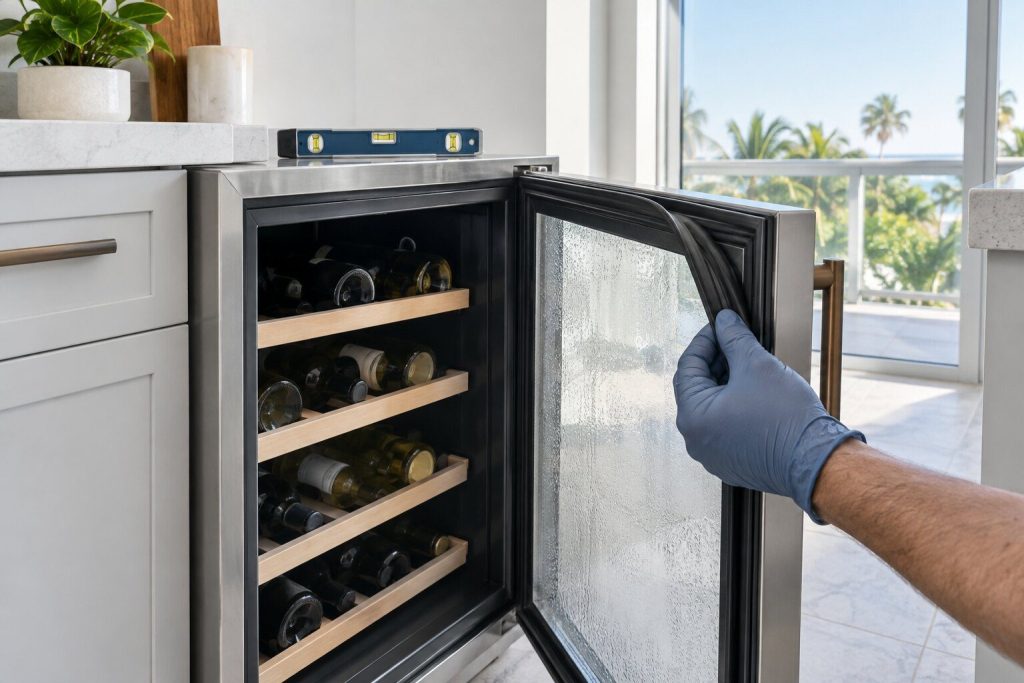
from $115 Wine cooler door and seal service
Condensation on the inside of the glass, a door that no longer pulls itself shut, or a cabinet that has started to run continuously since somebody loaded it fully. Glass doors, small hinges and a warm humid room are a combination that puts most of the wear on the door rather than on the machine behind it.
- Condensation, a sagging door and a seal that has hardened
- A full rack changes the geometry of a small door more than people expect
- Cheap to correct and expensive to ignore: the compressor pays for a leaking door
In more detail
About Frigidaire refrigerators
What this make puts in a South Florida kitchen
Frigidaire's refrigeration line is wide rather than deep in features: 142 cabinets, most of them freestanding, and a catalog whose largest family is still the plain top-freezer. That matters for a repair because these are machines built to a price and fitted into a kitchen somebody else chose — the cabinet is reachable, the parts channel is one of the widest in the trade, and the economics of fixing one are usually good. It also means we see them at every age, from a builder's handover to a cabinet older than the room around it.
Why the climate decides so much of the work
Humidity and salt do two specific things to these cabinets. They keep the door seal wet, so it never fully dries between openings and eventually stops sealing at the top corner, and they load the defrost system, which is why a blocked drain and a puddle under the crisper is the single most common call on this appliance. Neither is a problem of the make; both are why a Miami refrigerator ages differently from the same model in a dry state.
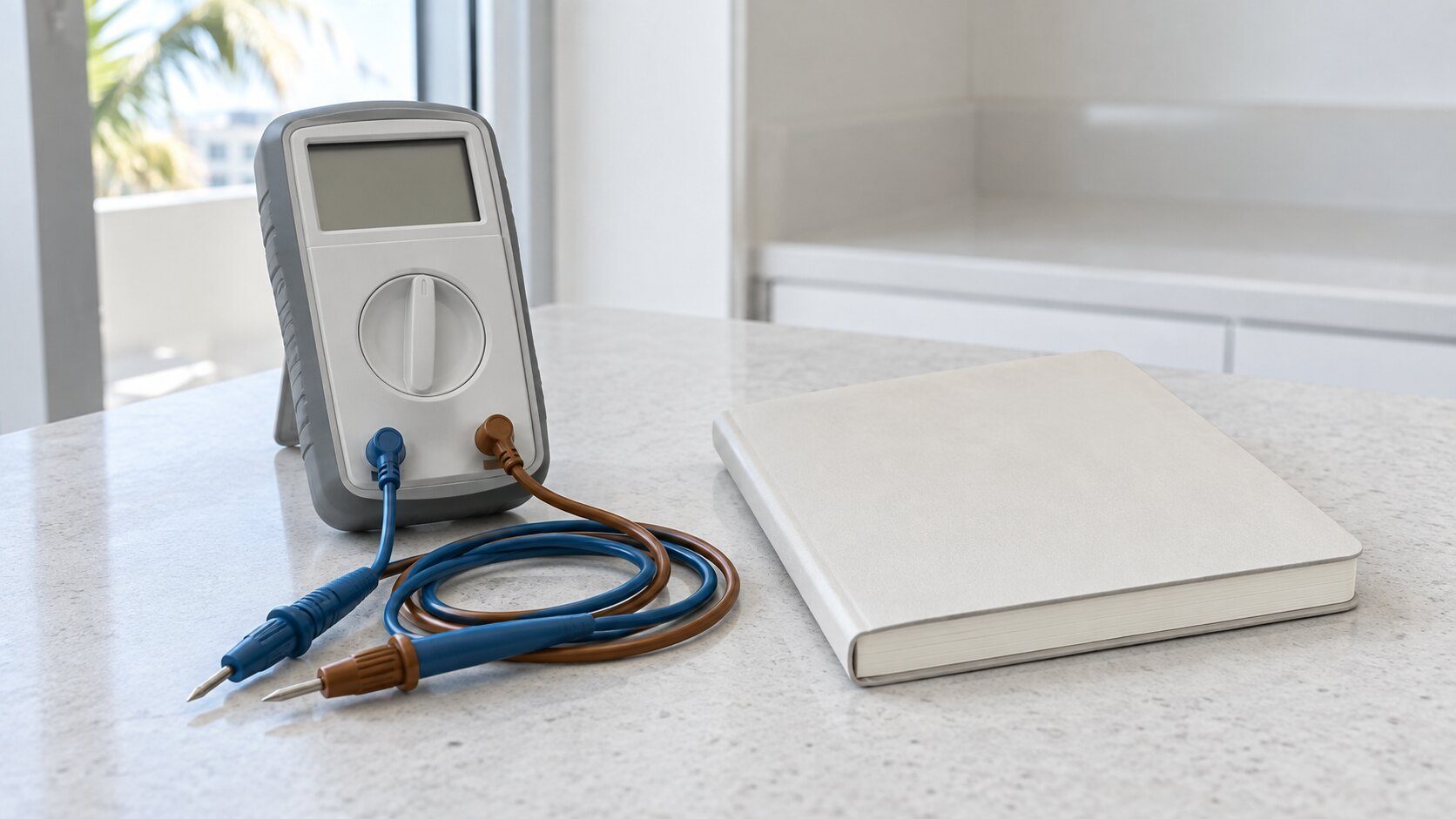
This article is based on:
- Official manufacturer documentation
- Internal repair procedures
- Technician repair history
- Company quality standards
Before you book
Questions about Frigidaire refrigerators
It is cold in the fridge and warm in the freezer, or the other way round.
That split tells us where to look before anyone arrives. A single sealed system serves both compartments on these cabinets, and air is moved between them, so one warm side is usually air — a defrost problem, a blocked duct, a damper or an evaporator fan — rather than the compressor. Tell us which side is wrong and roughly when it started; that pair of facts decides which parts ride on the van.
There is water under the crisper drawers.
Almost always the defrost drain, and in this climate it is the most common refrigerator call we take. The drain freezes or blocks, meltwater has nowhere to go, and it runs forward under the drawers instead of into the pan. It is a short job when it is that, and the visit is worth booking before the water reaches the floor and the cabinet below it.
How old is too old for one of these to be worth repairing?
We give you the number before we start rather than a rule of thumb. On a plain top-freezer cabinet a sealed-system failure is usually the end of the argument, while a defrost or fan problem on the same cabinet is worth doing at almost any age. The diagnostic tells you which of those two you have, and it is credited toward the repair.
Where we do it
Across Miami-Dade, Broward, and Palm Beach
Same terms everywhere we go: an on-site diagnostic first, the price agreed in writing, and the exact figure confirmed once we have seen the unit.
Neighborhoods people ask for by name