Common Problems
How Long a Frigidaire Washer Lasts, Measured in Loads Rather Than Years
Ten to twelve years is the usual figure and it hides an enormous range, because a household doing three loads a week and one doing twelve are putting completely different mileage through the same machine. Counted properly these are good for somewhere around two to three thousand cycles, which is fifteen years for one household and six for another. What ends a front-loader is almost always the rear bearing, and on many of these the bearing lives in a sealed outer tub — so the repair is the tub, the drum and the seal together rather than a bearing on its own. Everything before that point is a stocked part on this badge: the drain pump, the door lock, the inlet valve, the lid switch, the drive coupling, the suspension. That is why a ten-year-old machine here is usually worth fixing and a twelve-year-old one facing a bearing usually is not.
The full guide
How long do Frigidaire washers last is a question that gets a number for an answer when it should get a unit.
How long do Frigidaire washers last? Ten to twelve years means almost nothing
A couple doing three loads a week and a family of five doing twelve are not putting the same machine through the same life. After a decade the first household has run maybe fifteen hundred cycles; the second has run over six thousand.
Counted in loads, these machines are good for somewhere in the region of two to three thousand cycles before the parts under real load start arriving. That is fifteen years in one house and under six in another, on identical appliances bought the same day.
So when somebody asks whether a ten-year-old washer is finished, the useful question back is: how many loads a week, and has it been level the whole time?
One part decides the end, and everything before it is cheap
The bearing. On a front-loader the drum spins on a bearing at the back of the outer tub, and water gets to it eventually — through a seal that has done a few thousand cycles. Once it starts, the sequence is predictable: a rumble that rises with the spin speed, then a grinding you can hear through a wall, then metal.
The reason this ends machines rather than being repaired is that on many of these the outer tub is sealed. The bearing is not a part you replace; the tub, the drum and the seal are, together, as an assembly. That figure against a twelve-year-old volume-badge washer usually loses.
Everything else is not like that. The drain pump, the door lock, the water inlet valve, the lid switch on a top-loader, the drive coupling, the suspension rods, the control board — all stocked parts on this badge, all fitted in one visit, all worth doing on a machine with life left.
That is the whole repair-or-replace decision on a washer, and the year on the plate is not part of it.
What shortens one here specifically
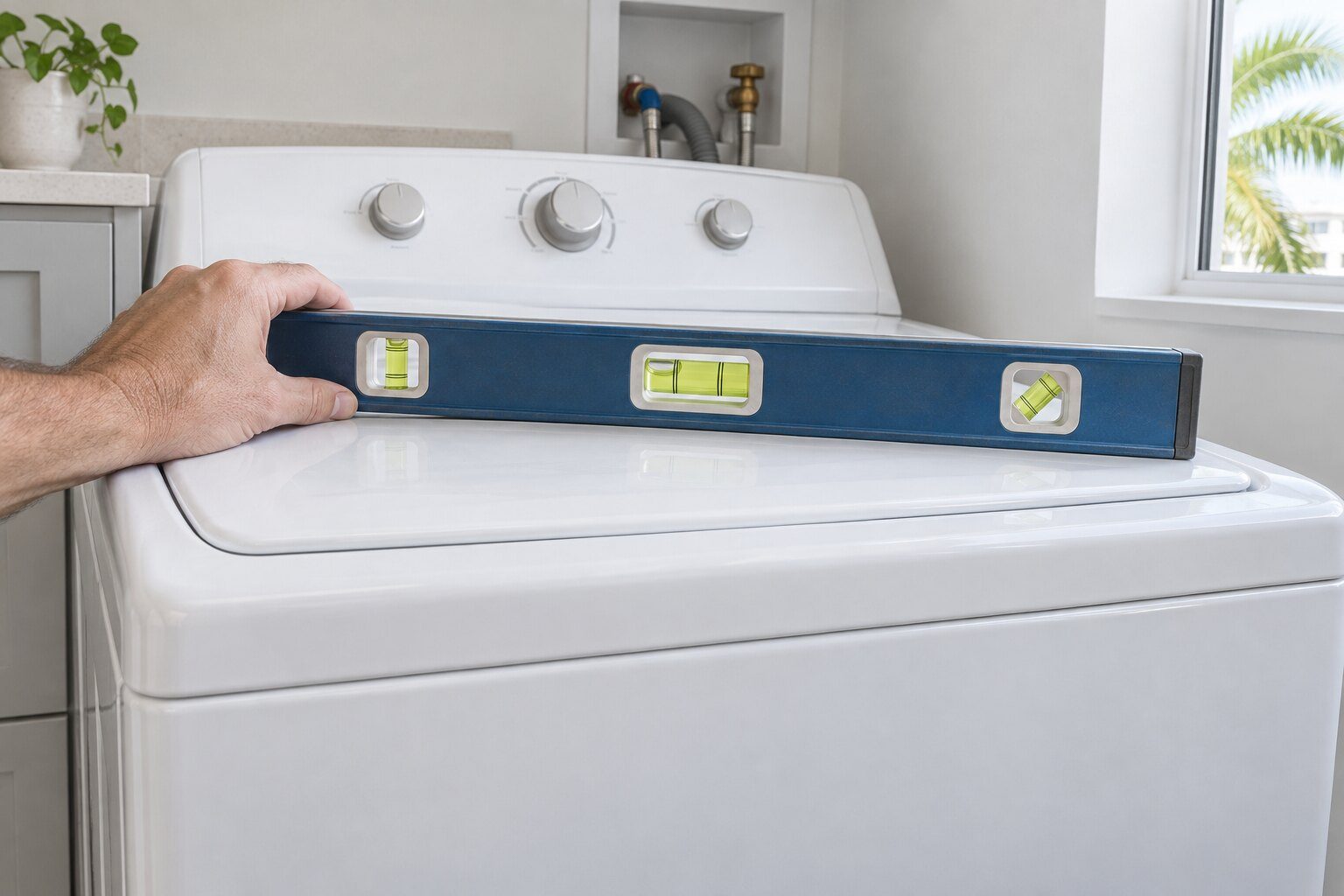
Level. This is the big one and it is free. A machine that is not sitting firm on all four feet spins slightly out of balance on every single cycle, and every one of those puts load into the bearing and the suspension that a level machine does not. Over a few thousand cycles that is the difference between a bearing at year twelve and a bearing at year seven.
This maker takes it seriously enough to give it a code of its own: E5 on a top-loader means the machine is not level. That is not a failure being reported, it is a warning being issued.
The laundry closet. In a South Florida condominium the machine is boxed in on three sides, which makes it harder to check level and much harder to notice it walking. It also means warm, damp air sits around the machine between loads, which is what does for a front-loader's door gasket.
Single heavy items. A comforter or a bath mat on its own is the hardest thing you can ask a front-loader to spin. The machine will refuse rather than damage itself — E4 on a top-loader is exactly that — and a household that fights it by running the spin again and again is loading the bearing to no purpose.
The warning, and how much notice it gives
A bearing does not fail suddenly. It announces itself for months.
The sequence is: a low rumble that only appears at high spin speed, then a rumble that starts earlier in the spin, then a noise at all speeds, then grinding. Somewhere in the middle of that the drum will start to have visible play if you grip it and pull.
That period is worth using. It is when the suspension can be checked — a cheap repair that sometimes turns out to be the real noise — and when a household can decide about the machine on its own schedule rather than on the day the drum seizes.
The honest recommendation on this badge
Repair anything that is not the bearing or the sealed system, and repair it without much hesitation, because the parts are on the van and the labor is one visit.
For a bearing: consider it on a machine under about six years old, or in a stacked laundry center where replacing the appliance means dealing with a closet and a cabinet as well. Against it on an older standalone front-loader that was inexpensive to begin with.
And in every case, before any of that: put a level on top of it. It is the cheapest thing on this page and it is what decides how long the next machine lasts.
If it turns out to be a repair
What this leads to, and what it costs
Every job on this site is priced the same way: an on-site diagnostic first, the figure agreed in writing before anybody starts.
-
Washer bearing and suspension repair
The rumble that rises with the spin and eventually becomes a grinding you can hear through the wall. On a front-loader the outer tub is often a sealed assembly, so a bearing is a large job with a large part — and it is the repair where we most often advise an owner to put the money toward a new machine instead. We give you both numbers and let you choose.
- A rumble that rises with spin speed and gets worse every week
- On many front-loaders the tub is sealed and the part is most of the machine
- This is the repair we most often advise against, with the numbers to show why
-
Washer drain pump replacement
A machine that fills, washes and then sits full. On the older Frigidaire front-loaders that make up most of what we open here, the pump is behind a filter trap that almost nobody has ever emptied, and a coin, a hairpin or a child's sock is as likely as a failed pump. We open the trap first — it costs nothing and it ends a good share of these calls.
- The trap before the pump: coins and socks outnumber failed pumps
- A pump that hums without moving water is jammed, not dead
- The drain hose and the standpipe are part of this, especially in a condominium
-
Washer will not spin
Two quite different machines wear this complaint. On a top-loader it is usually the lid switch or the drive; on a front-loader it is the door lock, the belt or a load the machine has decided it cannot balance. The useful thing you can tell us is whether the drum turns freely by hand and whether the machine tried and gave up or never tried at all.
- Top-loaders: the lid switch is one of the most common failures on an older machine
- Front-loaders: the door lock has to report closed before anything spins
- A machine that tries and aborts is a balance story, not an electrical one
-
Washer error code E5
Frigidaire washer error code E5: A separate code from the out-of-balance one, and the difference matters: E4 is about the load, E5 is about the machine. Which machines can raise it, what the maker publishes about it, and what to do next.
What this one means
Questions people ask about this
How long do Frigidaire washers last compared with a top-loader?
The simple top-loaders often outlast the front-loaders, and for a mechanical reason rather than a quality one: fewer parts under load, a transmission designed around a sacrificial coupling, and no sealed outer tub to make a bearing job uneconomic.
Is a bearing repair ever worth doing?
Sometimes. On a newer machine, or in a stacked laundry center where replacing the appliance means reworking a closet, the arithmetic can work. On a twelve-year-old front-loader it usually does not, and we would rather say so at the diagnostic than after ordering parts.
Common Problems
More guides like this one
-
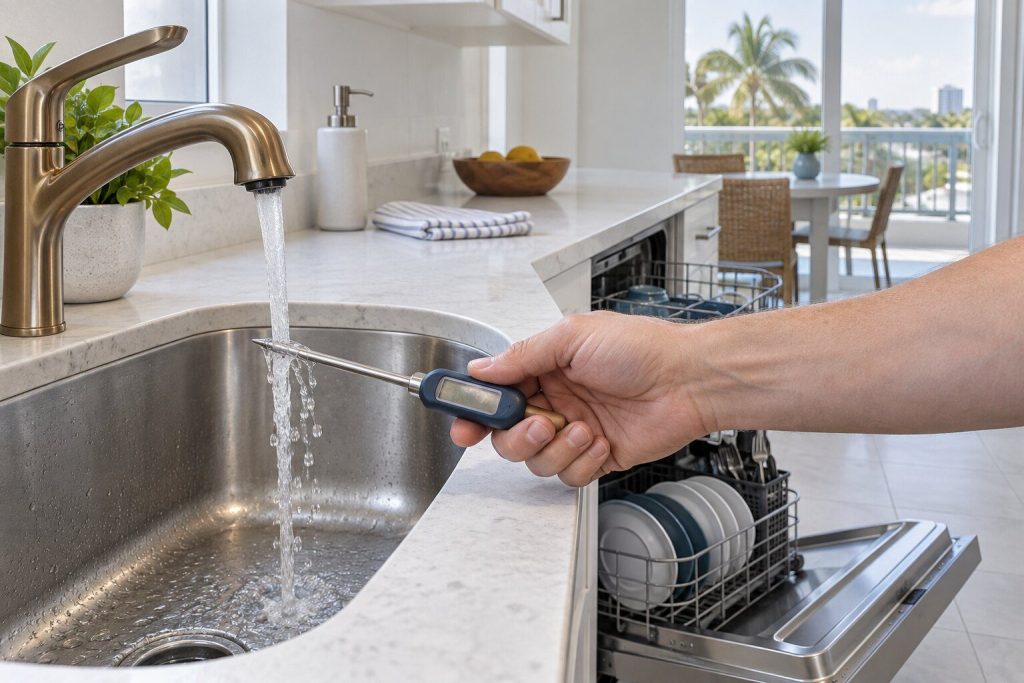
Why a Frigidaire Dishwasher Cycle Takes as Long as It Does
Two to three hours is normal, and the reason is heat. The machine waits for its water — about a minute or two of delay for every degree of temperature rise.
Read more -
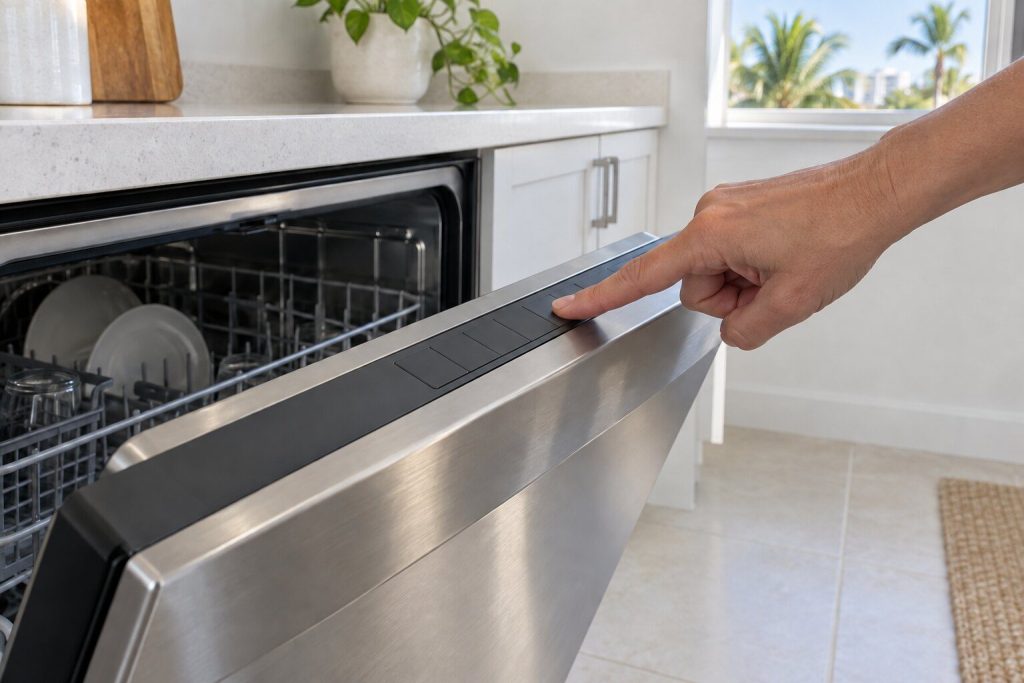
Unlocking a Frigidaire Dishwasher That Is Ignoring Every Button
Three different things get confused here: the control lock, a delay start counting down, and a door latch switch that is not making contact.
Read more -
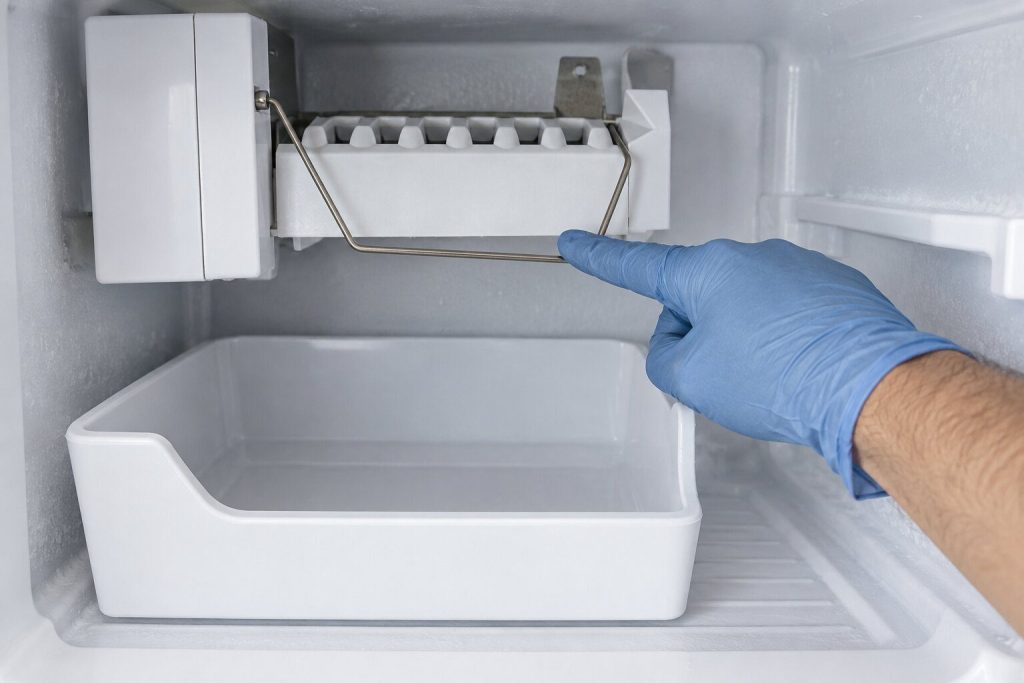
How to Tell Whether Your Frigidaire Ice Maker Is Actually Switched On
A wire arm knocked up by a box of frozen food is the cheapest reason a household goes a week without ice — and it looks exactly like a broken ice maker.
Read more
Tell us the model number and what it is doing.
This article is based on:
- Official manufacturer documentation
- Internal repair procedures
- Technician repair history
- Company quality standards