Common Problems
What Causes a Refrigerator Door Not to Close Properly, in Checking Order
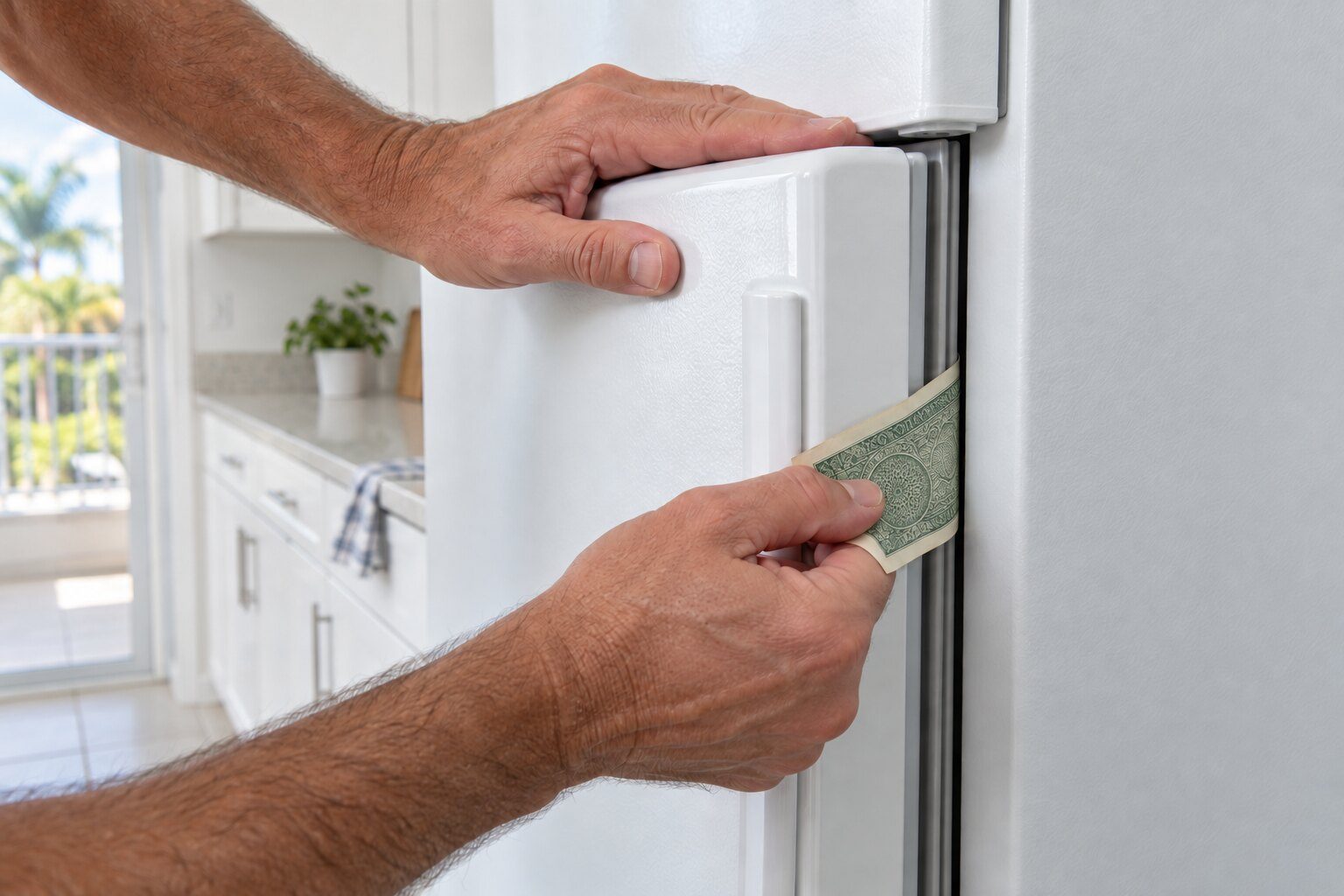
Four things, and they are worth checking in order of cost. First, what is inside the door: an over-filled bin, a bottle sitting proud, or a shelf pushed forward so it catches the liner. Second, whether the cabinet is level — these are designed to sit very slightly tipped back so the door falls closed under its own weight, and a floor that slopes toward the room defeats a perfectly good hinge. Third, the hinge itself, which drops on the handle side after years of somebody leaning on an open door. Fourth, the gasket: rubber that has hardened has lost the magnet's grip and the memory in the material, so it sits against the frame looking perfect and seals against nothing at the corners. The dollar-bill test finds that in under a minute. In South Florida this matters faster than elsewhere, because humid air entering all day is exactly what buries an evaporator coil in frost.
The full guide
What causes a refrigerator door not to close properly has four answers, and the useful part is the order — because three of them cost nothing and the fourth is the only one that needs a part.
What causes a refrigerator door not to close properly? Start inside the door
Before anything mechanical: take everything out of the door bins and close it.
An over-filled bin, a tall bottle standing proud of the shelf, or an interior shelf pushed forward so it catches the door liner will all stop a door closing, and all three get diagnosed as a hinge. It takes thirty seconds to rule out and it is right often enough to be worth doing first every time.
Then the floor
These cabinets are designed to sit very slightly tipped back. That is not a tolerance, it is a design decision: the tilt is what makes the door fall closed under its own weight when somebody lets go of it.
A kitchen floor that slopes toward the room — which is common in older buildings, and in any unit where tile has been laid over tile — cancels that. The door then stays wherever it was left, which in a busy household means slightly open, all night, several times a week.
Wind the front feet down a turn or two and try it again. If the door now swings shut on its own, the hinge and the seal were never the problem.
Then the hinge
Stand square in front of the closed door and look at the gap along the handle side.
An even gap top to bottom means the door is hanging correctly and the issue is the seal.
A gap that widens toward the bottom means the door has dropped, which is the hinge. On these cabinets that is nearly always caused by weight on an open door — somebody leaning on it, or a child hanging from it, or a heavily loaded door being left open while the fridge is unpacked.
Some hinges adjust. A hinge that has bent rather than worn needs replacing, and doing one side while leaving the other is a false economy when both have done the same number of years.
Then the seal, and here is how to test it
The dollar-bill test takes under a minute and it is the only honest way to check a gasket, because a hardened seal looks perfect.
Close a bill in the door so half of it is inside, and pull it out. There should be noticeable drag. Repeat at ten points around the whole perimeter — top corners, bottom corners, the middle of each side, and both hinge-side corners, which are the ones people skip.
Anywhere the bill slides out with no resistance, warm air is getting in at that point.
What fails is not usually a hole. It is a hardening: a gasket ten years old has lost the grip in its magnet strip and the memory in its rubber, so it lies against the frame looking exactly right and seals against nothing at the corners.
Why this is more urgent in South Florida than in most places
Elsewhere a leaking door seal is an efficiency problem — the cabinet runs longer, the bill goes up, nothing else happens.
Here it is a frost problem. The air getting in is warm *and wet*, and every hour of it deposits moisture on the coldest surface in the machine, which is the evaporator coil behind the rear panel. Enough of that and the coil is buried, airflow stops, and what the household notices is a fresh-food section that has gone warm while the freezer still looks fine.
That is why a door problem on this coast turns into a defrost call within a season, and why we would rather deal with it while it is still a strip of rubber.
Two other things worth knowing
A door alarm is not a door problem. If the cabinet beeps with the door shut, that is usually the switch in the frame rather than the door, and it is a separate repair.
A high-temperature alert after a night with the door ajar is the cabinet reporting exactly what happened. On these it will display H or HI, and the highest temperature reached is shown when the alert is acknowledged — write that number down before you clear it, because clearing it throws the number away.
If it turns out to be a repair
What this leads to, and what it costs
Every job on this site is priced the same way: an on-site diagnostic first, the figure agreed in writing before anybody starts.
-
Door seal replacement
A gasket that has hardened, torn or stopped pulling the door shut lets warm wet air into the cabinet all day. In Miami that shows up as sweating along the door frame, ice building at one corner of the freezer, and a compressor that never rests — and the seal is one of the few parts on a refrigerator where age alone is a good enough reason to replace it.
- Sweating on the frame and ice in one corner are the usual signs
- Seals die faster here: they never fully dry between openings
- Cheap next to what a leaking door does to run time and food
-
Refrigerator error code H
Frigidaire refrigerator error code H: The cabinet has been warmer than it should be for long enough to say so out loud, and the maker's own list of causes is the honest one: a door left open, a setting somebody changed, a seal that no longer closes. Which machines can raise it, what the maker publishes about it, and what to do next.
What this one means -
Frost building up inside
A frost-free cabinet is not supposed to accumulate anything, so frost is always a message. Where it is tells us which message: a sheet on the freezer back wall is the defrost circuit, frost around the door is a seal, and a fine crust over everything after a hot week is usually the humidity that came in through a door that was left ajar.
- A sheet of ice on the back wall is the defrost circuit, and it will not clear itself
- Frost at the door edge is a seal or an alignment question
- Chipping it out buys a week; the reason it formed decides whether it comes back
Questions people ask about this
What causes a refrigerator door not to close properly on a new cabinet?
Almost always the level or the packaging. A machine installed on a floor that slopes toward the room will not self-close, and adjusting the front feet up a turn or two fixes it. Check too that all the shipping material is out of the hinge area.
Can a hardened gasket be softened rather than replaced?
Warm water and a little petroleum jelly on the magnet strip will buy some time on a seal that is stiff rather than deformed. Rubber that has taken a permanent set at the corners is finished, and on this badge the replacement is a stocked part.
Common Problems
More guides like this one
-
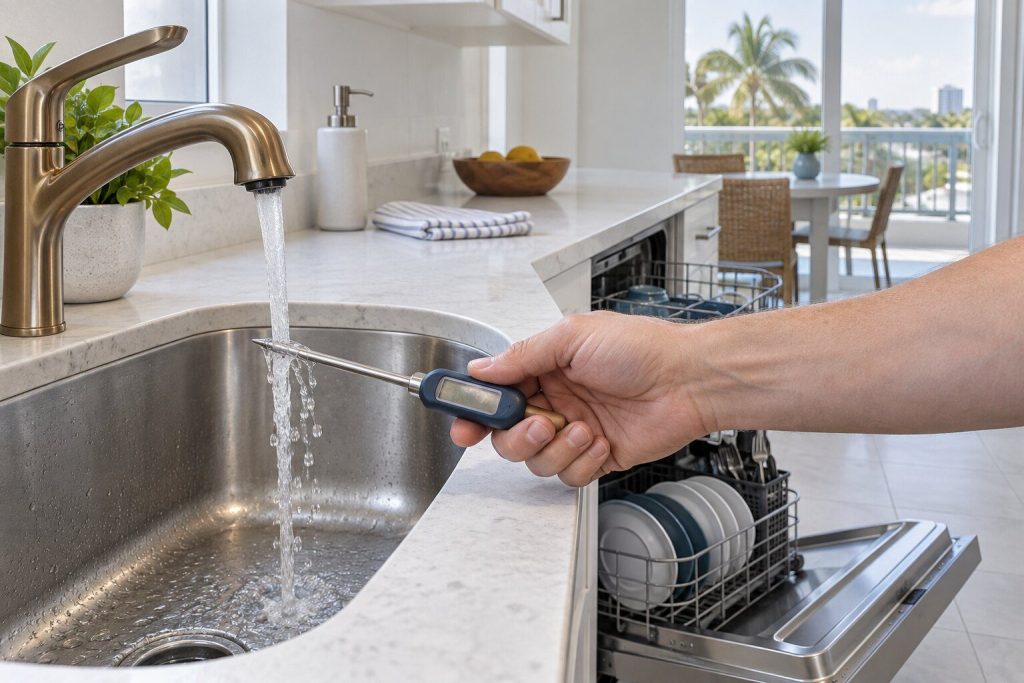
Why a Frigidaire Dishwasher Cycle Takes as Long as It Does
Two to three hours is normal, and the reason is heat. The machine waits for its water — about a minute or two of delay for every degree of temperature rise.
Read more -
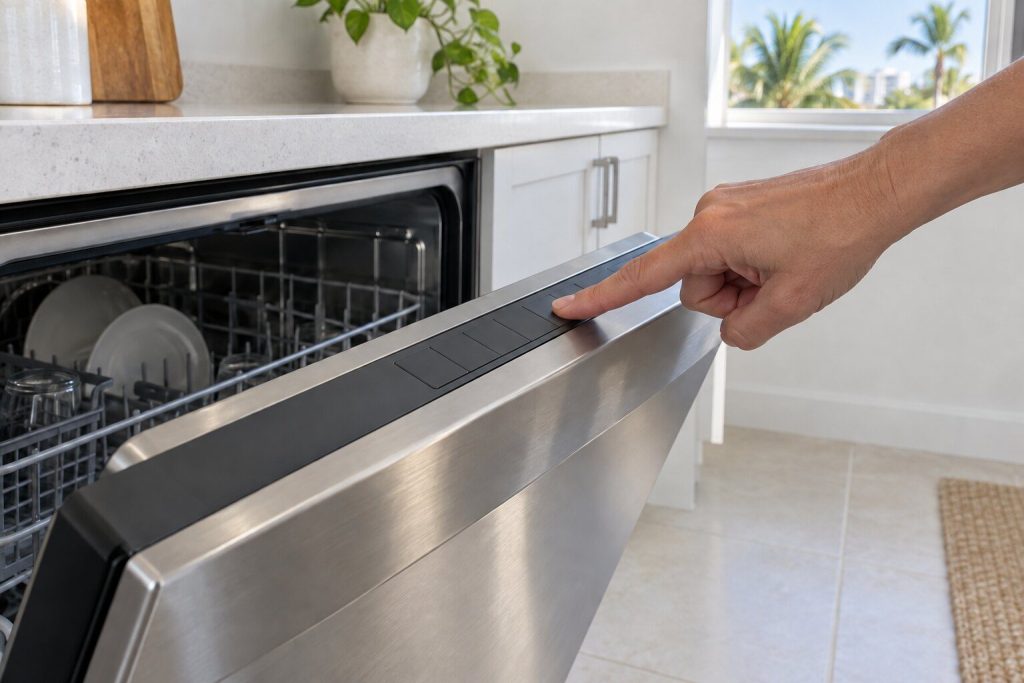
Unlocking a Frigidaire Dishwasher That Is Ignoring Every Button
Three different things get confused here: the control lock, a delay start counting down, and a door latch switch that is not making contact.
Read more -
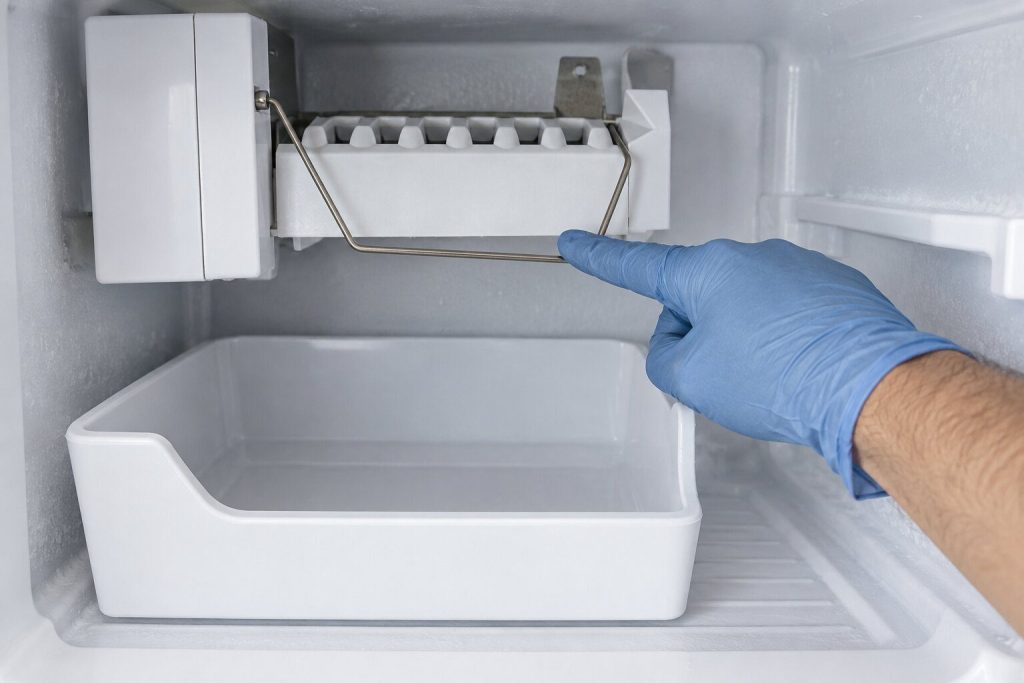
How to Tell Whether Your Frigidaire Ice Maker Is Actually Switched On
A wire arm knocked up by a box of frozen food is the cheapest reason a household goes a week without ice — and it looks exactly like a broken ice maker.
Read more
Tell us the model number and what it is doing.
This article is based on:
- Official manufacturer documentation
- Internal repair procedures
- Technician repair history
- Company quality standards